


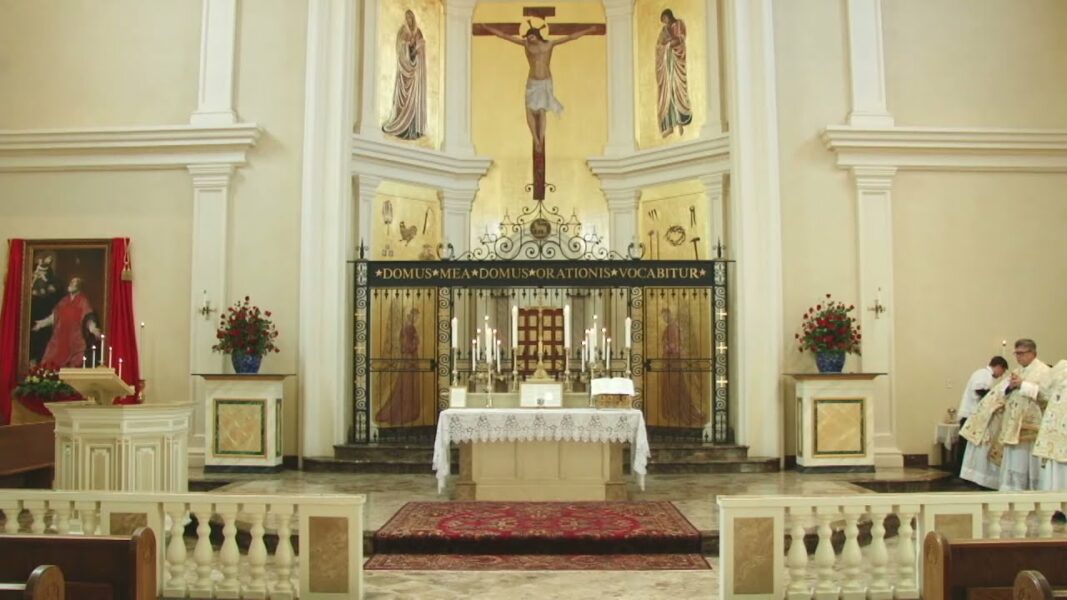
The Archdiocese of Toronto, in Canada, will begin applying new restrictions to the Traditional Mass next Sunday, September 20, in the communities served by the Oratory of St. Philip Neri. Once a month, one of the celebrations scheduled according to the 1962 Missal must be replaced by the Novus Ordo, and, according to information released from Toronto, the other sacraments may not be administered according to the traditional liturgical books either.
The background is especially significant: it was the Archdiocese itself that decades ago promoted the celebration of the Vetus Ordo at Saint Vincent de Paul to offer a diocesan alternative to the faithful attached to the traditional liturgy and to prevent them from attending the Priestly Fraternity of St. Pius X (FSSPX). The pastoral solution, maintained later by successive archbishops, is now beginning to be restricted under the government of Cardinal Francis Leo in application of Traditionis custodes.
One Traditional Mass per month will be replaced by the Novus Ordo
According to Vox Cantoris, since the end of spring the auxiliary bishops of Toronto have held conversations with the priests responsible for the main communities linked to the traditional liturgy to determine the application of the restrictions.
Among them is Father Russell Asch, chaplain of the faithful who participate in the traditional liturgy at Saint Lawrence the Martyr in Scarborough and Saint Patrick in Schomberg, as well as the priests of the Oratory of Toronto, responsible for Holy Family and Saint Vincent de Paul.
The first measures began to be applied in June in the communities served by Asch. The Oratory continued conversations with the Archdiocese in the meantime and will begin applying the new provisions next September 20.
In Holy Family and Saint Vincent de Paul, once a month, one of the Sunday Masses that until now were celebrated according to the usus antiquior must be celebrated according to the reformed Missal.
In Saint Vincent de Paul the former high altar may be used. In Holy Family, on the other hand, the celebration will be sung in Latin, but must be carried out versus populum.
The remaining scheduled celebrations will continue, for now, according to the 1962 Missal.
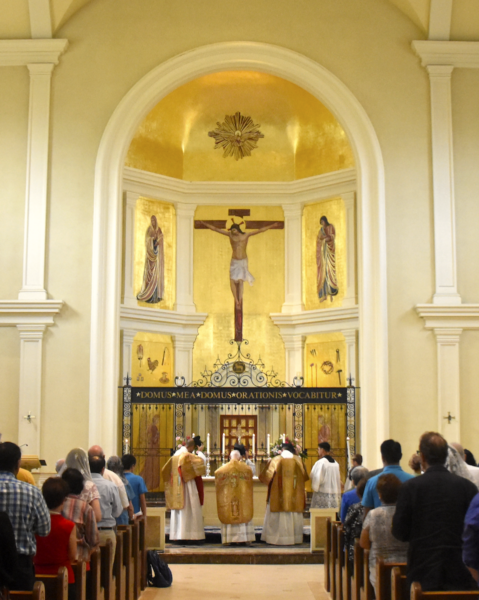
The Archdiocese of Toronto has not yet published a public decree detailing these provisions, so the specific conditions known come from information released by local Catholic media close to these communities.
The restrictions also extend to the other sacraments
The measure will not be limited to the celebration of Mass.
According to the same sources, the administration of the other sacraments according to the traditional liturgical books will no longer be permitted.
The restrictions thus fall on communities that for decades have developed their liturgical life within the structures of the Archdiocese and with the authorization of its pastors.
Nor is it a matter of introducing the Novus Ordo in parishes where it was not previously available. In the affected churches, Masses according to the reformed Missal are already habitually celebrated alongside the traditional celebrations.
The new provision therefore means that one of the celebrations requested by the faithful attached to the traditional rite will be periodically replaced by a liturgical form that is already habitually offered in those same communities.
Read also: Eleganti: “The marginalization of the Traditional Mass has been institutionalized”
The Archdiocese itself promoted the Vetus Ordo against the FSSPX
The celebrations in Schomberg and Scarborough date back more than four decades. For years they were linked to Father Liam Gavigan, who had authorization to celebrate according to the old Missal under the indult regime prior to Summorum Pontificum.
The Oratorians were already solemnly celebrating the Novus Ordo in Latin at Holy Family when, in the early 1990s, they also took charge of the nearby parish of Saint Vincent de Paul.
Subsequently, the Priestly Fraternity of St. Pius X acquired an old Baptist church in a nearby parish and opened a Mass center there. Faced with this situation, the then Archbishop of Toronto, Cardinal Aloysius Ambrozic, asked the Oratorians to begin celebrating the traditional liturgy at Saint Vincent de Paul on Sundays and holy days of obligation.
According to the account collected by local sources, the purpose was to attend within the Archdiocese itself to Catholics attached to the old rite and to prevent them from attending the celebrations of the FSSPX.
His successor, Cardinal Thomas Collins, maintained that policy and allowed the continuity of the celebrations.
The Traditional Mass at Saint Vincent de Paul did not therefore arise as an initiative developed outside diocesan authority. It was the Archdiocese itself that promoted its celebration as a pastoral response to the presence of faithful seeking the traditional rite and who could go to the FSSPX to find it.
A diocesan alternative that is now being restricted
The application of Traditionis custodes thus reverses, in practice, the pastoral solution adopted decades ago by the Archdiocese itself.
It is not a matter of authorizing a new community or of introducing the old rite in places where it was never present. The affected communities have existed for decades and their celebrations were authorized, maintained, and, in the case of Saint Vincent de Paul, expressly promoted by diocesan authority.
Decades later, the FSSPX continues to be present in the region. What is beginning to be reduced is precisely the diocesan alternative that Toronto had promoted so that the faithful attached to the traditional liturgy could find it within the structures of the Archdiocese.
As of next Sunday, those faithful will have more limited access to the Vetus Ordo and, according to the known provisions, will no longer have the other sacraments according to the traditional books available in these communities. The FSSPX, meanwhile, continues to celebrate according to those books in its own Mass centers.