


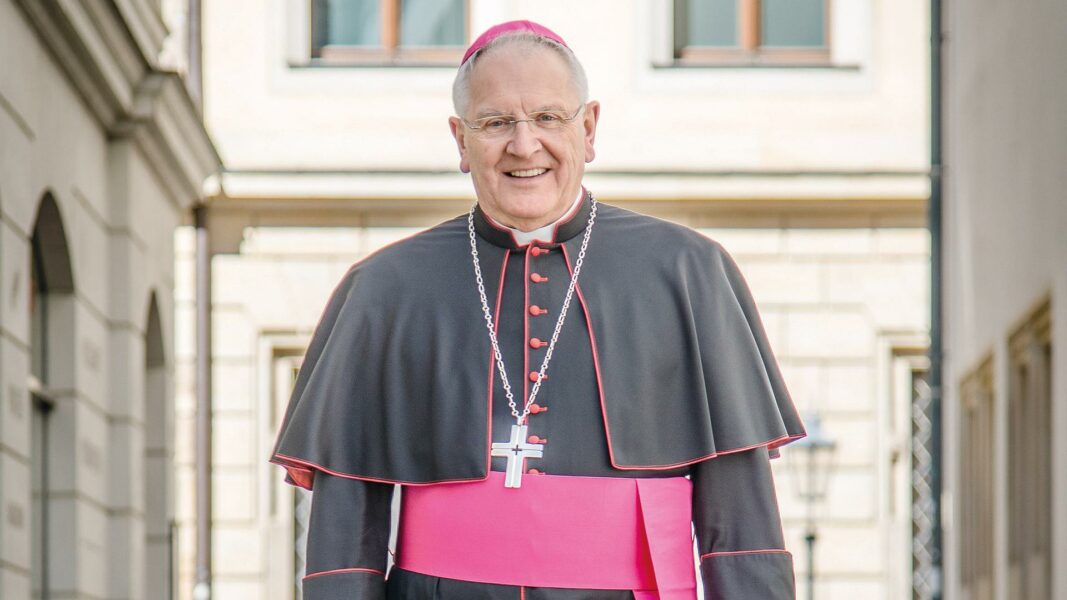
Pope Leo XIV has accepted this Wednesday, September 2, the resignation of Heinrich Timmerevers from the pastoral governance of the diocese of Dresden-Meissen, in Germany. The decision takes effect immediately and comes as the prelate has just turned 74, almost a year before reaching the age of 75 at which diocesan bishops are ordinarily required to submit their resignation to the Pope.
The departure had been anticipated on Tuesday by the German magazine Publik-Forum, although the information initially placed the retirement at the end of the year. The diocese itself has now confirmed that Timmerevers had requested to be relieved in Rome several months ago and that he even personally explained his reasons to Leo XIV during an audience. The bishop maintains that there is “no external cause or acute health reasons” behind his decision and attributes the step to the wear and tear caused by ten years at the head of the diocese.
The resignation comes, however, after months of controversies surrounding his administration, particularly over the process of clarifying sexual abuse cases and an real estate investment of nearly 50 million euros. Timmerevers also leaves behind a diocese that during his episcopate openly aligned itself with several of the main proposals of the German Synodal Way, especially regarding sexual morality and the recognition of homosexual persons.
A resignation almost a year before the scheduled age
Timmerevers turned 74 on August 25. According to canon 401 §1 of the Code of Canon Law, he was not required to submit his resignation due to age until August 25, 2027.
The Holy See’s communiqué merely states that Leo XIV “has accepted the resignation from the pastoral governance of the diocese of Dresden-Meissen presented by H.E. Msgr. Heinrich Timmerevers,” without specifying the circumstances of the decision.
The diocese, for its part, has offered a more extensive explanation. Timmerevers states that episcopal responsibilities have taken a significant toll on him:
“I feel that the multiple challenges and tasks of this responsibility have required an enormous amount of energy.”
For that reason, he explains, he decided to leave the leadership of the diocese “in younger hands.” According to his account, he made the decision after intense discernment in prayer and it does not respond to “any external cause or acute health reasons.” He adds that the diocese needs “leadership with full capacity to act” and acknowledges that “age and numerous tasks” have also left their mark on him.
Criticism over the clarification of abuse cases
One of the main conflicts in recent years has been the process of clarifying sexual abuse cases in Dresden-Meissen.
In 2023, an independent commission shared by the archdiocese of Berlin and the dioceses of Dresden-Meissen and Görlitz, as well as military pastoral care, began operating. The structure originally had nine members: two appointed by victim representatives, four by the federal states, and three by the Church. After successive resignations, the bishops decided to dissolve it in June 2025.
Dresden-Meissen subsequently opted to create its own diocesan structures. The process has not been without difficulties. The diocese itself acknowledges that it initially found no victims willing to join the new commission and commissioned historian Bernd Schäfer to conduct a study on cases recorded since 1945 and the Church’s institutional response, with conclusions expected by mid-2027.
In July, public broadcaster MDR reported criticism from victims denouncing a lack of dialogue with the bishopric. According to the outlet, 67 victims of sexual abuse are currently known within the diocese. One of them, Sabine Otto, also questioned the independence of the study commissioned by Timmerevers due to the historian’s prior relationship with the diocese. The bishopric responded that it remained open to the participation of those affected and later announced that a victim had already joined the new process.
A 48 million euro investment
The other focus of criticism has been the new Propst-Beier-Haus, the building that has housed the episcopal administration since last autumn.
According to local media, between 40 and 50 million euros were reportedly allocated to the project. The diocese’s official documentation allows the figure to be specified: the planned investment budget is around 48 million euros.
The diocese maintains that the former administrative headquarters required a thorough renovation and that, after analyzing various alternatives, construction and relocation proved to be the most suitable option. It also notes that the diocesan economic bodies participated in the planning process for several years. Approximately 40% of the new complex’s surface area can be allocated to office and residential rentals.
The investment coincided with an economic adjustment process through which the diocese aims to save a double-digit million euro amount annually in the long term. During Timmerevers’ episcopate, a major territorial reorganization also took place: the 97 existing parishes were grouped between 2017 and 2020 until reduced to 37.
Supporter of the Synodal Way and changing sexual morality
Timmerevers has also been one of the German bishops most clearly aligned with reform proposals regarding homosexuality and sexual morality.
In 2020, he specifically commissioned a priest and a pastoral agent to care for homosexual persons in Dresden-Meissen. The diocese itself explained at the time that the bishop wanted to strengthen their “acceptance and tolerance” within Catholic communities.
In an interview given that same year to KNA, he went further. He argued that the Catholic Church needed to “reposition itself” regarding homosexuality and expressed support for allowing the blessing of same-sex couples. When specifically asked if he would welcome such an opening, he replied: “Yes,” although he added that its concrete form would need to be determined.
A year later, he participated alongside the bishop of Essen, Franz-Josef Overbeck, in the volume Katholisch und Queer, whose episcopal texts proposed a development of Catholic sexual morality based on new perspectives from the sexual sciences. Timmerevers then maintained that for centuries the Church had wrongly judged certain people and left them on the margins.
His position became even more explicit in 2025. In statements to Herder Korrespondenz, he declared that “the Church must also change in doctrine,” specifying that it needed to develop and deepen it. Regarding homosexuality and gender issues, he also argued that the creation narrative in Genesis needed to be “rethought” and stated that in the human sciences there are “precursors that the Church must follow.”
Timmerevers was also part of the Assembly of the German Synodal Way as a member of the German Bishops’ Conference. The official list of participants still included him among the assembly members in January 2026.
His own diocese, in reviewing his ten years of episcopate this Wednesday, highlights precisely that Timmerevers “advocated for the strengthening of synodal structures,” promoted greater lay participation in celebrations and parish life, and supported “greater integration and appreciation” of queer people within the Church.
Read also: German bishops promote recognition of “sexual diversity” in Catholic schools
His episcopal jubilee becomes a farewell
The date chosen by Rome adds a particular circumstance to his departure. Timmerevers is celebrating precisely this September 2 the 25th anniversary of his episcopal consecration.
The diocese had planned to celebrate the anniversary this Saturday, September 5, with a solemn Mass in Dresden Cathedral and a subsequent event with several hundred guests. The homily will be delivered by Heiner Wilmer, president of the German Bishops’ Conference. Numerous German and foreign bishops are also expected to attend. The celebration will now become Timmerevers’ official farewell from diocesan governance.
The bishop, who has governed Dresden-Meissen since August 2016 and previously served as auxiliary bishop of Münster, will remain in Dresden and has announced his willingness to continue collaborating pastorally during his retirement.
With the acceptance of the resignation, the vacant see has begun immediately. The cathedral chapter has eight days to elect a diocesan administrator while the procedure to appoint his successor begins. Due to the concordat particularities applicable to Dresden-Meissen, the Holy See will prepare a list of three candidates and the chapter will choose the new bishop from it, who will subsequently be appointed by Leo XIV.