A Boston College philosopher returns to the psalms to point out the crack through which our age has let prayer fall.
There is a gesture that defines our time better than any survey. It is the one made by someone who, seeking a bit of peace on a Sunday in August, opens an app on their phone, selects “ten minutes of calm,” closes their eyes, and waits for a pre-recorded voice to teach them how to breathe. There is nothing ridiculous about it. Rather, it is a symptom. We have turned even silence into a downloadable function, and the inner life into a service with notifications. The question is whether what we are seeking—and so rarely finding—has anything to do with what for three thousand years was called prayer.
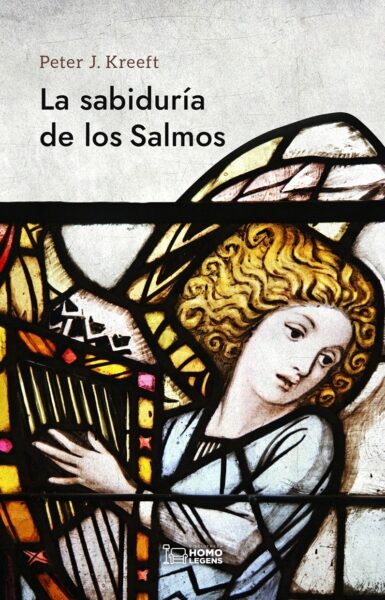
Peter Kreeft, professor of Philosophy at Boston College and one of the most widely read Catholic apologists in the English language, argues that it does not. He makes his case in a brief and incisive book, The Wisdom of the Psalms, which Homo Legens has made available to Spanish readers with a foreword by Scott Hahn. His diagnosis is uncomfortably simple: we have split the world into two halves, technique and feeling, and allowed everything important to slip through the crack between them. Prayer, first of all.
It is worth explaining the fracture, because everything else depends on it. At one extreme lies the obsession with method. We are surrounded by techniques: for sleeping, for concentrating, for managing anxiety, for “meditating.” Technique, Kreeft writes, is a way of minimizing effort; it works precisely when we can press a button and disengage. At the other extreme is the cult of feeling, the suspicion that only what is felt is authentic and that a prayer without emotion is a false prayer. Between the engineer and the sentimentalist, there is no room left for the one who loves. And praying, the author insists, “is not essentially a way of thinking, but a way of loving.”
That is the heart of the matter. Prayer is not a spiritual technology, not even the most sophisticated one. Technique minimizes effort; prayer maximizes it. The first treats matter in the most efficient way to satisfy our desires for power, pleasure, and security; the second does not seek to change things, but to change the heart that desires them. To confuse them is to ask prayer to perform like an app and then discard it, disappointed, when it does not “work” within the span of a session. It is the consumer’s mistake, not the believer’s.
This is not about despising calm or canonizing anguish. It is about recognizing a trade-off. The wellness industry promises serenity in exchange for almost nothing: a few minutes, a subscription, no conversion. Christian prayer promises the opposite of a shortcut. It asks for time, constancy, and above all, a recipient: one does not pray into the void or to one’s improved self, but to Someone. The difference between relaxing and praying is the same as between looking in the mirror and looking into another’s face. The first rests; the second transforms. And no app has ever produced a saint, while the Psalter has produced them by the thousands.
The contrast becomes sharper when Kreeft recalls how Christ answered the only request his disciples made on this point. They did not say “give us faith” or “make us holy,” but “teach us to pray.” And the answer was not a technique, nor a method, nor a spiritual yoga. It was words: the Our Father and, before that, the psalms, the prayer book that Israel had prayed for centuries and that Jesus prayed throughout his life, even on the cross, where he died reciting Psalm 22: “My God, my God, why have you forsaken me?” God, in response to the plea “teach us to pray,” did not deliver a manual of instructions. He delivered a book of poems.
And here emerges what makes the psalms an exact antidote to consumerist sentimentalism. They are not curated emotions or handbook positivity. They contain the full range of the human, including what we would prefer to filter today: anger, fear, helplessness, the thirst for justice that in Psalm 137 goes so far as to curse by the rivers of Babylon. Kreeft does not disguise it: many psalms seem “primitive, selfish, furious, or even childish.” But that rawness is deliberate. Against a culture that edits its feelings like retouching a photograph, the psalm teaches us to present ourselves before God whole, without makeup, with rage and terror included. It is the opposite of prefabricated calm: it is honesty without anesthesia. That is why, three thousand years later, they still sound as if they were written this very morning.
There is a second blow in the book, this one directed inward at the Church itself, and it is perhaps the bravest. Kreeft asks what part of clerical formation truly aims to teach prayer, and answers with stinging frankness: we remain clericalist even in this, and take it for granted that praying is the business of priests and religious while the laity wait for someone up above to solve it. “Even a pope can disappoint,” he writes. His conclusion is not bitter, but mobilizing: “reform must come from the bottom up. And you are at the bottom.” The recovery of prayer will not come from a document or a commission: it will begin the day a father, a student, or an ordinary retiree opens the Psalter and decides to pray it. The reform that matters is not convened; it is practiced.
The psalms, moreover, cannot be reduced to information. They are poetry, and a poetry built—Kreeft reminds us—on parallelism: each idea is said twice, in different words, like two nails that hold a board better than one. They appeal simultaneously to head and heart, to understanding and love, and therefore resist summary and headline. They are not consumed: they are ruminated. In an age that wants everything at a glance, that deliberate slowness is already a form of resistance.
None of this requires being an intellectual, and Kreeft—who is one—hurries to deny it. Contemplative prayer, he warns, is not an exercise for philosophers, monks, or specialists of the spirit. Its essence is not thought, but love. He cites the definition given by a peasant to the holy Curé of Ars about what he did for so many hours before the tabernacle: “I look at Him, He looks at me. Nothing more.” No technique teaches that, nor can any feeling replace it. Only the patient, humble habit of returning to the same words until they cease to be ours and become prayer.
There remains the practical question, the one an honest reader asks upon closing the book: where does one begin? Kreeft does not propose a program. He proposes a gesture as old as the Church and so new that it feels almost subversive: to take the book that God Himself wrote so that we might speak to Him, and use it. His commentary—thirteen psalms read with the eye of the philosopher and the ear of the poet—does not aim to replace the great works of the genre; he himself notes that St. Augustine’s homilies on the psalms, whose feast the Church celebrates a few days later, remain unsurpassed. He only wants to restore to us the habit we have lost.
Perhaps that is the best plan for a Sunday in August, when the noise subsides and for a moment silence seems possible. Not to download one more app. Instead, to open the most ancient of prayer books and discover that that voice “coming from you and from me” has been waiting for three thousand years. It is not a technique. It is not a feeling. It is, quite simply, the school where the West learned to speak with God and which now, amid algorithms and moods, runs the risk of forgetting.