


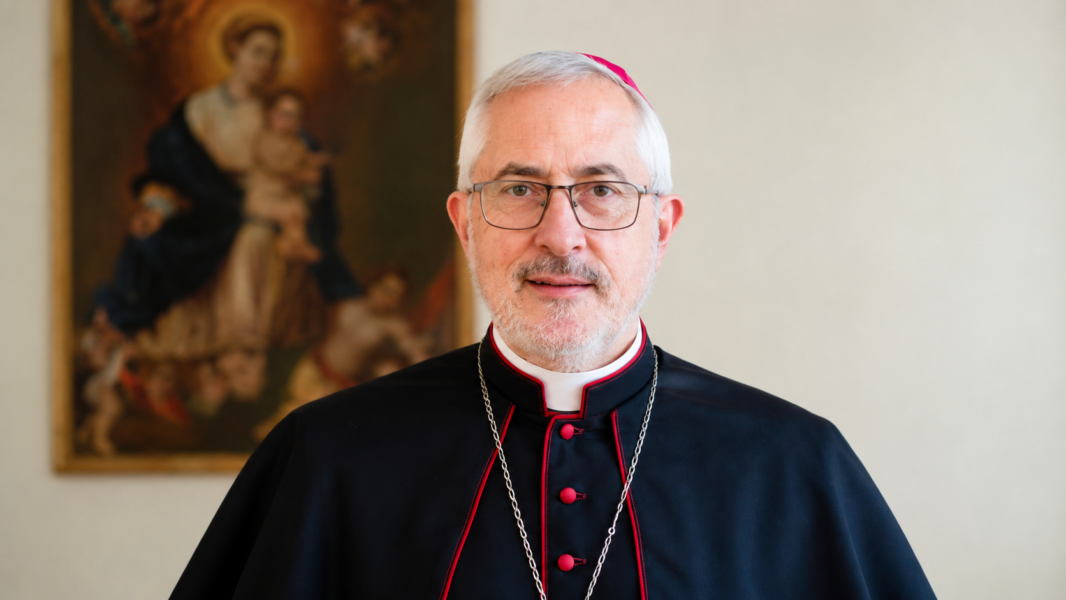
The Archbishop of Tangier, Monsignor Emilio Rocha Grande, has once again spoken about the consequences of the massive influx of immigrants from Morocco to Ceuta recorded at the end of July and has defended the creation of regular immigration channels linked to employment and training. In an interview given to the SIR agency, the prelate has emphasized the deaths during attempts to reach Spanish territory and the situation that the autonomous city continues to face.
The statements come three weeks after an unprecedented migratory crisis in Ceuta. The Spanish Government has subsequently placed the number of people who entered from Morocco on July 30 and 31 at around 80,000, although the majority later returned to the neighboring country. The presence of thousands of people and numerous unaccompanied minors continues to put pressure on the city’s resources.
Rocha focuses on the deceased
The archbishop begins his analysis with those who lost their lives trying to reach Spain. «My thoughts go above all to the boys and girls who have lost their lives. For me, this is the most painful situation,» Rocha states, before pointing out that political, social, and economic assessments must be made without losing sight of the human cost of what happened.
«Each one of them is a child of God, even if many do not know it. Each one had projects, dreams, hopes, and also disappointments,» the prelate states, recalling that many put their lives at risk hoping to find a better future in Europe.
Rocha also calls for prayers for the dead and wounded and for the inhabitants of Ceuta, who continue to face the consequences of the crisis.
Thousands of people still remain in Ceuta
According to the archbishop’s explanation to SIR, the situation in the Moroccan town of Fnideq, near the border, has calmed down after the days at the end of July. The situation is different in Ceuta, where thousands of people remain and there is a significant presence of unaccompanied minors.
Rocha points out the limitations of a city of reduced dimensions to assume such migratory pressure and warns of the health, food, and security difficulties that arise as the situation prolongs.
The figures on the people who still remain in the city vary according to sources. RTVE indicated this week that estimates ranged between around 5,000 and more than 8,000 people, while authorities work to expand temporary reception spaces.
The mirage of a Europe without difficulties
The archbishop insists on a diagnosis he had already publicly raised during the first days of August: Morocco is not a poor country, but a developing nation that presents significant inequalities and where numerous young people aspire to improve their living conditions.
In his opinion, social networks play an important role in transmitting an image of Europe that does not completely correspond to reality: high salaries, widespread prosperity, and absence of unemployment or difficulties.
This is compounded by the image that some Moroccans residing in European countries transmit when they temporarily return to their country. According to Rocha, they often present a more favorable situation than the one in which they actually live.
InfoVaticana already reported this analysis by the prelate at the beginning of August, when Rocha warned young Moroccans against the illusions that present Europe as «a paradise on earth.»
The risk of throwing oneself into the sea without knowing how to swim
Rocha also draws attention to the specific circumstances in which numerous young people attempted to reach Ceuta. Some, he explains, came from inland areas of Morocco and did not even know how to swim.
The short distance that separates certain points of the Moroccan coast from Ceuta can create the impression that reaching Spanish territory by sea is relatively simple. However, currents can drag those trying to stay afloat with precarious means toward open waters.
«Many people have died and the bodies of many will never be found,» the archbishop laments, describing the situation as one of «great desperation.»
The Church’s work in Morocco
The archbishop also explains the work carried out by the Church in the face of the migratory phenomenon. The Archdiocese of Tangier has had a Diocesan Commission for Migrations for about fifteen years that develops its activity mainly in Tangier, Tetouan, and Nador, the latter near Melilla.
During the current crisis, a team has also moved toward the Ceuta border.
The assistance, according to Rocha, is not limited to providing material help. The Church offers psychosocial support and assistance with documentation, both for those who intend to remain legally in Morocco and for those who wish to return to their countries of origin.
«It is not a question of building walls»
Asked about the European response to immigration, Rocha acknowledges that the Diocesan Commission also receives funding from the European Union, so he rejects speaking of abandonment by Brussels. However, he does question the general approach of migration policy.
«It is not a question of prohibiting access, building walls, or putting up more barbed wire,» he maintains.
The archbishop proposes carrying out more intense work of «promotion and training» and establishing mechanisms that allow regular immigration directly linked to job positions.
Rocha cites Spain as an example, where he recalls the decline in birth rates and the need for workers in certain sectors. In his opinion, many of the young Moroccans who aspire to emigrate have the capacity to learn the language and acquire a profession.
His proposal is that those who arrive in Europe can do so «with a work contract, in a regular manner» and subsequently integrate «into society and culture.»