


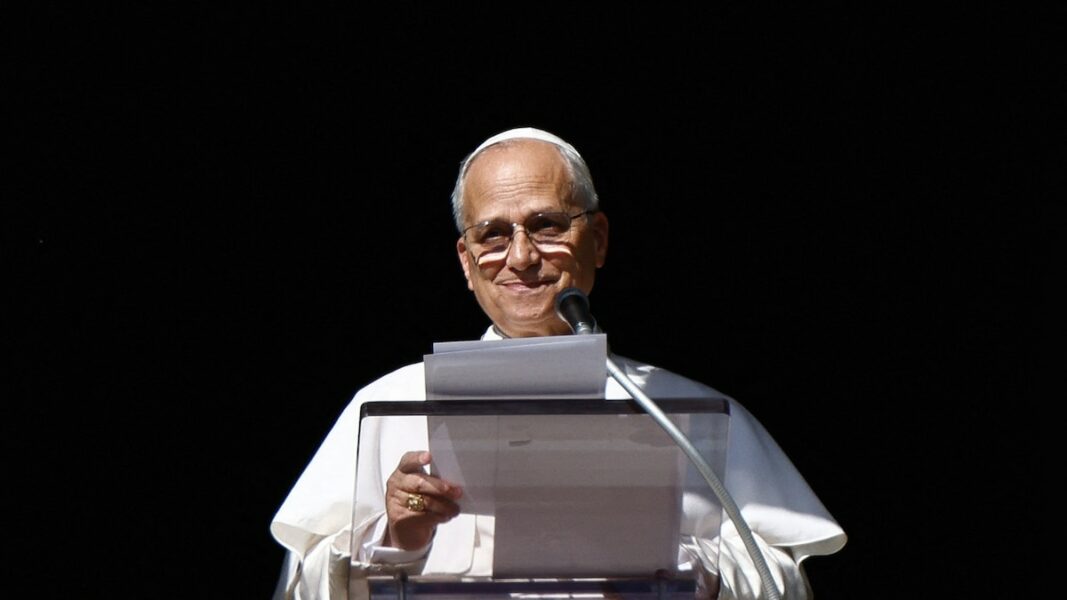
The most revealing aspect of the words that Leo XIV dedicated this Sunday to Ceuta lies not in what they say, but in their syntax.
«I continue to follow with concern the alarming situation in Ceuta, asking God, through the intercession of Our Lady of Africa, that solutions of peace, stability and justice may be found».
Thirty-three words, three abstract nouns and not a single proper name belonging to politics: the only ones present are God, a city and its patron saint.
Morocco does not appear. Spain does not appear either.
What happened at the Tarajal border is filed away as a “situation,” a category that shares with storms the property of lacking an agent. And the solutions are neither demanded nor even requested: it is asked “that they may be found,” the subjunctive of a subjunctive, the possibility of a possibility.
A “situation” without a subject
It is worth recalling what that word encompasses.
Between fifty and seventy thousand people entered Ceuta in a matter of two days, in a city of just over eighty thousand inhabitants. More than seventy people died in the attempt. Italy suspended Schengen with Spain and the European Union’s interior ministers are holding an emergency meeting this Tuesday.
None of this is a natural phenomenon.
The method has been documented since May 2021, when the European Parliament condemned the Moroccan authorities for the use of minors in the Ceuta migration crisis, triggered after the deliberate relaxation of border controls.
Then there were nine thousand; the mechanism was identical and the scale, a rehearsal.
Those who crossed this week, mobilized through social media and already returned in their vast majority, are the ammunition, not the army; the army is the State that opens the door.
Even eldiario.es, hardly suspect of border alarmism, has written these days that “Morocco is not a friendly country” and that Rabat uses its own population as an instrument of its aspirations over the city.
The syntax of diplomacy
No one can claim that the Pope is unaware of what city that is.
He spoke in Spanish, addressing Spain without naming it. He invoked the patron saint of Ceuta, the only non-neutral gesture in the text, because praying to the patron saint of a city is to recognize to whom the city belongs.
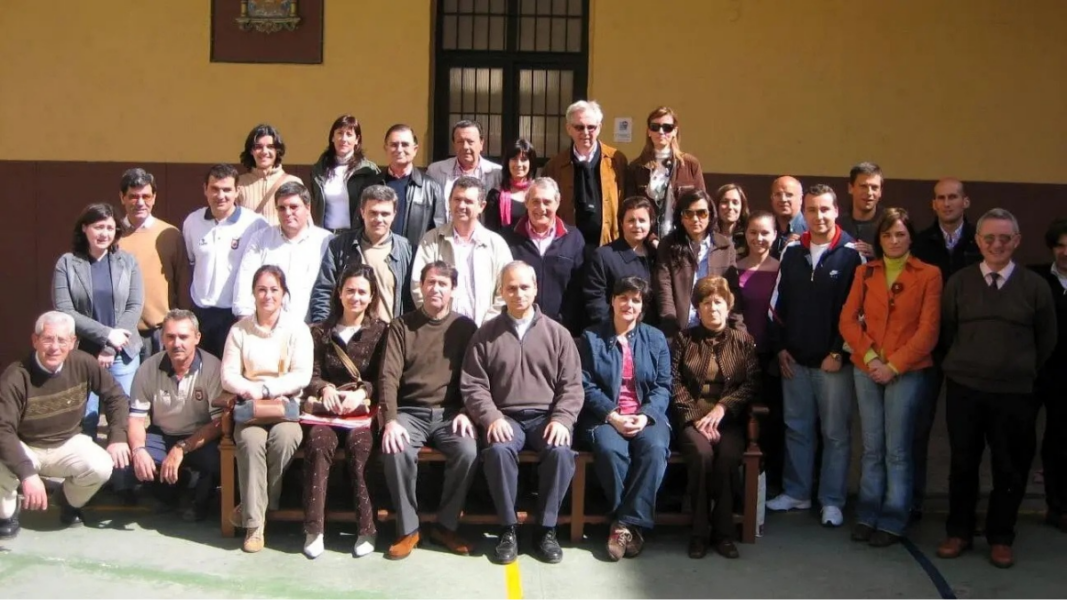
And Robert Prevost walked through Ceuta in 2007, as prior general of the Augustinians, visiting the school of his order. He knows the place, its coexistence and its border.
Precisely for that reason the syntax does not admit the excuse of distraction.
It is the record of a diplomacy that maintains with Rabat a file of its own —the partner of “moderate” Islam, Francis’s 2019 trip— and that does not intend to spend it on the Tarajal breakwater.
There is no need to attribute intentions: it is enough to read the construction.
The contrast within the Church itself
The contrast, moreover, was not introduced by the hostile press, but by its own episcopate.
On the same day, the president of the Spanish Episcopal Conference, Luis Argüello, wrote that “demography is a weapon” and denounced the instrumentalization of migrants as political pressure.
An archbishop of Valladolid naming the mechanism that the Bishop of Rome leaves in ellipsis.
Meanwhile, Vatican News headlined the chronicle of its own boss by focusing concern on the thousands of migrants who tried to reach Spain: the same sentence, read from the overwhelmed city or from those who overwhelm it.
The Pope who in June, in the Canary Islands, met with migrants and humanitarian organizations knows how to pronounce names when the subject is the one who crosses; reserve appears when the subject is the one who pushes.
When a thirty-three-word text simultaneously serves two opposing readings, ambiguity is not an accident: it is the genre.
The missing name
What is asked of God deserves the same rigor as what is asked of men.
Peace requires knowing between whom; stability, of what; justice, for whom and against whom.
The three things the Pope requests begin with a proper name that the text withholds.
To Our Lady of Africa, who has watched over Ceuta for centuries, intercession can be entrusted; what cannot be entrusted to her is to supply the silence of the one who does have a voice in the chancelleries.
In Ceuta, according to Rome, nothing has happened: something has occurred. And as long as the subject remains tacit, the solutions will remain in the subjunctive.