


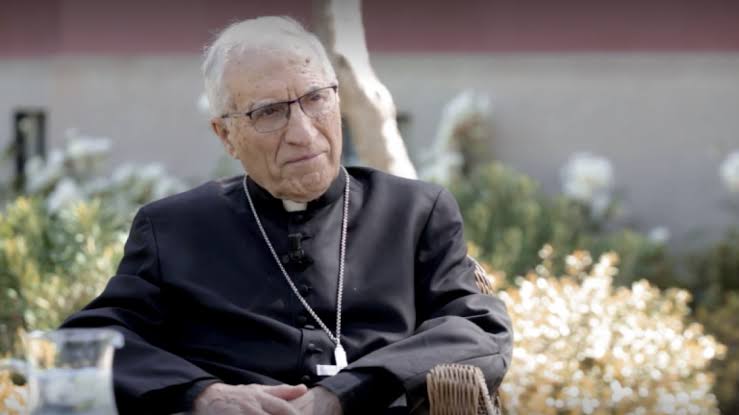
Cardinal Antonio María Rouco Varela has praised the magisterium of Leo XIV and has stated that the new Pontiff is reminding the Church of the need to “return to the Second Vatican Council,” while clearly reaffirming the fundamental truths of the faith. This is what he affirms in an interview given to El Debate, in which the archbishop emeritus of Madrid addresses some of the main challenges facing the Church today.
On the verge of turning 90 and after having participated in the extraordinary consistory held in Rome at the end of June, Rouco reflects on the pontificate of Leo XIV, the crisis of faith in Europe, the German Synodal Way, and the consequences of the reception of the Second Vatican Council.
“He has the fundamental truths of the faith very clear”
The archbishop emeritus of Madrid explains that he has closely followed both the writings and the interventions of the Pontiff, especially during his recent apostolic journey to Spain. In his view, Leo XIV is developing a magisterium deeply centered on Christ and the Eucharist.
“You find the concern of a Successor of Peter who has very clear what the fundamental truths of the faith are and what the fundamental principle of that fidelity to the truth is,” he states.
Rouco also highlights the Pope’s constant references to eternity, Christian hope, and personal conversion, as well as the importance he places on the defense of life and the dignity of the human person from a transcendent perspective.
According to the cardinal, the magisterium of Leo XIV once again places “what is essential” at the center of the Church’s life, from which the social and cultural challenges of the present can also be addressed.
“We must return to the Second Vatican Council”
Mons. Rouco also comments on Leo XIV’s decision to dedicate his catecheses to the Second Vatican Council. For the prelate, this choice constitutes a call to rediscover the authentic meaning of the Council.
“It is curious, but he has already chosen the Second Vatican Council as the theme for his catecheses, which is a wake-up call to everyone. We must return to the Second Vatican Council, since it is the immediate, clear, evident, and unequivocal source of what is asked of the Church for a long time. We still have a great deal of room for the application of Vatican II ahead of us.”
The cardinal also maintains that there is a fundamental continuity between Leo XIV and his predecessors, although he observes a special emphasis on Christocentrism and the supernatural identity of the Church.
The Church “is not a parliament”
Rouco also refers to the concern in Rome regarding the so-called German Synodal Way, an issue that, he explains, was also present at the recent consistory.
The cardinal insists that the Church cannot be understood through political categories and rejects any view of the College of Bishops as an organ that controls the Successor of Peter.
“The College of Bishops is not a kind of parliament, a Senate that controls the head,” he states, while recalling that the best image for understanding the constitution of the Church is that of a family presided over by the Bishop of Rome.
He also rejects speaking of “national churches” and recalls that the Church is “one, holy, catholic, and apostolic,” above any state reality.
The crisis of faith in Europe
Rouco maintains that the difficulties the Church is experiencing in Germany are the consequence of a broader crisis of faith that has affected much of Western Europe for decades.
He explains that when faith in God and in Jesus Christ weakens, the understanding of the nature of the Church is also lost, reducing it to a merely social reality. In his analysis, he places the origin of this process in a historical evolution rooted in the Enlightenment, which was later aggravated by the atheistic ideologies of the twentieth century, especially Marxism-Leninism and National Socialism.
The liturgical question
The cardinal also addresses the situation of the traditional liturgy, an issue on which he had already spoken recently. He reiterates that the use of the rite prior to the liturgical reform does not constitute a doctrinal problem, but rather a disciplinary and pastoral one, although he warns that disobedience to ecclesiastical authority ultimately affects the unity of the Church.
At the same time, he recalls that after the Second Vatican Council, liturgical abuses occurred in many places which, in his judgment, distorted the meaning of the Eucharistic celebration and led some of the faithful to return to the liturgy prior to the conciliar reform. Rouco maintains that these abuses help explain the origin of part of the current liturgical debate, although he notes that disobedience constitutes a different problem that affects ecclesial communion.