


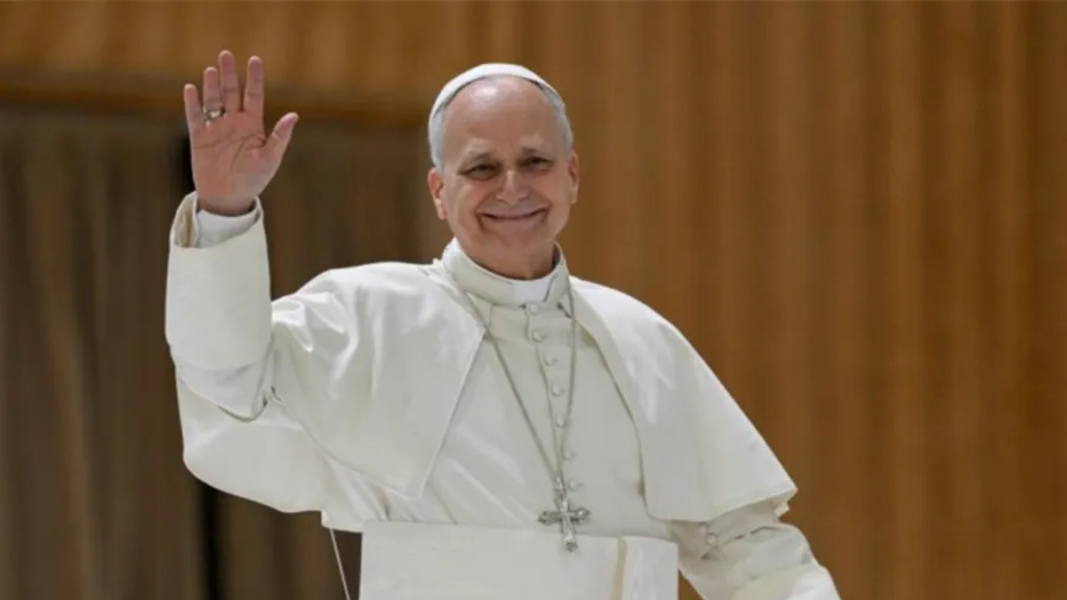
Vatican News published this Monday an editorial signed by Andrea Tornielli, editorial director of the Dicastery for Communication since the pontificate of Francis, in which he maintains that Pope Leo XIV “always speaks as a pastor,” even when addressing issues such as war, immigration, or artificial intelligence.
The text comes days after The New York Times attributed to the United States Ambassador to the Holy See, Brian Burch, the claim that the Pontiff’s assessments regarding the conflict with Iran should be understood in his capacity as head of state and not as an expression of his magisterium.
The editorial, titled “The Pope’s word is always that of the Pastor”, argues that the fact that the Bishop of Rome is also sovereign of the Vatican City State by virtue of the Lateran Pacts of 1929 does not mean that he acts or expresses himself as a political leader when he intervenes on matters affecting humanity.
The sovereignty of the Vatican at the service of the spiritual mission
Tornielli affirms that the existence of the Vatican City State responds to the need to guarantee the full independence of the Successor of Peter to exercise his spiritual mission and not to the existence of a dual political and religious function.
To support this idea, he cites the address delivered by Saint Paul VI before the General Assembly of the United Nations on October 4, 1965. In that intervention, the Pontiff explained that the limited temporal sovereignty of the Holy See exists solely to ensure the freedom with which it can carry out its spiritual mission.
“It has no temporal power, nor any ambition to compete with you; we have nothing to ask for, no question to raise; only, if anything, a desire to express and a permission to request: that of being able to serve you in what is given to us to do, with disinterestedness, humility, and love.”
The author of the editorial also recalls words spoken by then-Cardinal Giovanni Battista Montini in October 1962, in which he maintained that, after the end of the Papal States, the papacy was able to develop with greater vigor its mission as teacher and witness of the Gospel.
“He is not speaking as head of state”
The article maintains that “any exaltation or overemphasis of the Pontiff’s role as head of state is misleading,” because it diverts attention from his “only true mission as universal pastor.”
As an example, Tornielli mentions the Pope’s interventions in defense of human life, his calls for peace and disarmament, the invitation to move beyond the concept of “just war,” the recourse to dialogue and negotiation, the defense of the dignity of migrants, attention to the poor, religious freedom, and care for creation.
“The Successor of Peter is not speaking as head of state. He is simply proclaiming the Gospel.”
The statements attributed to the U.S. ambassador
The publication of the text comes after The New York Times published an interview with Brian Burch, the United States Ambassador to the Holy See, whose full transcript has not been released, in which the New York newspaper attributes to him having questioned the scope of the Pope’s statements on the war between Israel, the United States, and Iran.
According to the version offered by the newspaper—later picked up by other U.S. media such as The Washington Post—Burch would have maintained that the Holy See “has neither said nor will it definitively declare” whether that conflict constitutes a just or unjust war, and that when the Pope speaks on these matters, he does so in his capacity as sovereign of the Holy See, comparable to other heads of state, and not as head of the Catholic Church.
The newspaper adds that, in the diplomat’s view, the Pontiff has limited information about the conflict and therefore cannot issue a definitive judgment on its legitimacy.
It should be noted that these statements are known only through the editorial filter of the U.S. press, in an election year in which relations between the White House and the Holy See are subject to conflicting political interpretations. Neither the U.S. Embassy to the Holy See nor Burch himself has so far published their own version of his words, nor have they confirmed or denied the scope attributed to them by the New York newspaper.
A publication interpreted as a response
Vatican correspondent Gerard O’Connell, of America Magazine, noted that editorials of this scope usually have the approval of the highest authorities of the Holy See and considered that the text was directed at the U.S. ambassador, although without naming him explicitly for diplomatic reasons. This is, in any case, an interpretation by the Vatican correspondent himself, which the Holy See has not confirmed.
In the German edition of Vatican News, moreover, the article was illustrated with a photograph showing Leo XIV and Brian Burch together.
Tornielli, a veteran Vatican journalist, was one of the most influential figures in Vatican communications during the pontificate of Francis, for whom he often served as interpreter. His continuity at the helm of the editorial line of the Holy See’s media outlets under the new pontificate, at a time of reorganization of the Dicastery for Communication, is the subject of attention among Vatican observers.
Relations marked by previous disagreements
This is not the first time that public disagreements with statements by the Pontiff have been attributed to Brian Burch. Since taking office in 2025, after being appointed by President Donald Trump, he has on several occasions defended the positions of the U.S. Administration regarding some interventions by Leo XIV.
Before assuming the diplomatic post, Burch headed the organization Catholic Vote, close to Trump’s political circle, and was critical of some decisions of the pontificate of Francis. Among other issues, he questioned the removal of U.S. Bishop Joseph Strickland and spoke out against the declaration Fiducia supplicans.
In an interview granted to the Italian newspaper Avvenire—this one published with his direct words—the ambassador stated that there are more points of agreement between Donald Trump and the Pope than are usually perceived. He also said that Leo XIV had personally explained to him that his visit to the Italian island of Lampedusa on July 4 was not intended to be interpreted as a gesture against the United States.
Burch himself also highlighted that on the same day the Pontiff went to dinner at the residence of the U.S. Ambassador to the Holy See, a visit he described as exceptional in the recent history of diplomatic relations between the two states.