


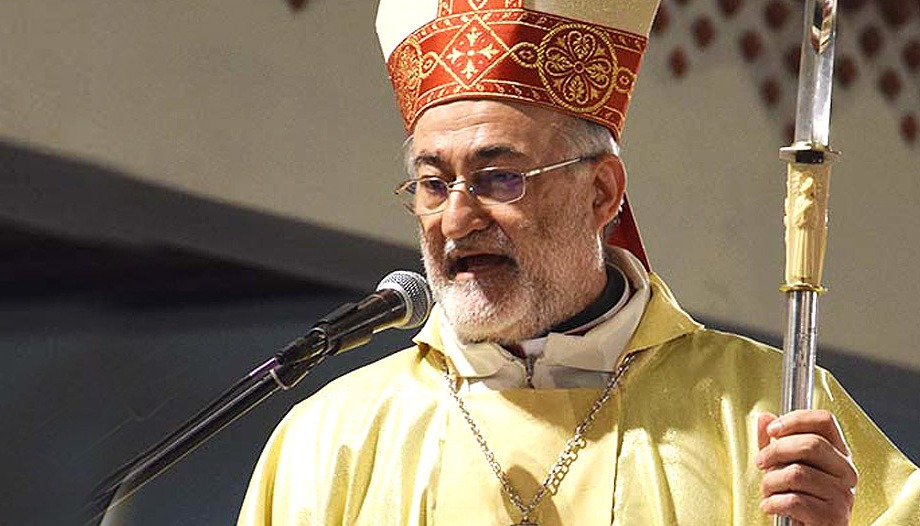
The preliminary investigation opened by the Holy See against Cardinal Cristóbal López Romero has placed one of the Spanish cardinals with the greatest international projection at the center of current events. Archbishop of Rabat since 2018 and created cardinal by Pope Francis in 2019, the Salesian from Almería has carried out most of his ministry outside Spain and has become a well-known figure for his positions on dialogue with Islam, immigration, synodality, and some of the main reforms promoted during the pontificate of Francis.
López Romero himself announced on July 7 that he was temporarily suspending all public and pastoral activity after the Holy See opened a preliminary investigation following complaints of alleged inappropriate behavior toward several adult women. According to the AFP news agency, at least five women have filed complaints. The cardinal has categorically denied the accusations and has stated that he will fully cooperate with ecclesiastical authorities.
Until the opening of this investigation, López Romero was mainly known for his frequent interventions on some of the most controversial debates in the contemporary Church: synodality, mission in Islamic contexts, immigration, the role of women, priestly celibacy, and his defense of documents such as Fiducia supplicans.
From Almería to the Salesian mission
Cristóbal López Romero was born on May 19, 1952, in Vélez-Rubio (Almería). He entered the Salesian Congregation in 1964 and professed his first religious vows four years later. He studied Philosophy and Theology at the Salesian seminaries in Girona and Barcelona, where he also studied Journalism.
He was ordained a priest in 1979 and soon began a long missionary career outside Spain. Between 1984 and 2002, he worked in Paraguay, where he held various responsibilities until becoming provincial of the Salesians from 1994 to 2000. During those years, he also obtained Paraguayan nationality.
He was later assigned to Morocco, where he served from 2003 to 2010, before being appointed Salesian provincial in Bolivia from 2011 to 2014. After a brief return to Spain, Pope Francis appointed him Archbishop of Rabat on December 29, 2017.
A cardinal for a minority Church
López Romero received episcopal ordination on March 10, 2018, at the hands of Cardinal Juan José Omella. In May 2019, he also assumed the apostolic administration of the Archdiocese of Tangier, and a few months later, on October 5, Francis created him a cardinal with the title of San Leone I.
His appointment surprised many observers at the time. The Archdiocese of Rabat has only about 20,000 Catholics spread across 18 parishes, and Morocco had never had a cardinal. The decision was interpreted as recognition of the importance Francis placed on minority Churches, interreligious dialogue, and the Catholic presence in North Africa.
From Rabat, López Romero repeatedly presented the Moroccan Church as a community called to be a “bridge” between Europe and Africa, between Christians and Muslims, and between different cultures.
Evangelizing without proselytism
One of the most characteristic features of his ministry has been his understanding of mission in a predominantly Muslim country.
During Pope Francis’s visit to Morocco in 2019, he described the local Church as a “Samaritan” community, dedicated to serving without asking about people’s origin or religion.
In various interviews, he summarized this vision with a phrase that became one of the most cited of his ministry: “In Morocco we can and want to evangelize, but not proselytize.”
This approach was welcomed by those who advocate a model of interreligious dialogue based on the witness of life, although it also drew criticism from those who believe that such a formulation may obscure the missionary mandate to explicitly proclaim Christ.
Synodality as a change of model
If there is one area in which López Romero has shown particular commitment, it is the synodality promoted during the pontificate of Francis.
In various interviews, he described the synodal process as “revolutionary,” considering that it represents a new way of living ecclesial communion through greater participation of the entire People of God.
After the conclusion of the Synod, he stated that those who disagree with the decisions finally adopted are “morally obliged” to support them out of ecclesial communion.
He also recalled that among the working groups opened after the Synod are issues such as priestly celibacy and the role of women in the Church, matters which, in his view, remain open for study.
During the general congregations prior to the 2025 conclave, he also maintained that respect for the norms of canon law constitutes a “peripheral” issue in the life of the Church, specifying that such norms must always serve the evangelizing mission.
His defense of Fiducia supplicans
As president of the Episcopal Conference of North Africa, López Romero publicly defended the declaration Fiducia supplicans, published by the Dicastery for the Doctrine of the Faith in December 2023.
In an essay titled Is Homophobia the Problem?, he called for interpreting the document from a pastoral perspective and criticized reactions that demanded its rejection or disobedience. For the cardinal, the declaration did not change the doctrine on marriage but offered pastoral criteria for accompanying people in irregular situations.
His defense of the document placed him among the bishops who most clearly supported one of the most controversial decisions of Francis’s pontificate.
Immigration as a central theme of his discourse
The issue of migration has occupied a central place in his public interventions.
López Romero has repeatedly advocated for a broad welcome to immigrants and has criticized European policies of tightening border controls. In various interviews, he described some of those policies as “mean,” “selfish,” and “short-sighted,” and rejected discourses that present immigration as a threat to Europe.
He has also insisted that Christians must view the migratory phenomenon from the perspective of human dignity and the causes that provoke it—especially war and poverty—rather than from exclusively political or economic criteria.
Statements that sparked debate
When asked about his political position, he responded with a phrase that received wide circulation: “The extreme left is too far to the right for me; I belong to the Gospel.”
In other interventions, he defended that Francis had not changed the doctrine of the Church, although he had opened new spaces for pastoral reflection.
He also criticized those who justify certain wars from perspectives presented as Christian and used the expression “clerical far-right” to refer to some ecclesial sectors particularly critical of Francis’s pontificate.
The investigation opened by the Holy See
The investigation opened by the Holy See constitutes the most delicate episode in López Romero’s ecclesiastical career.
According to AFP, the complaints were filed by at least five adult women and refer to events that allegedly occurred between 2009 and 2024. Various international media outlets indicate that the accusations include alleged inappropriate behavior, insistent and unwanted hugs, attempts at physical closeness, and, in one of the testimonies made public, alleged repeated sexual assaults. To date, the Holy See has not made public the specific nature of the complaints.
The statement issued by the Archdiocese of Rabat refers only to an investigation into “inappropriate behavior.” Subsequently, in statements to EFE, the cardinal himself assured that he had not committed “any assault, any act of violence, or any sexual harassment.”
In statements to the French daily La Croix, the vicar general of the Archdiocese of Rabat, Marc Helfer, confirmed that the complaints had reached the Apostolic Nunciature last April and stated that the diocese is fully cooperating with ecclesiastical authorities. “We do not know if these are really sexual assaults, but no one is covering anything up,” he declared.
For their part, Moroccan authorities have indicated that, for the time being, there is no criminal investigation open against the cardinal in the country.
In the statement signed on July 6, López Romero announced that he was temporarily stepping down from all public and pastoral activity so as not to interfere with the investigation. “I have already responded to my ecclesiastical superiors, with whom I will continue to cooperate fully,” he stated. He also asked for prayers for the affected persons, for the Archdiocese of Rabat, and for himself while the Holy See clarifies the facts.
The investigation makes López Romero the first Spanish cardinal in recent history to publicly face a canonical procedure for complaints of improper sexual conduct. Its outcome will be followed with particular attention not only by the Church in Morocco but also in Rome, where the cardinal continues to be a well-known figure for the positions he has maintained in some of the most relevant debates in ecclesial life in recent years.