


The publication of the documents from the Dicastery for the Doctrine of the Faith on the Priestly Fraternity of Saint Pius X (FSSPX) has sparked intense debate about their canonical consequences, especially regarding the validity of confessions and marriages administered by its priests.
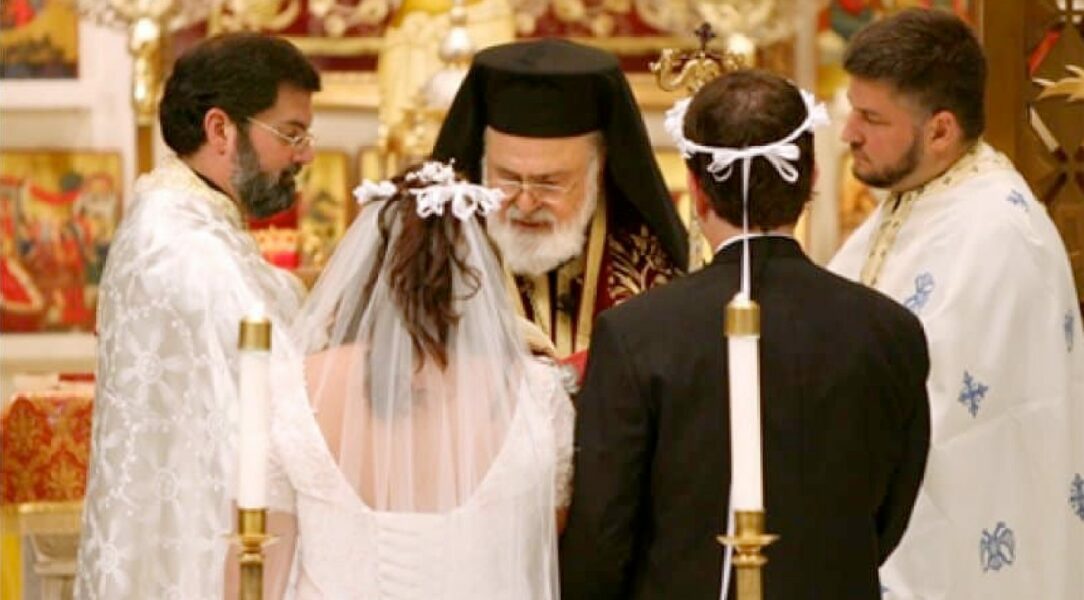
One of the questions most frequently raised in recent days is why the Catholic Church recognizes as valid the marriages celebrated in the Orthodox Churches, while the Explanatory Note published by the Dicastery maintains that marriages assisted by priests of the Fraternity would be invalid.
In statements reported by ACI Prensa, the priest and canonist Davide Cito, professor of Canon Law at the Pontifical University of the Holy Cross in Rome, argues that both situations correspond to different juridical and ecclesial realities.
The difference between the FSSPX and the Orthodox Churches
According to Cito, the Orthodox Churches are not in full communion with Rome, but neither are they in a situation comparable to the one the Dicastery currently attributes to the Priestly Fraternity of Saint Pius X.
“The Orthodox are not in full communion with the Catholic Church, but they are not excommunicated persons. By contrast, the Fraternity has committed a formal act of breaking ecclesial communion,” the canonist states.
Read also: The formula used by Tucho to excommunicate priests and laity lacks penal efficacy
In his view, this difference explains the distinct canonical treatment given to both realities. While the Eastern Churches have preserved apostolic succession and a valid priesthood, the situation described by the Dicastery regarding the FSSPX would have consequences for those sacraments whose celebration requires canonical faculty or authorization.
Cito also recalls that during the pontificate of Pope Francis, the priests of the Fraternity received faculties to validly absolve confessions and, in certain cases, to assist at marriages with the authorization of the competent ecclesiastical authority. According to his interpretation, the new situation described by the Dicastery represents a change from that regime.
Why does the Church recognize the Orthodox sacraments?
The professor recalls that relations between the Catholic Church and the Orthodox Churches underwent a significant change after the Second Vatican Council. In December 1965, Saint Paul VI and Ecumenical Patriarch Athenagoras I lifted the mutual excommunications pronounced in 1054, initiating a new stage of dialogue between East and West.
Although that gesture did not restore full communion, the Catholic Church continues to recognize the validity of the Orthodox sacraments because it considers that these Churches have preserved apostolic succession and a valid priesthood.
“We are in communion, though not in full communion,” Cito summarizes. “That is why there are areas in which it is possible to share sacramental life.”
In this regard, he recalls that canon 844 of the Code of Canon Law provides for certain cases in which Catholics and Orthodox may receive some sacraments from one another.
The debate on the juridical scope of the Vatican documents
The statements contained in the Dicastery’s Explanatory Note have nevertheless given rise to differing interpretations among specialists in Canon Law.
Some canonists maintain that the documents published on July 2 distinguish between the Decree, which expressly declares the excommunication of six bishops linked to the Fraternity, and the Explanatory Note, whose juridical nature has been the subject of discussion regarding its capacity to produce general penal effects on the body of priests and faithful of the FSSPX.
In that context, the assertion concerning the invalidity of confessions and marriages celebrated by priests of the Fraternity has also been debated. Some experts consider that the faculties granted by Pope Francis through the apostolic letter Misericordia et misera (2016) and the provisions of the then Pontifical Commission Ecclesia Dei on marriages (2017) are not expressly revoked in the new documents, and therefore question the juridical scope of the Note on this point.
By contrast, Professor Pierpaolo dal Corso, lecturer in Canonical Penal Law at the San Pio X Faculty in Venice, interprets that the Explanatory Note considers the administration of the sacraments by the ministers of the Fraternity to be illicit and maintains that, in the case of Penance and Marriage, they would also be invalid. Consequently, he states that the dioceses must exhort the faithful to remain in ecclesial communion and not to participate in the activities promoted by the FSSPX.
A question that remains open
Cito insists that the underlying problem is not limited to the use of the traditional liturgy. As an example, he cites the Priestly Fraternity of Saint Peter, which also originated in the context of the episcopal consecrations performed by Archbishop Marcel Lefebvre, but which remains in full communion with Rome and celebrates the traditional liturgy with full authorization.
“The problem has never been simply the liturgy. The issue concerns fundamental doctrinal aspects related to the Second Vatican Council and ecclesial communion,” he maintains.