


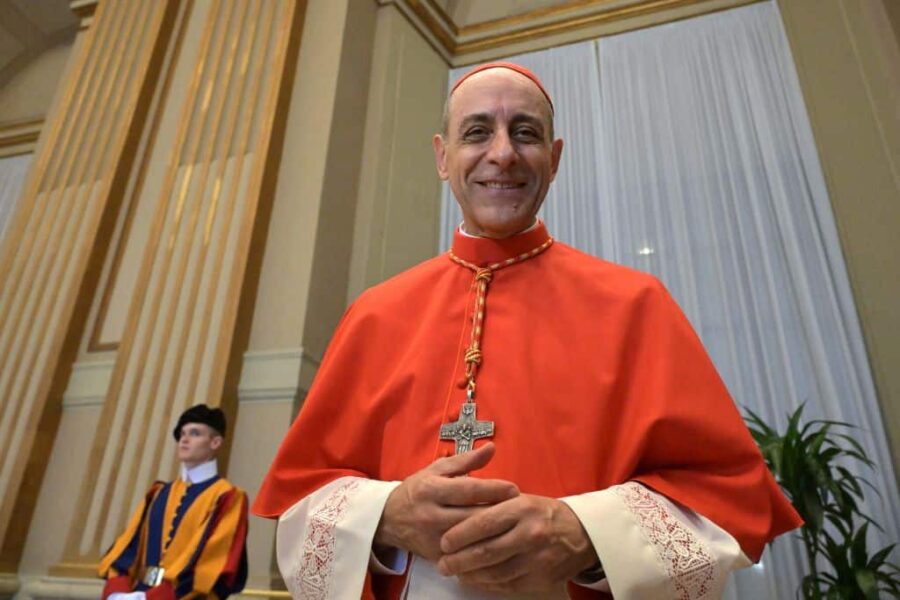
The two documents published on 2 July by the Dicastery for the Doctrine of the Faith—a Decree and an Explanatory Note (Prot. N. 99/2009), both signed by Cardinal Víctor Manuel Fernández and the secretaries Armando Matteo and John J. Kennedy—present defects of canonical technique that drastically limit their actual scope. Analyzed in accordance with Book VI of the Code of Canon Law, their juridical effect is reduced to the declaration of six excommunications. With respect to the more than seven hundred priests of the Priestly Fraternity of Saint Pius X and their faithful, the formula employed lacks penal efficacy.
1. Two instruments of distinct juridical nature
On the one hand, the Decree declares “for all juridical purposes” that Bishop Alfonso de Galarreta and the four bishops consecrated on 1 July—Pascal Schreiber, Michael Goldade, Michel Poinsinet de Sivry and Marc Hanappier—have incurred ipso facto the excommunication latae sententiae reserved to the Apostolic See (cann. 1387 and 1364 § 1 CIC), and that Bishop Bernard Fellay, as co-consecrator who publicly adhered to the schismatic act, has incurred the excommunication of can. 1364 § 1. It is a declaratory decree of censures already contracted: the only figure, together with the sentence, capable of declaring latae sententiae penalties (cann. 1341, 1720). Its subjective scope is exhaustive: six bishops.
Yet the accompanying Explanatory Note contains three additional assertions: that the sacred ministers of the Fraternity “are in schism and must be considered schismatics,” remaining “subject to the excommunication provided by law”; that the laity who “formally adhere” to the Fraternity “are to be considered schismatics and excommunicated” under the conditions of the Note of the Pontifical Council for Legislative Texts of 24 August 1996, which the Dicastery declares still in force and “makes its own”; and that the penance administered by its priests and the marriages they assist at “are invalid.” An explanatory note does not appear in the typology of acts with penal efficacy: it is not a law (cann. 7-22, 29 ff.), not a general executory decree (cann. 31-33), not a penal precept (can. 1319), nor a sentence or declaratory decree issued in accordance with cann. 1341 ff. and 1717 ff. It is an expository act. Whatever it states regarding indeterminate categories of persons has the value of a doctrinal warning, not the constitution or declaration of a penalty.
2. The contradiction between the Decree and the Note
The Decree warns clerics and lay faithful “not to adhere to the schism of the Priestly Fraternity of Saint Pius X, because they would incur ipso facto the penalty of excommunication latae sententiae.” The verbal tense is conditional: the offence, with respect to them, is contemplated as future and eventual. The Note, by contrast, affirms in the present tense that the ministers “are in schism.” Both texts bear the same date and the same signatures. The contradictory conflict must be resolved in favour of the Decree, the only instrument possessing penal form; and in accordance with can. 18, penal laws are subject to strict interpretation, which excludes extending by way of a note what the decree formulates as a mere admonition. The consequence is that the Dicastery itself, in its juridically effective act, acknowledges that priests and faithful have not yet incurred the censure.
3. Absence of assessed individual imputability and regime of the undeclared censure
Even accepting, for dialectical purposes, that the Note intended to operate as a general declaration, latae sententiae penalties are contracted ipso iure by each subject who commits the offence with the full imputability required by can. 1321 § 2, assessed in accordance with cann. 1323-1325: inculpable ignorance of the law or of the penalty, error, grave fear and a state of necessity—even putative—exempt from the penalty or prevent its application. That judgment is necessarily individual and has not been carried out with respect to any priest. The collective qualification of seven hundred clerics as “schismatics subject to excommunication” without verification of imputability or procedure (can. 1720: hearing of the accused, certainty regarding the offence and imputability) is incompatible with the regime of Book VI.
It follows that any possible censures of the Fraternity’s clergy remain, in the best case for the Dicastery’s thesis, in the condition of undeclared latae sententiae. The regime of these is that of can. 1331 § 1, mitigated by can. 1335 § 2: the prohibition of administering sacraments and sacramentals is suspended whenever a faithful person requests them for any just cause. The formula chosen therefore leaves intact, on the juridical plane, the situation of the faithful who request the sacraments from a priest of the Fraternity.
4. The reference to the 1996 Note excludes automatism with respect to the laity
The 1996 Note of the Pontifical Council for Legislative Texts, which the Dicastery “makes its own” with its conditions, is not an authentic interpretation under can. 16 § 1—it lacks specific pontifical approval and promulgation as such—but an opinion published in Communicationes. Its content, moreover, is restrictive. Its n. 5 requires for “formal adherence to schism” a double element: internal (a properly schismatic will: to place personal choice before obedience to the Roman Pontiff) and external (its translation into acts). Its n. 7 establishes that with respect to the faithful “occasional participation in liturgical acts or activities of the movement, carried out without making one’s own the attitude of doctrinal and disciplinary disunity, is not sufficient”; that the person’s intention must be considered above all; and that “the various situations must be judged case by case, in the competent forums of external and internal forum.”
The reference thus produces the opposite effect to the apparent one: by incorporating the conditions of 1996, the 2026 Note itself excludes any automatic excommunication of laity for frequenting the Fraternity’s chapels and subordinates any censure to an individual judgment that has not been carried out and cannot be carried out by means of a general document. The practice of three pontificates confirms this restrictive reading: the Decree of the Congregation for Bishops of 21 January 2009 remitted the excommunications only of the four bishops consecrated in 1988, the only declared censured persons; Benedict XVI, in the Letter of 10 March 2009, placed the priests on the plane of suspension and lack of canonical status, not of excommunication; and the faculties granted by Francis presuppose subjects capable of receiving them, a condition incompatible with that of an excommunicated person (can. 1331 § 1, 2º).
5. The invalidity of confessions and marriages requires the revocation of pontifical acts that the Note does not effect
The invalidity proclaimed by the Note does not derive from excommunication, but from the lack of faculty to absolve (can. 966 § 1) and from defect of canonical form in marriage (can. 1108). Both deficiencies were supplied by acts of the Roman Pontiff: the apostolic letter Misericordia et misera, n. 12 (20 November 2016), which stably granted the faculty to absolve validly to the priests of the Fraternity, and the Letter of the Pontifical Commission Ecclesia Dei of 27 March 2017, approved by Francis, which enabled delegation to assist validly at marriages. The Note mentions neither of the two acts nor contains any revocatory clause. Can. 21 therefore applies—in doubt revocation is not presumed—and the principle of the hierarchy of acts: a dicastery cannot derogate from acts of the Roman Pontiff except with specific pontifical approval (art. 7 § 2 of the General Regulations of the Roman Curia; constant praxis), approval which does not appear in the published text. Until an express revocation by the Pope intervenes, the faculties remain in force and the declaration of invalidity is juridically unfounded. Subsidiarily, even if revoked pro futuro, the supply of faculty by common error or positive and probable doubt under can. 144 would operate in multiple cases, an issue the Note likewise does not address.
6. Conclusion
The result of the analysis is as follows. First: the only validly declared censure is that of the six bishops, by means of the Decree. Second: with respect to the clergy, the Note lacks formal suitability to declare penalties, contradicts the conditional admonition of the Decree itself, and omits the individual judgment of imputability required by cann. 1321-1325 and 1720; the censures, if they exist, would be undeclared and would remain suspended upon the faithful’s request for sacraments (can. 1335 § 2). Third: with respect to the laity, the reference to the 1996 Note—with its requirement of a double element and case-by-case judgment—excludes automatism by definition. Fourth: the declaration of invalidity of confessions and marriages purports a derogatory effect on existing pontifical acts that a dicasterial note without specific approval cannot produce (can. 21). One may add an indication of the technical imprecision of the whole: Bishop Fellay is censured solely under can. 1364 § 1, whereas can. 1387 reaches whoever consecrates without a mandate, a condition that also concurs in the co-consecrator.
In sum, the juridical formula chosen by the prefect—declaring six by decree and all the others by note—leaves without effect, in law, the excommunication of the priests and laity of the Fraternity: where there was penal form there are only six addressees, and where the others are named there is no penal form. If the Holy See intended to extend the consequences of the schism to the entire Fraternity, the law in force required another route: law or penal precept, individual declaratory decrees preceded by the procedure of can. 1720, and express revocation, with specific pontifical approval, of the concessions of Misericordia et misera and of 2017. For the moment, none of this has been done.