


The Church of England has acknowledged its participation in the system that for decades separated thousands of unmarried mothers from their newborn children in the United Kingdom, when it managed around a hundred homes for mothers and babies during the decades following the Second World War.
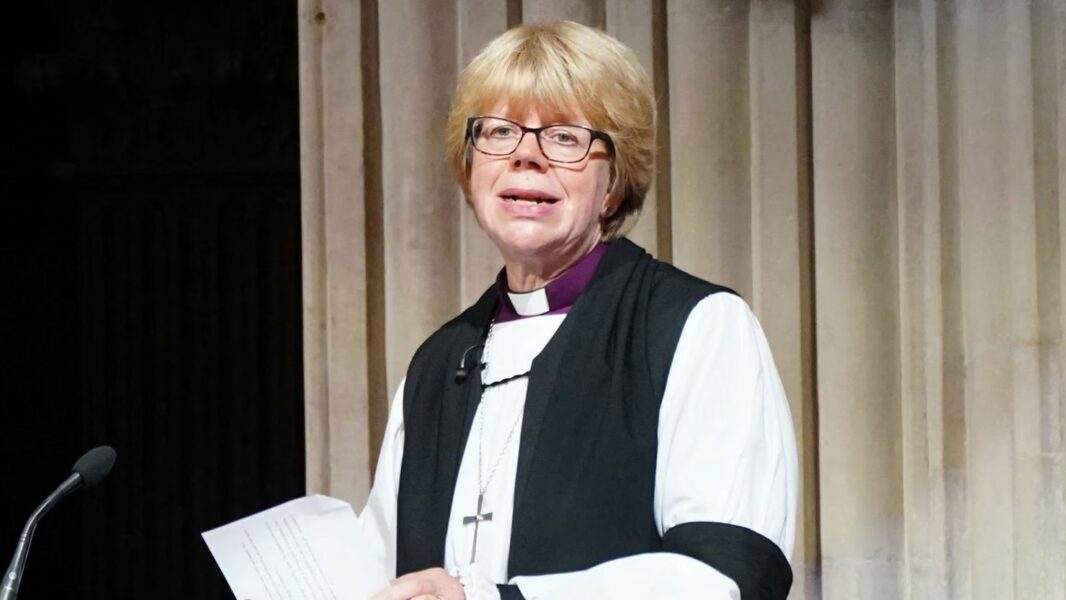
The apology was delivered by Sarah Mullally, the acting head of the Church of England following the vacancy in Canterbury, who expressed “deep shame” over the role played by institutions linked to Anglicanism.
“The shame is ours”
An investigation promoted by the Church itself has concluded that thousands of women pregnant outside marriage were sent to these centres and subjected to strong pressure to give up their children for adoption after birth.
Between 1949 and 1976, around 185,000 adoptions were processed in England and Wales within a system backed by the public authorities of the time. Although officially mothers could keep their children, numerous testimonies gathered by the investigation describe a very different reality.
“They have nothing to be ashamed of. Rather, it is we who feel deep shame that this happened to people under the care of Christian communities,” Mullally stated in a message addressed to the victims.
The Anglican leader acknowledged that many women had few real options to refuse adoption and admitted that the Church helped sustain a culture that prioritised social respectability over the care of mothers and their children.
The report also documents cases of women and teenagers forced to perform domestic and manual labour during pregnancy as a form of moral correction. It also points to prejudices related to race and disability that influenced the treatment received by some mothers.
Possible compensation and Government apology
The request for forgiveness comes as the Church of England prepares a redress programme for people who suffered harm in church institutions.
According to The Telegraph, some cases related to coercive adoptions could be considered within this system. Financial compensation could range from £5,000 to £660,000 in exceptional circumstances, in addition to providing psychological support and spiritual accompaniment.
The Church’s apology also comes just a day after the British Government confirmed it is preparing an official statement on its responsibility in this system. The Education Secretary, Bridget Phillipson, described those years as a “shameful” period in the country’s history.
Scotland and Wales had already apologised to the victims earlier, while the British Prime Minister is expected to do the same before the House of Commons in the coming weeks.
An institution marked by new crises
The acknowledgement of responsibilities comes at a particularly tense moment for the Church of England. The Anglican denomination has for years been experiencing a sustained loss of worshippers and growing internal fragmentation.
The decline in attendance at religious services is compounded by debates over the ordination of women, the blessing of same-sex couples, homosexuality and issues related to gender ideology. These controversies have caused tensions among different provinces of the Anglican Communion and have weakened the cohesion of an institution whose credibility had already been affected by various scandals involving abuse and failures in child protection.
In February this year, the General Synod of the Church of England agreed to create a new working group on relationships, sexuality and gender, reflecting divisions that remain open.
Anglican decline and conversions to Catholicism
At the same time, various studies show a steady decline in Anglican identification among younger Britons. While the number of citizens with no religious affiliation is growing, there has also been an increase in conversions to Catholicism.
A study published in 2025 calculated that around 700 former Anglican clergy and religious had been received into the Catholic Church since 1992, including 16 bishops. Nearly 500 were subsequently ordained as Catholic priests.
The data reflect a trend that affects not only the clergy. Among young Britons who regularly practise the Christian faith, Catholicism has increased its presence in recent years, while the Church of England continues to face the challenges arising from its loss of religious and cultural influence.