


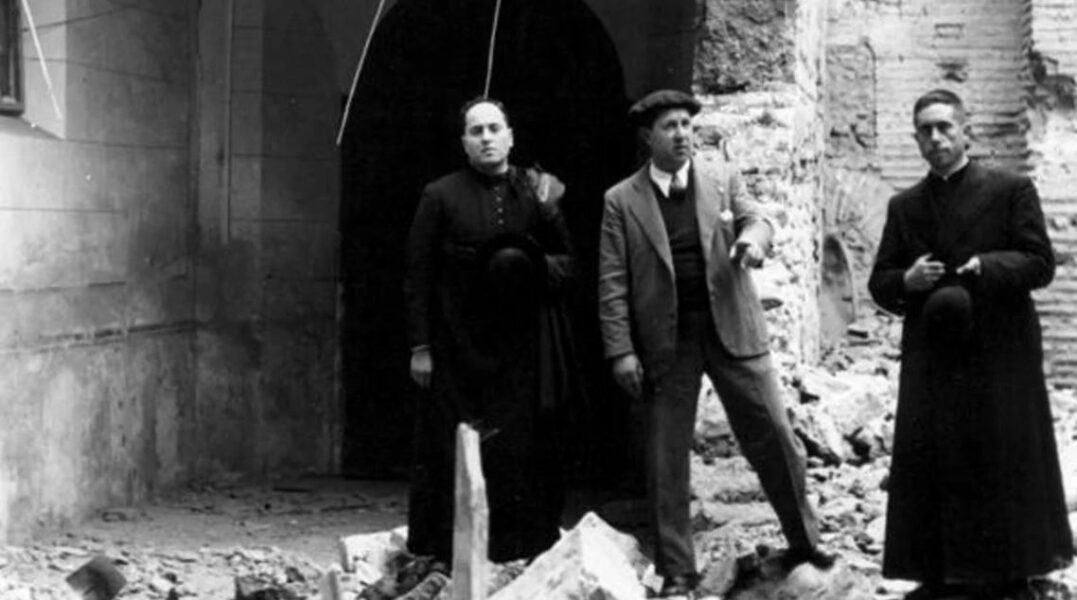
Pope Leo XIV has recognized the martyrdom of twenty priests from the diocese of Ibiza who were killed out of hatred for the faith during the religious persecution of 1936. The decision, approved this Thursday during an audience with Cardinal Marcello Semeraro, prefect of the Dicastery for the Causes of Saints, paves the way for the beatification of Juan Torres Torres and his nineteen companions.
The decree officially recognizes that these priests were killed in odium fidei between August and September 1936, in the early months of the Spanish Civil War. With this recognition, the Church declares that they died precisely because of their status as priests and their fidelity to the Catholic faith.
The future beatification of these twenty martyrs adds to the numerous causes of victims of the Spanish religious persecution recognized by the Church in recent decades, a memory that continues to emerge almost ninety years after those events.
Half the clergy of Ibiza and Formentera
The twenty murdered priests represented approximately half of the clergy of Ibiza and Formentera at that time. Their deaths occurred in a context of growing hostility toward the Church that had already begun years before the outbreak of the Civil War.
The situation deteriorated to the point that the diocese suspended processions for security reasons. In 1934 the parish of San Carlos was desecrated, and later attacks against churches and religious buildings were recorded.
The persecution unleashed in the summer of 1936 was not limited to isolated attacks. Its goal was to eradicate the public presence of the Church in the islands. Among other measures, religious references were removed from public life, including the prefix “San” in some place names.
Juan Torres Torres, head of the cause and the youngest of the group, was known for his humility and spirit of service. His memory, like that of his companions, has remained alive for generations among the faithful of Ibiza and Formentera.
One of the greatest religious persecutions of the 20th century
During the religious persecution that took place mainly between 1936 and 1939, thousands of priests, religious men and women, and laypeople were killed for reasons directly related to their Catholic faith. Churches, convents, schools, and religious works were looted, burned, or destroyed in numerous regions of the country.
From Saint John Paul II to the present day, the Church has continued to recognize many of those victims as martyrs, emphasizing that their deaths were not an accidental consequence of a political conflict, but the result of a persecution specifically directed against the faith and its representatives.
Five new venerables
Alongside the recognition of the martyrdom of the priests of Ibiza, the Pope also authorized the promulgation of decrees on the heroic virtues of five Servants of God, who now receive the title of Venerable.
Among them stands out the Mallorcan Clara Andreu y Malferit, a Hieronymite nun born in Palma de Mallorca in 1596. She entered as a child the monastery of San Bartolomé de Inca, where she developed an intense life of prayer and a profound spiritual experience. Her mystical phenomena aroused the interest of ecclesiastical authorities, who ordered various investigations to discern their authenticity. Far from resisting, she humbly accepted all the dispositions imposed on her, making obedience one of the most outstanding traits of her spiritual life. She died in 1628 at just 31 years of age, and her reputation for holiness has remained alive for centuries in Mallorca.
Also recognized as Venerable was the Belgian priest Júlio Maria De Lombaerde, a missionary of the Congregation of the Missionaries of the Holy Family and founder of three religious congregations. His missionary vocation was born in adolescence after hearing the preaching of an African bishop. After an initial period linked to missions in North Africa, he was sent to Brazil, where he carried out intense evangelizing, educational, and social work in hard-to-reach regions. He traveled vast territories dedicated to catechesis and the formation of Christian communities, until his death in a traffic accident on Christmas Eve 1944.
The American María Teresa Tallon, daughter of Irish immigrants and founder of the Parish Visitors of Mary Immaculate, devoted much of her life to education and care for the most disadvantaged. During a diphtheria epidemic in San Francisco she contracted the disease while attending the sick and continued to comfort other patients even during her own hospitalization. Later she founded a congregation conceived to bring the presence of the Church into homes, especially among immigrants, the sick, and people distant from religious practice.
Among the new Venerables is also María Inés Tribbioli, founder of the Pious Workers of St. Joseph. Born in Florence under difficult family circumstances, she developed intense charitable activity inspired by Franciscan spirituality. During the Second World War she welcomed and protected persecuted Jews, even confronting the German authorities. For this action she would later be recognized as Righteous Among the Nations, one of the most significant titles granted to those who helped save Jewish lives during the Holocaust.
Completing the list is the Italian Dominican María Petra Giordano, born in Naples in 1912. After moving with her family to Rome, she discovered her religious vocation in the basilica of Santa Maria sopra Minerva. She entered the Dominican monastery of Santa Maria del Sasso in Tuscany, where she came to hold responsibilities in governance and formation. She served as mistress of novices and later as prioress of the community. She died in 2006, and her cause still counts on numerous direct witnesses who were able to know firsthand her life of prayer, fidelity to the Gospel, and dedication to the contemplative life.