


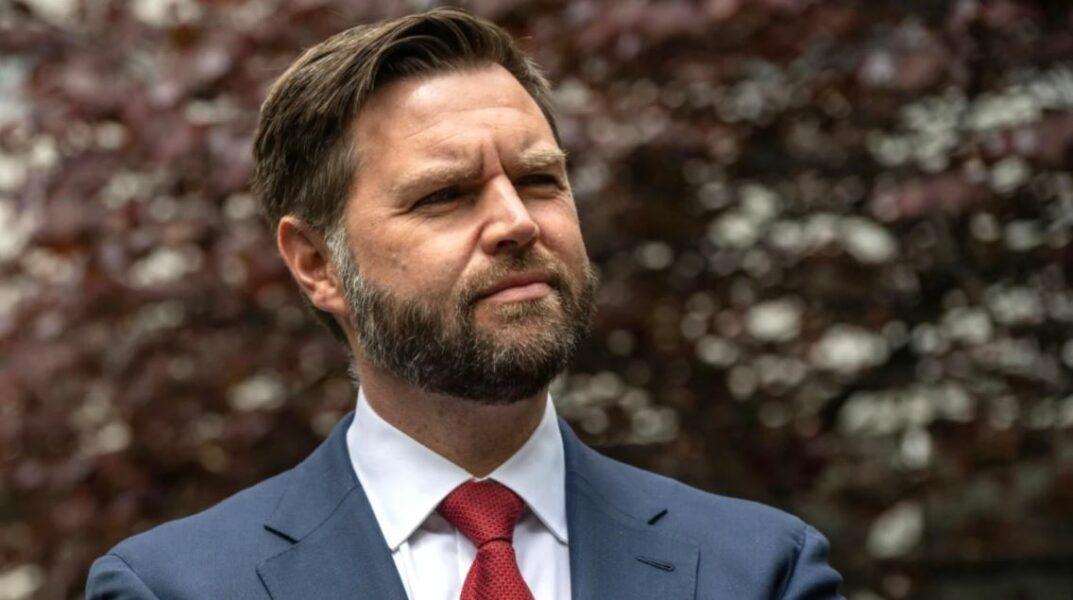
The Vice President of the United States, JD Vance, this week published Communion: Finding My Way Back to Faith, a book in which he reconstructs his conversion to Catholicism and recounts some of the disagreements he has had with the Holy See on immigration, international policy, and the role of religion in public life.
The work is presented as a spiritual continuation of Hillbilly Elegy, the autobiographical book that brought him to national attention in 2016. However, far from focusing on his political rise, Communion primarily addresses his religious journey and the consequences it has had on his way of understanding society, family, and political action.
Throughout its pages, Vance explains how the Catholic faith went from being a reality practically absent in his life to becoming one of the central elements of his worldview, while also describing some of the differences that have arisen with the Vatican on issues especially sensitive to U.S. politics.
From Protestantism to Atheism
Vance recounts a childhood marked by Appalachian evangelical Christianity and the influence of his grandmother, a figure to whom he already devoted numerous pages in Hillbilly Elegy.
After her death, his religious practice began to weaken progressively. During his years in the Marine Corps and later at Yale University, he drifted away from Christianity until openly defining himself as an atheist.
The Vice President also recalls the influence exerted on him by the ideas of writer Ayn Rand, whose defense of individualism and personal self-sufficiency for years occupied the space that religion had previously held.
Among the episodes he mentions is a car accident that occurred after his grandmother’s funeral. Although he does not present it as a miraculous event, he acknowledges that the experience continued to accompany him even during the period when he rejected any religious belief.
The Return to Faith and Entry into the Catholic Church
The book devotes several pages to the intellectual process that led him back to Christianity.
Vance explains that some of his convictions began to change upon coming into contact with people who combined solid intellectual formation with a practicing religious faith. Among them, he mentions tech entrepreneur Peter Thiel, whom he met in the years after his time at Yale.
His wife, Usha Vance, a practitioner of Hinduism, also occupies an important place. The conversations they held on issues such as death, suffering, or the meaning of existence form part of the account of his spiritual evolution.
According to what he recounts in the book, a visit in 2018 to a French cathedral helped strengthen his interest in Catholicism. A year later, he was formally received into the Church.
An “Unsettling” Meeting with Vatican Diplomacy
One of the most revealing passages of the work is devoted to a meeting held in April 2025 with Cardinal Pietro Parolin, Secretary of State of the Holy See, and with Archbishop Paul Richard Gallagher, Secretary for Relations with States.
The encounter took place during an official visit to Rome, just hours before Vance met with Pope Francis.
The Vice President describes that conversation as “unsettling” due to the differences between the Trump Administration and the Holy See on immigration and various international conflicts.
According to his account, the Vatican representatives insisted on the need to guarantee dignified treatment for immigrants and refugees, while he defended the right of states to control their borders and regulate migratory flows.
Vance also writes that he found some of the objections raised by Vatican diplomacy too general, believing they did not sufficiently address the concrete difficulties governments face in managing these phenomena.
For its part, the Vatican reported at the time that the meeting had served to exchange views on various international matters, including the conflicts in Ukraine and Gaza, the situation of migrants, and several humanitarian crises.
The Debate on the ordo amoris
Differences between Vance and the Holy See have also surfaced around the concept of ordo amoris, a classical expression of the Christian tradition that the Vice President has used to defend the existence of priority duties toward one’s own family, the local community, and the nation.
This interpretation led to public exchanges of arguments with Church officials during the pontificate of Francis, especially in the context of the debate on immigration.
Divergences have also appeared in matters related to international policy. While the Trump Administration has defended certain military actions in different scenarios, both Francis and Leo XIV have repeatedly insisted on the need to favor diplomatic negotiation and avoid new escalations of conflict.
Faith in Public Life
In addition to recounting his religious journey, Vance devotes part of the book to reflecting on the relationship between faith and politics.
The Vice President maintains that religious convictions should not remain confined to the private sphere and explains how his conversion influenced his view of issues such as family, birth rates, and the responsibility of public institutions.
During the promotion of the work, he has also explained that, on exceptional occasions, a priest has celebrated Mass in the Vice President’s official residence, although he has noted that he normally prefers to attend a church to participate in the liturgy alongside other faithful.
A Book Between Faith and Politics
The publication of Communion coincides with a period of special attention toward the political figure of JD Vance within the Republican Party.
In addition to recounting his return to Catholicism, the book shows how some of the main issues currently shaping relations between Washington and the Vatican—from immigration to international conflicts—have been part of the personal and political experience of one of the most visible figures in American public life.