


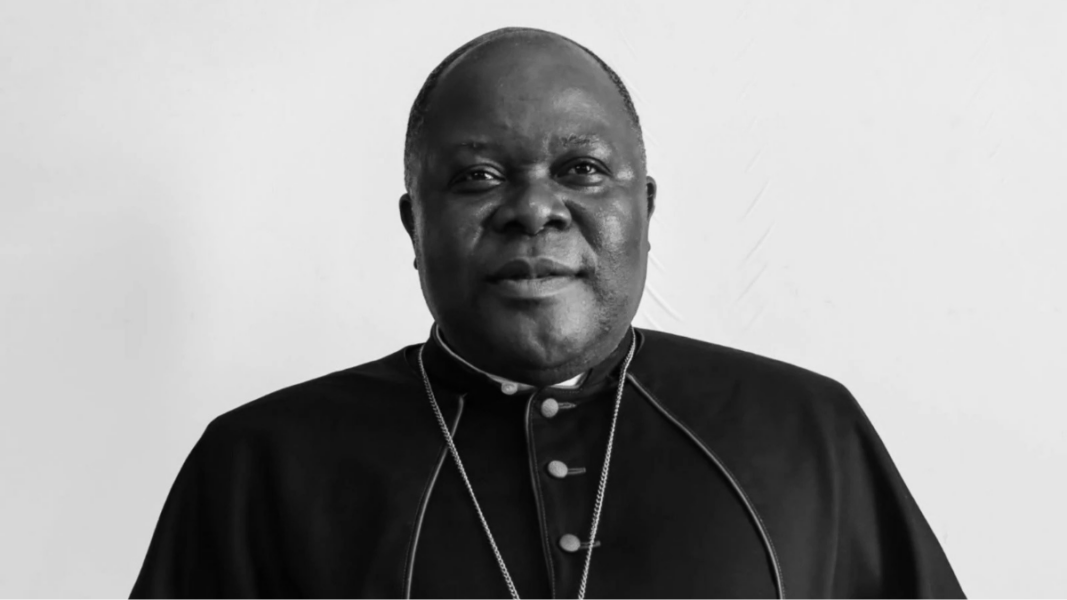
The murder of Monsignor Osório Citora Afonso, bishop of Quelimane (Mozambique) and apostolic administrator of Beira, has taken an unexpected turn following the arrest of three suspects, including a priest from the same diocese. The news has caused shock among Catholics in Mozambique, where many questions still remain about the circumstances and those responsible for the crime.
According to Mozambique’s National Criminal Investigation Service (SERNIC), the investigations have led to the identification of three people allegedly linked to the murder of the prelate, which occurred on June 6. The detainees are a priest, a guard, and a gardener who worked at the episcopal residence. All three appeared before an investigating judge, who ordered their remand in custody while the investigation continues.
A crime still surrounded by questions
During a press conference held in Zambezia province, authorities explained that forensic medical examinations, ballistic analyses, DNA tests, and other technical procedures have been carried out to clarify the facts.
SERNIC’s provincial spokesperson, Domingos Barone, confirmed that the evidence gathered so far points to a violent death caused by firearm. However, he avoided answering questions about the origin of the weapon used or other key aspects of the investigation.
The arrest of individuals directly linked to the episcopal residence marks a significant shift from the initial reports released after the murder. It was first reported that the attackers had scaled the walls of the complex to disable the security system before shooting the bishop.
That version led some observers to suspect a carefully planned operation. According to the first reports, Monsignor Afonso had been shot in the chest with a modernized Kalashnikov rifle, a weapon commonly used by the country’s security forces.
Suspicions persist about a possible wider plot
Sources consulted by The Pillar have expressed doubts that the detainees acted on their own initiative. One of them, linked to a charitable organization working with church leaders in Mozambique, noted that the investigation should clarify whether there were other collaborators or masterminds behind the crime.
These sources recall that Monsignor Afonso had promoted changes and reorganizations within the diocese of Quelimane, although they consider it difficult to explain a crime of this nature solely on that basis.
The same voices also point to the delicate political context Mozambique is experiencing. In recent years, the Catholic Church has maintained a critical stance toward various government actions, especially following the controversial 2024 elections and the violence recorded during the subsequent protests.
Mozambican bishops have also repeatedly denounced the authorities’ inability to contain the jihadist insurgency that has affected the northern province of Cabo Delgado for years.
The Church calls for a full investigation
In a pastoral note published two days after the murder, the bishops of Mozambique described the death of Monsignor Afonso as an attempt to silence “the voice of faith, justice, and peace.”
The prelates demanded a swift and thorough investigation and warned that any failure to clarify the facts would represent a grave responsibility for the country’s authorities.
Meanwhile, thousands of faithful took part in prayer vigils held at the cathedral of Quelimane, where the bishop’s body was laid out before the funeral rites.
Leo XIV calls for the crime to be clarified
On the same day as the funeral, Pope Leo XIV sent a message to the archbishop of Nampula and president of the Episcopal Conference of Mozambique, Monsignor Inácio Saúre, in which he expressed his closeness to the family of the murdered bishop, to the Missionaries of the Consolata, and to the dioceses of Quelimane and Beira.
“While I await the full clarification of the circumstances of this crime, I implore the consolation of hope,” the Pontiff wrote. Leo XIV also assured his prayers for the soul of the deceased bishop and asked that this moment of pain be lived “in the light of the risen Christ,” granting his apostolic blessing to the Mozambican Church so that it may remain steadfast “in the proclamation of forgiveness and harmony.”
“We must not fear the truth”
The funeral Mass was celebrated at the Cathedral of Our Lady of the Liberation in Quelimane and was presided over by the apostolic nuncio to Mozambique, Monsignor Luis Miguel Muñoz Cárdaba. Numerous priests, religious, and faithful attended the ceremony, as well as the president of Mozambique, Daniel Chapo, members of the government, and other national authorities.
During the homily, the papal representative underscored the gravity of the crime by recalling that no bishop had ever been murdered in Mozambique’s history.
“Today we should not be here. What has happened should never have occurred,” he stated. The nuncio also called for certainty regarding all the motives that led to the bishop’s death. “We must not fear the truth. The truth sets us free,” he declared.
Monsignor Muñoz Cárdaba described Osório Citora Afonso as “a man of peace,” “a man of reconciliation,” and a shepherd who gave himself completely to the service of the Church. “They have killed a man of peace, a man of reconciliation, a missionary who believed in the goodness of people,” he affirmed.
The nuncio also expressed hope that the bishop’s death would not be in vain and that God might transform the evil suffered into good for the Church and for Mozambique.
A pastor deeply loved inside and outside Mozambique
Monsignor Osório Citora Afonso, a missionary of the Consolata, was 54 years old. Between 2017 and 2023 he worked in Rome as an official of the Dicastery for Evangelization, before returning to his country to take on pastoral responsibilities.
During a Mass celebrated this week at the dicastery’s headquarters in Rome, Cardinal Luis Antonio Tagle recalled his enthusiasm for evangelization and his love for Sacred Scripture. “He never tired of promoting Bible study meetings and spiritual retreats,” he said.
For his part, Cardinal Protase Rugambwa, archbishop of Tabora (Tanzania), described him as a “gentle, humble, cultured, and refined” priest, as well as a tireless worker and a loyal friend.
After the ceremonies held in Quelimane, the bishop’s remains will be transferred to Nampula, the city where he was baptized, confirmed, and ordained a priest, where he will be buried in the local clergy cemetery.