


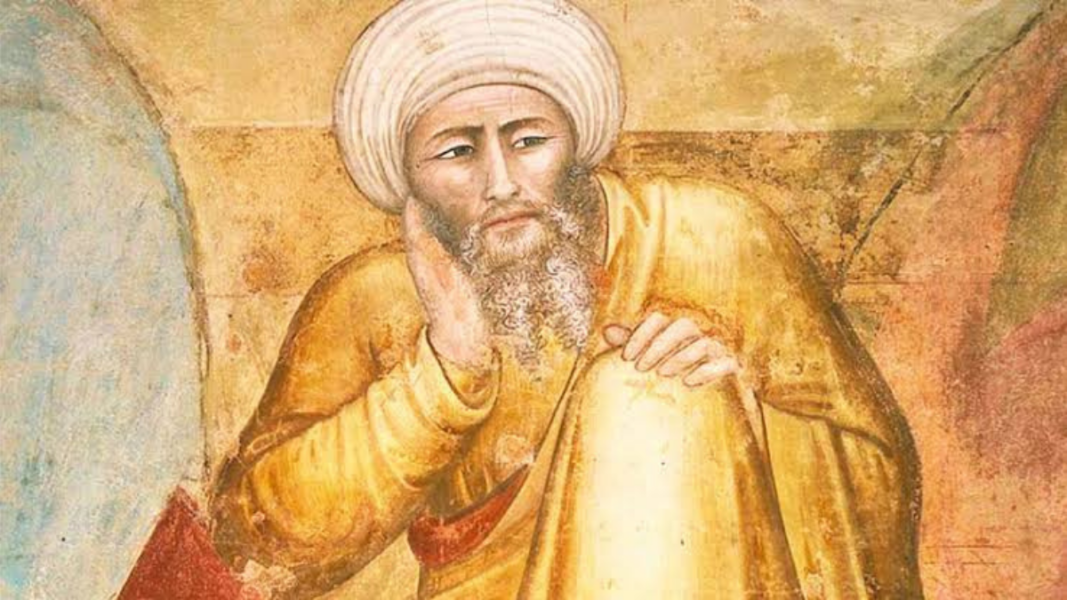
Pope Leo XIV set foot in Spain and, even before addressing the faithful, gave its authorities a history lesson. He maintained that “it is not the culture of confrontation, but that of encounter, which generates stability and prosperity,” and as proof he offered al-Andalus: the long presence of Islam, he said, was not only confrontation, but a “space of contact, conversation and dialogue about the meaning of truth among Christians, Muslims and Jews.” He cited the school of translators of Alfonso X, evoked Córdoba and Toledo as “places of mediation between languages, religions and knowledge,” and named two illustrious guarantors of that concord: Averroes and Maimonides. The thesis is beautiful. It has the small inconvenience that the two witnesses the Pope summoned testify against him.
Let us begin with Maimonides, because his case is the one that closes the discussion. He was born in Córdoba, yes, in the Córdoba the speech praises. And from that Córdoba he fled. When the Almohads took the city in the mid-twelfth century, they abolished the statute that tolerated Jews and set three doors before them: the Qur’an, exile or the sword. The family of the greatest Jewish thinker of the Middle Ages chose the second, wandered through North Africa and he himself ended up dying in Egypt, far from the land that a Pope invokes eight centuries later as a model of coexistence. Presenting Maimonides as a product of Andalusian tolerance is like presenting a castaway as proof of the goodness of the sea. He was not its beneficiary: he was its victim, and that is why he survived to become famous.
Averroes meets the same fate as an argument. The Cordoban whom Europe read in order to rediscover Aristotle ended his days in disgrace: the very Almohad power that the speech adorns banished him and ordered his philosophical books condemned. The second witness to concord was, like the first, persecuted by the society we are invited to imitate. One understands that in the haste of the visit someone might have noted two prestigious names without considering their biographies. But erudition consists precisely in that: in knowing that the two luminaries of al-Andalus shone in spite of al-Andalus, and that both ended, one in exile and the other in the bonfire of his own works.
The third fact sinks the entire metaphor, and it is in the Pope’s own mouth. The school of translators he cites is that of Alfonso X. Alfonso X was king of Castile and reigned in the thirteenth century. Toledo, where that school flourished, had by then been reconquered for almost two centuries: it had been taken by Alfonso VI in 1085. Thus the celebrated “encounter of the three religions” in Toledo is not an achievement of the Islamic presence, but an achievement of Christian Spain, financed by Christian kings, in a city wrested from Islam by force of arms. The Pope attributes to Andalusian coexistence the glory of the Reconquista. It is like attributing the harvest to the fire that preceded it. If Toledo translated in three voices it was because a Christian crown had first conquered the city and then protected those who lived in it; the fact the speech offers as proof of its thesis is, read with a calendar in hand, its refutation.
It is only fair to be just, because honesty is more devastating than caricature. There was real transmission: through al-Andalus and through Christian Toledo a great part of Greek and Arabic learning entered Europe, and that is a fact no sectarianism should deny. There was also, at the zenith of the caliphate, a tolerance greater than that of many contemporary kingdoms. To deny it would be to replace one myth with another. But “tolerance” is not “coexistence among equals,” and that is where the sleight of hand lies. That society did not dialogue “about the meaning of truth” on an equal footing: it was legally stratified by religion. The Christian and the Jew were dhimmis, second-class protected persons who paid a tax for breathing their faith and lived under restrictions that no preacher of diversity recalls today. And when the step broke—the martyrs of Córdoba beheaded in the ninth century, the Almoravid and Almohad persecutions—the word “mediation” fell very short. To call that a model is to keep the stained-glass window and forget the dungeon.
There remains the greatest fallacy, the one that sustains all the others: that the history of Spain teaches encounter and not confrontation. It is exactly the opposite, and anyone knows it who does not confuse desire with fact. Spain, the nation the Pope was addressing, was not born of an interfaith gathering: it was born of eight hundred years of Reconquista. The language in which the speech was delivered, the crown that listened to it, the kingdoms that later evangelized half the world, the entire Golden Age, are children of a confrontation, not of a concord. It is not that confrontation is good—it is not; it is that telling Spain that its greatness sprang from coexistence is telling it that its history was the opposite of what it was. And the crowning touch of the confusion is that the speech invoked, to establish that continuity, the apostle James: the very one whose cult structured the Reconquista, the patron saint whom tradition depicts on horseback and sword in hand. The saint of battle is summoned to preach that Spain must forget the battle. The incoherence is not a detail: it is the structure.
No one asks a Pope to make an apology for the crusades or to apportion grievances. He is asked for something more modest: that if he is going to give a history lesson, he himself not fail the exam. He cited two sages to prove concord, and both had fled from it. He chose a city to crown his thesis, and that city had been Christian for two centuries. He called witnesses to coexistence, and all of them, when they took the stand, testified against the narrative. One, from exile. Another, from the ashes of his books. And an entire country, from the simple fact of still existing.