


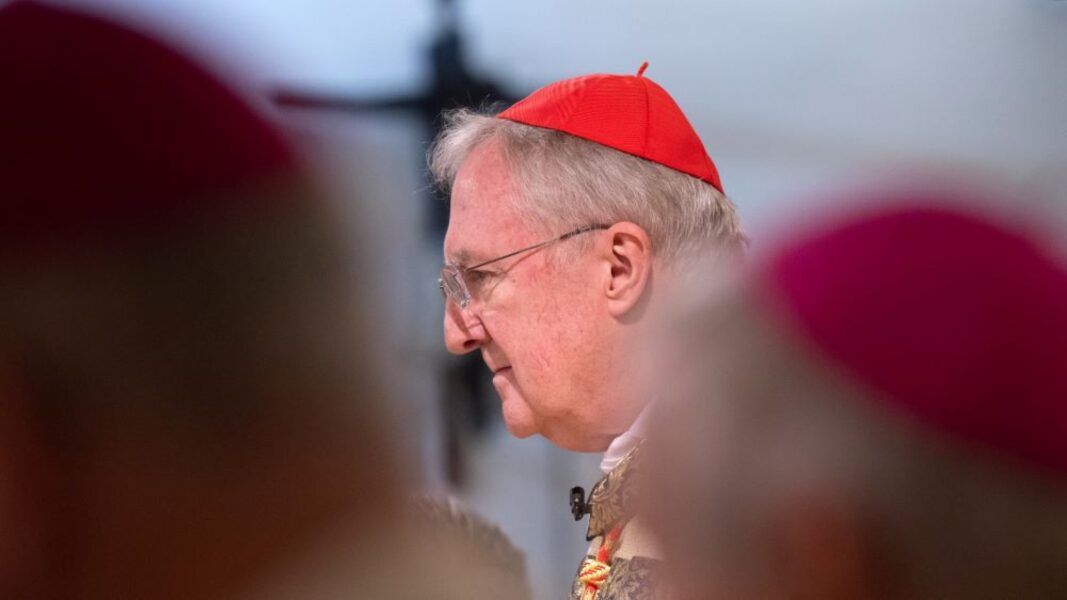
The dissemination of the letter from Cardinal Giovanni Battista Re, Dean of the College of Cardinals, this Wednesday, made it clear that the liturgical question will not form part of the next consistory convened by Leo XIV for June 26, 27, and 29. The final agenda will focus on the international situation, the encyclical Magnifica humanitas, and the synodal process, leaving aside the topic of the liturgy and the vetus ordo, which had already been postponed during the January consistory but had been duly prepared by the Prefect of the Dicastery for Divine Worship.
Read also: Roche’s document on the liturgy revealed
This absence has a consequence that some are beginning to view positively: the intervention prepared by Cardinal Arthur Roche on liturgical reform and the Traditional Mass has been definitively shelved.
The liturgy is once again left out
During the consistory held in January, the cardinals decided to prioritize debates on synodality and the evangelizing mission, leaving issues such as the reform of the Curia and the liturgy for a future meeting.
Many assumed that this latter topic would return to the agenda now. However, Leo XIV has chosen to focus the work on other matters, avoiding reopening one of the most sensitive debates within the Church in recent times.
Roche’s address that was never discussed
The main reason is the content of the document prepared by Cardinal Arthur Roche, Prefect of the Dicastery for Divine Worship and the Discipline of the Sacraments.
In that text, initially intended to serve as an introduction to the liturgical debate, Roche openly defended the theses of Traditionis custodes and questioned the direction taken by Benedict XVI in Summorum Pontificum.
The British cardinal maintained that it was not possible to “return to that ritual form which the conciliar fathers, cum Petro et sub Petro, felt the need to reform,” and reaffirmed the idea that the liturgical books promulgated after the Second Vatican Council constitute the only expression of the lex orandi of the Roman rite.
Roche also insisted that the concessions made since St. John Paul II for the use of the 1962 Missal were never intended to promote the expansion of the traditional liturgy.
Leo XIV has set a different tone
The exclusion of the liturgical question takes on special relevance in light of some recent gestures by the current Pontiff.
A few months after Roche’s statements, Leo XIV sent a letter to the French bishops asking them to seek “concrete solutions” that would allow for a “generous inclusion” of the faithful sincerely attached to the Vetus Ordo, always within the orientations of the Second Vatican Council.
Those words were interpreted by the bishops themselves as a correction of the climate of confrontation that had accompanied the liturgical debate in recent years. Even Roche and Parolin moderated their rhetoric.
Precisely for this reason, initiating a cardinal discussion on the liturgy based on a text so clearly aligned with the more restrictive line of Traditionis custodes would hardly have favored understanding at this time.
Chartres and a reality impossible to ignore
The decision also comes just days after a new edition of the Paris-Chartres pilgrimage, which once again brought together more than 20,000 participants, the vast majority of them young people.
The steady growth of these traditional pilgrimages in France, Spain, Italy, and other European countries has reinforced the perception that there is a living pastoral reality that cannot simply be dismissed as a disciplinary matter.
For many cardinals, the phenomenon requires closer attention to the aspirations of thousands of faithful who find in the traditional liturgy a path of Christian life and ecclesial belonging.
Awaiting a more serene discussion
The removal of the liturgy from the agenda does not mean that the issue has been resolved. The tensions stemming from Traditionis custodes remain present in numerous dioceses and communities.
However, everything indicates that Leo XIV prefers this debate to be addressed at another time and in a climate more conducive to mutual understanding.
The impression left by the Pontiff’s latest decisions is that the discussion on the Traditional Mass will not be closed through new restrictions, but through that “new way of looking at one another” of which he spoke to the French bishops. If Roche’s replacement does indeed take place in the coming months, many expect that it will be his successor who addresses this issue with a greater measure of serenity, common sense, and pastoral sensitivity toward all the realities present in the Church.