


Three canoes used by migrants to reach the Canary Islands will surround the altar from which Pope Leo XIV will celebrate the closing Mass of his trip to Spain on June 12 in Santa Cruz de Tenerife. The initiative is part of a series of events prepared by the local Church to highlight the migratory reality of the archipelago and turn some of its best-known symbols into an expression of welcome and hope.
According to the organizers of the trip during a press conference held at the headquarters of the Spanish Episcopal Conference, the intention is that three boats that arrived in the Canary Islands remain anchored next to the altar as a “significant and silent” presence of one of the phenomena that has most marked life on the islands in recent years.
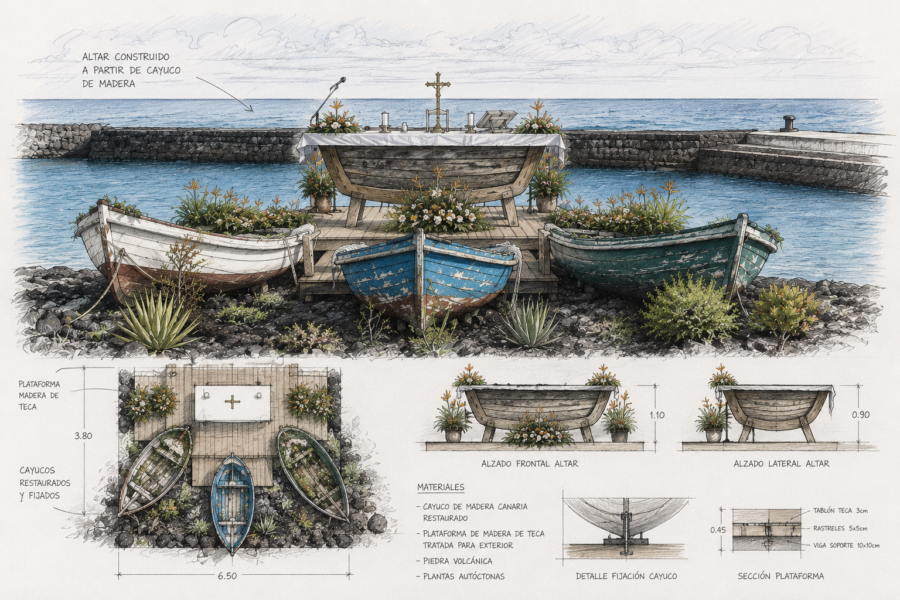
The canoes arrive at the center of the papal stage design
The Mass that Leo XIV will celebrate in the dock of the Port of Santa Cruz de Tenerife will conclude his visit to Spain. The choice of location was not accidental. As Antonio Pérez, coordinator of the local Tenerife Committee, explained, from the beginning the aim was to find a site with the Atlantic Ocean as a backdrop and to make visible the migratory reality associated with the Canary coasts.
The presence of the canoes next to the altar is one of the most striking elements of a visit in which the migration issue will occupy a prominent place. During his stay in the Canary Islands, the Pope will also visit reception centers and take part in events with migrants and organizations involved in accompanying those arriving on the islands via the Atlantic route.
Read also: Praise for the Catholic who did not know the Pope’s name
From the “dock of shame” to the “port of hope”
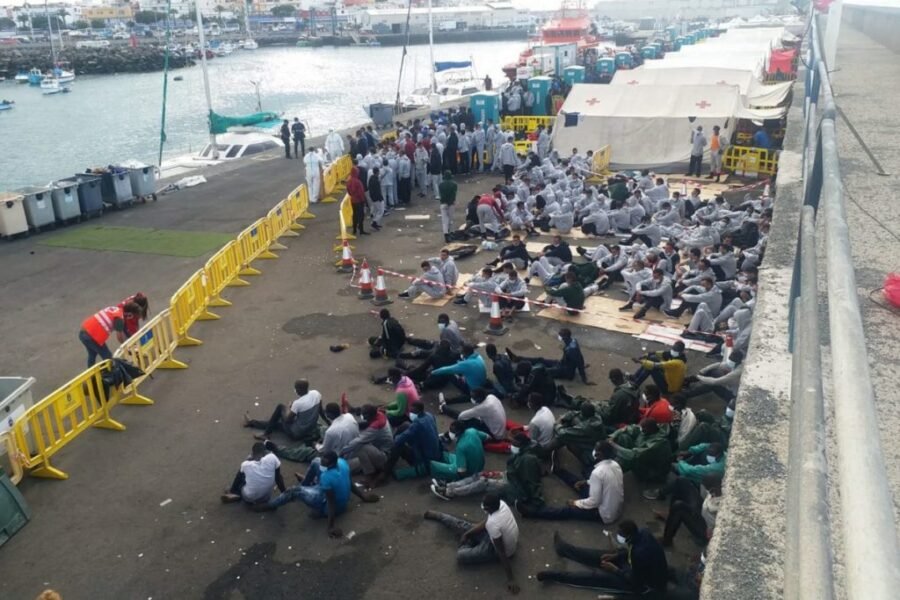
The symbolic weight of these gestures was especially evident in the presentation of the events planned in Gran Canaria. There, Leo XIV will visit the Port of Arguineguín, one of the sites associated with the migration crisis experienced by the Canary Islands since 2020.
During the press conference, the coordinator of the local Canary Committee, Enélida Hernández, openly called for transforming the meaning associated with that location. “It became known as the dock of shame in 2020, because of the way the entire reality experienced there was managed. We want that port to stop being the dock of shame and become the port of hope,” she stated.
The expression reflects the aim of turning a place identified for years with the migration collapse, reception difficulties, and images of thousands of people crammed together into a symbol of integration, solidarity, and accompaniment. In this context, the presence of the canoes next to the altar in Tenerife is also understood, now turned into a central element of the visual narrative of the papal visit.
A visit marked by the migration issue
Immigration will be one of the central themes of Pope Leo XIV’s Canary Islands stage. In Tenerife, the Pontiff will visit the emergency reception facility at Las Raíces, where some of the hosted migrants will be able to share their testimonies. He will also participate in an event in Plaza del Cristo de La Laguna dedicated to showcasing integration experiences promoted by various ecclesial realities.
The gathering in Arguineguín is expected to bring together around 1,800 people from migrant families. The program includes testimonies, a floral offering in memory of those who died at sea and the blessing of a cross made from boat wood, as well as a small fishermen’s altar dedicated to the Virgin of Carmen.
Pope Leo XIV’s visit to the Canary Islands will thus conclude with a carefully prepared image: an altar surrounded by canoes and a Church that seeks to present the migratory reality not only as a humanitarian challenge, but also as one of the most visible symbols of its pastoral action in the archipelago.