


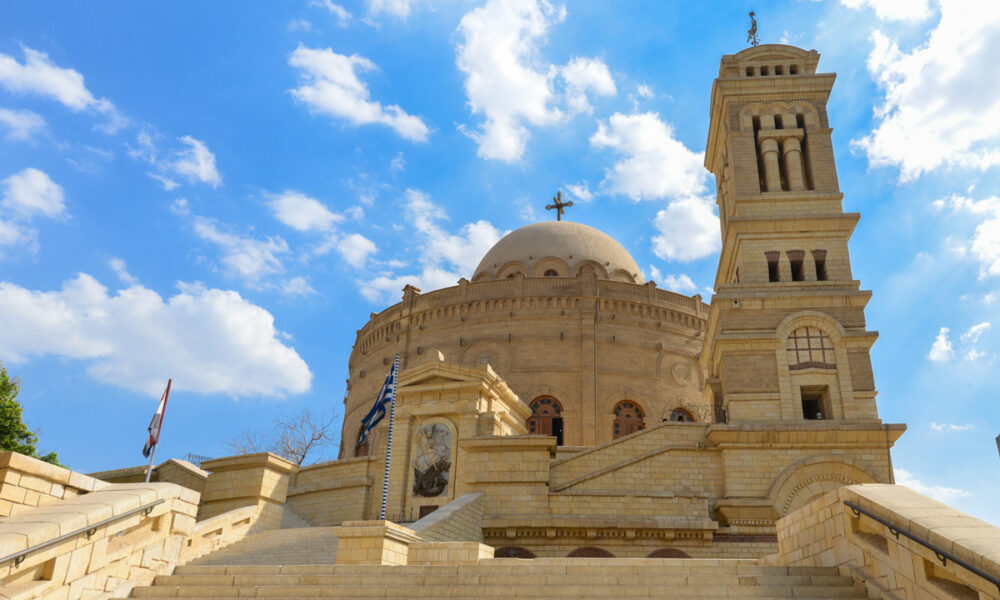
The Egyptian Government has granted legal recognition to another 191 Christian temples and service buildings, a measure that raises to 3,804 the total number of church properties regularized since the process driven by the authorities began almost a decade ago.
The decision was approved after a meeting chaired by Prime Minister Mostafa Madbouly and falls within the implementation of the 2016 law aimed at regulating the construction and legal status of churches in the country.
A process opened in 2016
For decades, numerous Egyptian Christian communities faced significant administrative difficulties in building, expanding, or restoring their places of worship. As a result, many churches operated without fully consolidated legal recognition.
The law passed in 2016 marked a significant change by creating a committee tasked with examining the status of these buildings and progressively granting the necessary authorizations for their regularization.
The approval now announced corresponds to the thirtieth batch of cases resolved by that committee.
More than 5,400 applications submitted
According to data released by various Christian organizations, more than 5,400 regularization applications have been submitted since the process began.
With the 191 newly approved cases, the total number of churches and church buildings that have obtained official recognition reaches 3,804. However, several hundred applications remain pending resolution.
Egyptian authorities note that each case undergoes various checks related to building safety, compliance with construction regulations, and the legal status of the land on which they are located.
The situation of Christians in Egypt
Egypt is home to one of the world’s oldest Christian communities. Coptic Christians, who make up the majority of the country’s Christian faithful, trace their origins to the preaching of Saint Mark in the 1st century.
The issue of building and legally recognizing churches has for years been one of the main concerns of these communities, especially in regions where administrative procedures were more complex.
Some challenges persist
Various organizations dedicated to defending religious freedom have positively assessed the continuity of the process and the authorities’ willingness to continue resolving pending cases.
However, some entities also point out that Christians continue to face difficulties in certain areas of the country, including community tensions and local administrative obstacles.
Likewise, some observers consider that the procedures applicable to churches remain more demanding than those affecting other places of worship.
Nevertheless, the new regularization represents another step in a process that seeks to grant legal stability to thousands of Christian communities spread throughout Egyptian territory.