


We do not like to play the role of doomsayers, nor to take refuge in the comfortable “we warned you.” But we did warn you. That the Spanish Government was navigating amid increasingly serious corruption scandals was evident to anyone with a minimum of intellectual honesty. And that a papal visit at the height of judicial proceedings would inevitably be politically instrumentalized was also clear.
Leire Díez, Ábalos, Santos Cerdán, Begoña Gómez, David Azagra. The ruling signed this Wednesday by Judge Santiago Pedraz describes the biggest scandal in decades: an organized structure based in Ferraz to “systematically and continuously destabilize” the judicial proceedings affecting the circle of the Prime Minister. All of this, allegedly, financed from the party’s slush fund. It did not require special brilliance to understand that this was hardly the most prudent moment to seat a Pope in the Congress chamber.
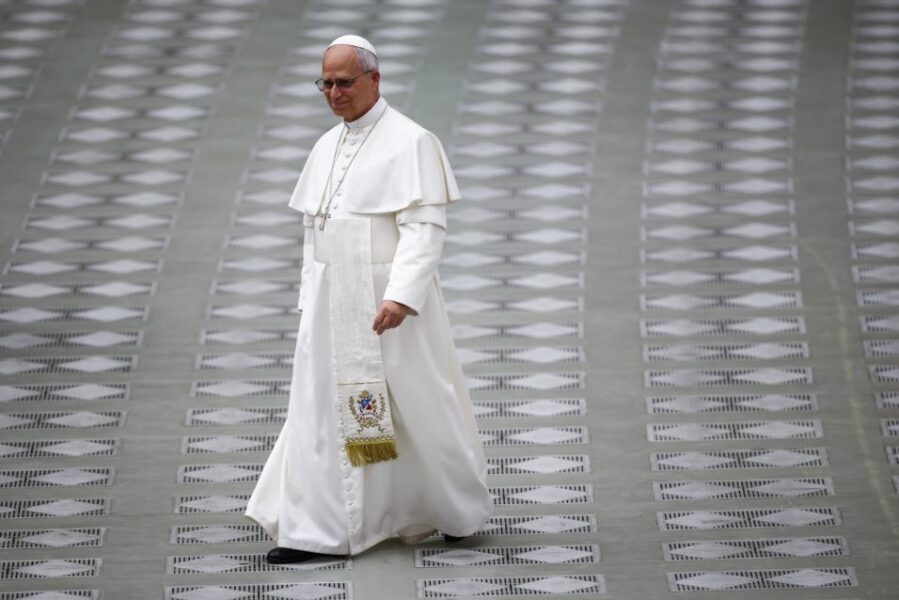
Congratulations, therefore, to the Vatican Secretariat of State. Congratulations to the Spanish Episcopal Conference. And congratulations, especially, to Cardinal José Cobo, the main promoter of this parliamentary liturgy. They have managed—and it was no easy task—to ensure that León XIV’s first visit to Spain will inevitably be associated, in the collective imagination, with a legislature besieged by the UCO and by suspicions of structural corruption.
Ecclesiastical diplomacy, that millennial art of timing, seems to be going through a particularly off-key phase. Because one thing is to engage in dialogue with political power, a normal obligation of the Church, and quite another to offer an institutional photograph of legitimization precisely when that power is experiencing its moment of greatest moral and judicial deterioration.
God writes straight with crooked lines. But it is wise not to make His work unnecessarily harder.