


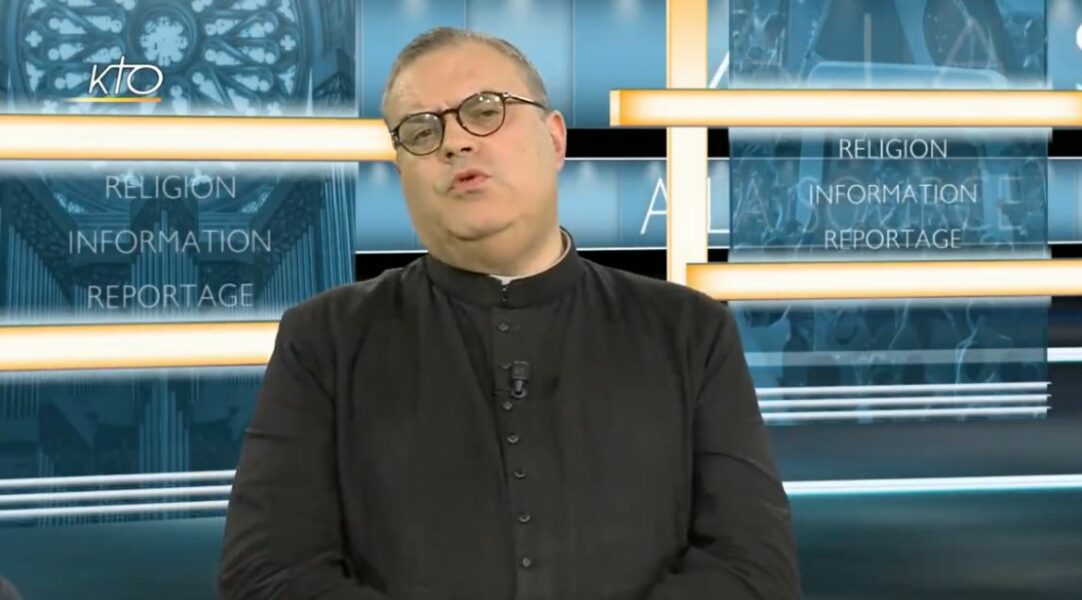
The episcopal consecrations that the Priestly Fraternity of Saint Pius X plans for July 2026 continue to generate strong reactions in France. The canonist and priest Albert Jacquemin, a former member of the FSSPX and currently president of the National Canonical Penal Tribunal of the French Episcopal Conference, has stated that new bishops consecrated without a pontifical mandate would no longer be an isolated act as in 1988, but “the consummation of a de facto schism”.
The statements were made in an extensive interview given to Le Salon Beige on the occasion of the publication of his new book Le Choix de la rupture. Mgr Lefebvre, Rome, les sacres, 1974-2026, a work dedicated to analyzing the doctrinal and ecclesiological journey of Archbishop Marcel Lefebvre from the years following the Second Vatican Council to the present.
“The issue is no longer liturgical, but ecclesiological”
Jacquemin maintains that the true conflict between Rome and the Priestly Fraternity of Saint Pius X no longer revolves primarily around the traditional liturgy, but about doctrinal authority and the very nature of the Church.
“The problem is no longer the traditional Mass”, says the French priest, recalling that the rite of Saint Pius V continues to be celebrated in numerous communities fully recognized by Rome.
In his view, the possible repetition of the 1988 episcopal consecrations would demonstrate that the Fraternity has progressively assumed a logic of doctrinal and hierarchical autonomy vis-à-vis the Holy See.
According to his explanation, the FSSPX has developed an “ecclesiology of substitution”, de facto claiming the mission to preserve the true Tradition against what it considers the doctrinal deviations of the contemporary Church.
“A state of necessity cannot be invoked against the Pope”
One of the central arguments historically used by the Fraternity to justify episcopal consecrations without papal authorization has been the so-called “state of necessity” within the Church.
However, Jacquemin categorically rejects that interpretation. The canonist recalls that Church law provides for exceptional circumstances where a true state of necessity may exist, but insists that it never can be used against the explicit will of the Roman Pontiff.
In addition, he underlines that in 1988 Rome had already accepted the possibility of consecrating an bishop from the Fraternity through a canonical agreement with Archbishop Lefebvre, which —according to him— completely invalidates the argument that there was no other legitimate solution.
For this reason, he recalls that Saint John Paul II described those consecrations as a “schismatic act” in the motu proprio Ecclesia Dei.
Jacquemin criticizes the doctrinal evolution of the Fraternity
The French priest considers that the current position of the FSSPX is even more radical than that of 1988.
According to him, the Fraternity implicitly holds that the ordinary means of sanctification have practically disappeared from the Church, and that only it would fully preserve the Catholic Tradition.
For Jacquemin, that vision directly contradicts the Catholic doctrine on the indefectibility of the Church and ultimately transfers doctrinal authority from Rome to a parallel structure.
“The real authority is de facto shifted toward the jurisdiction of the Fraternity”, says he.
Traditionis Custodes and the responsibility of Rome
During the interview, Jacquemin addresses the impact of Traditionis Custodes, the document promulgated during the pontificate of Francis that considerably restricted the celebration of the traditional liturgy.
The canonist admits that those measures could have generated confusion and discomfort among many faithful connected to the traditional Mass, but he considers that that does not justify new consecrations without a pontifical mandate.
In his view, the core problem is no longer liturgical, but doctrinal and ecclesiological: the Fraternity’s claim to constitute a normative reference against the Roman magisterium.
Will the future bishops be excommunicated?
Jacquemin recalls furthermore that canonical law automatically provides for excommunication for those who participate in an episcopal consecration without a mandate from the Pope.
The priest also responds to those who compare this situation with the doctrinal controversies arising in Germany around the so-called “synodal way”.
Although he recognizes the seriousness of some positions defended by sectors of the German Church, he maintains that juridically they are not the same type of canonical act.
While an episcopal consecration without a papal permission constitutes immediately a public rupture of the hierarchical communion, doctrinal deviations require distinct processes and progressive discernment by Rome.
Despite this, Jacquemin acknowledges that in both cases the same core issue is at play: the unity of the Church and the effective communion with the successor of Peter.