


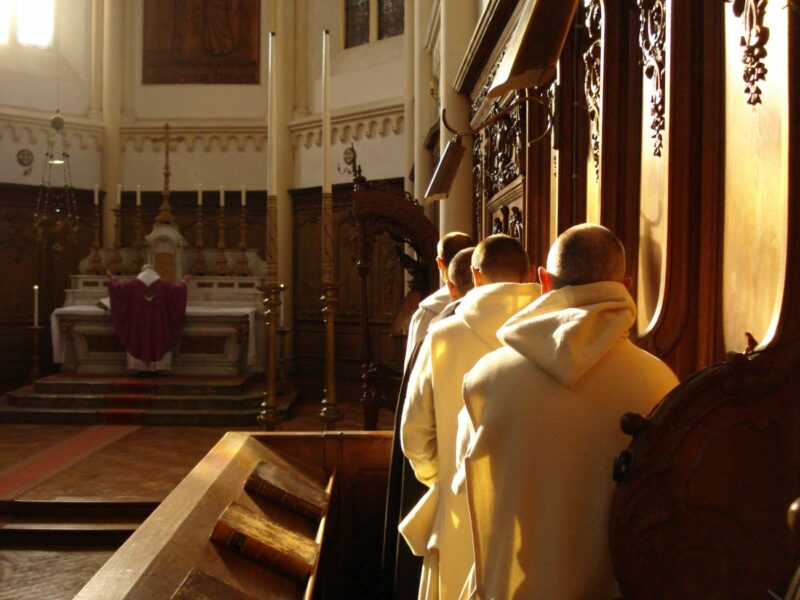
The General Chapter of the Carthusian Order is meeting this month at the Grande Chartreuse in France to deliberate, among other matters, on the approval of modifications to the Carthusian Rite that will subsequently be presented to the Dicastery for Divine Worship and the Discipline of the Sacraments.
According to information obtained from the young British liturgist Calder Claydon— a Theology student at St. Mary’s University in Twickenham, about to begin his postgraduate studies at Oxford on Liturgy and Worship—, the modifications to be voted on affect only the Order’s own Divine Office, and not the Missale Cartusiense, whose latest edition was published in 2021.
The news has generated some unease among those who recall the well-known adage traditionally applied to the Carthusian Order—«Numquam reformata, quia numquam deformata» («Never reformed, because never deformed»)—and fear that this unaltered character may now be affected. However, Claydon believes there is no reason for serious concern and provides several details to contextualize the matter.
The Proposed Modifications
According to the dialogue Claydon had with the Prior of one of the European charterhouses, one of the latest modifications to be proposed to Rome consists of an enrichment of the Pentecost Office, which would include «special psalms with their own antiphons». Likewise, small changes have been proposed in the prayers developed after the Second Vatican Council, with the aim of making them «more faithful to the sources».
The liturgist emphasizes that the modifications being voted on have arisen from within the Carthusian Order itself, making it highly unlikely that changes of a «subversive» or «destructive» nature to the Carthusian Office will be submitted to the Dicastery.
Dialogue with the Dicastery and «Romanization»
Nevertheless, the dialogue with the Dicastery for Divine Worship regarding these liturgical books has been ongoing for some time. It is likely, Claydon warns, that some «romanizations» will inevitably be introduced into the Carthusian liturgy, as already happened with the Missal.
In fact, certain changes in the rubrics of the Missale Cartusiense have already shown a desire for greater closeness to the Roman liturgy, using expressions such as «being in the bosom of the Roman Rite», formulas that previously did not appear so explicitly.
It can be expected that approvals from the Dicastery will not be excessively delayed, given that—unlike other liturgies—the Carthusian one did not undergo substantial changes after the promulgation of the Novus Ordo Missae.
Let us pray for the Carthusian Fathers in these days as they vote on matters of such importance for the liturgical life of their venerable Order.