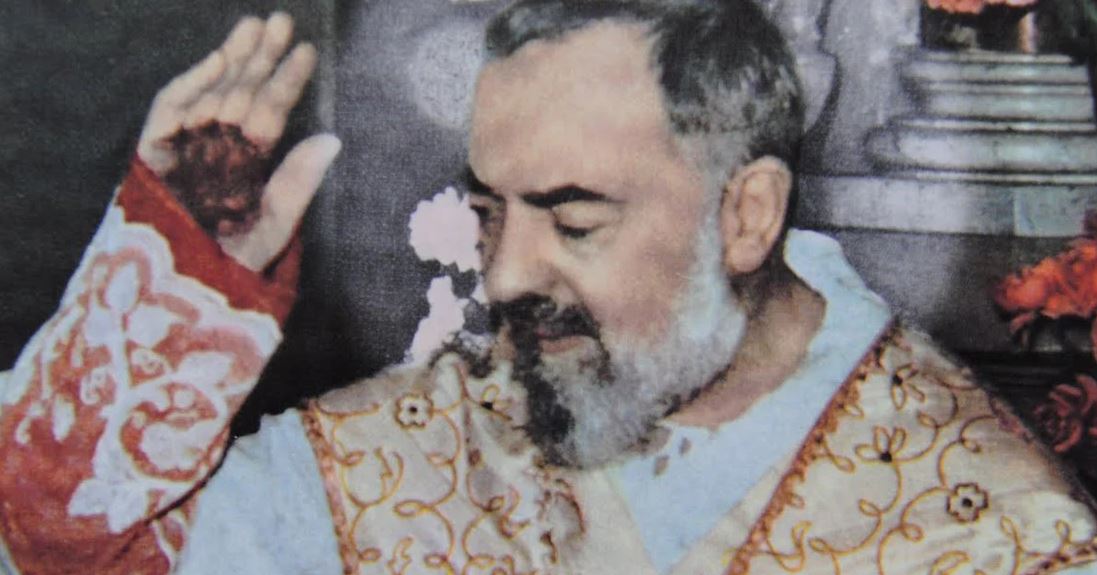
There are books about Padre Pio written by historians, theologians, and devotees who never knew him in life. And there is a book written by someone who visited him for twenty-six consecutive years, from 1942 to 1968, and who, when he died, still considered him his spiritual father.
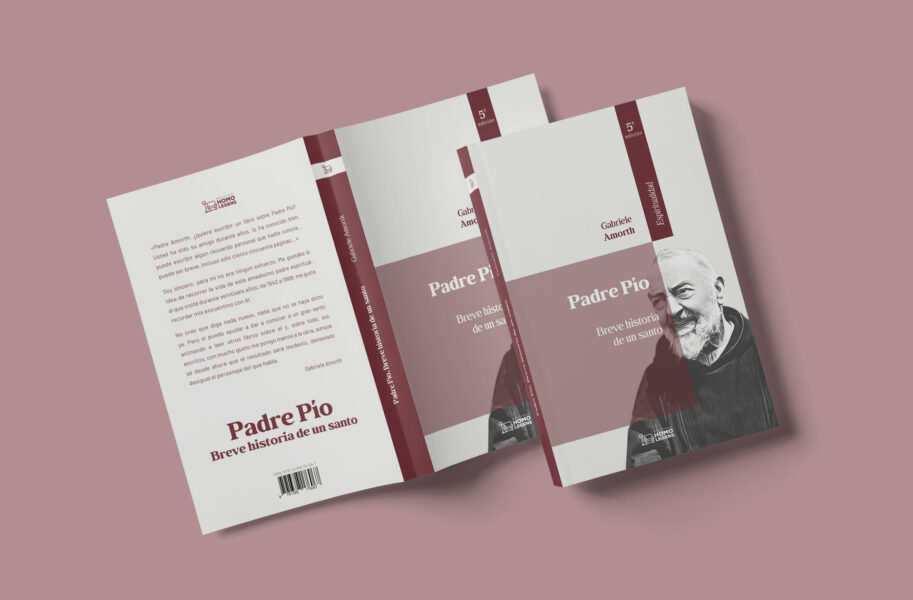
That book is Padre Pío. Breve historia de un santo, by Gabriele Amorth. And Homo Legens has just published its fifth edition.
Two figures who need each other
Gabriele Amorth, born in Modena in 1925, studied Law, was ordained a priest in 1954, and spent years as a journalist and editor before discovering his definitive vocation: exorcism. In 1986, he was appointed exorcist of the Diocese of Rome. Throughout his life, he performed more than 70,000 exorcisms. He founded the International Association of Exorcists in 1990. When he died in Rome on September 16, 2016, he was the most recognized figure worldwide in that ministry within the Catholic Church.
A man who faced absolute evil every day of his priestly life. And who, at the same time, maintained a deep friendship for more than two decades with the man whom many considered the greatest manifestation of holiness of his century.
It is no coincidence.
What only he could write
Amorth did not set out to write an academic biography. He says it himself in the book’s introduction, with disarming honesty: «I don’t think I say anything new, nothing that hasn’t been said already. But if I can help make a great saint known, encouraging reading other books about him and, above all, his writings, I gladly get to work, even though I know from now that the result will be modest, too uneven compared to the character he speaks of».
That modesty is in itself a portrait of the spirituality with which Amorth lived alongside Padre Pio. There is no grandiloquence. There is no showcase hagiography. There is the gaze of someone who knew the saint up close, who saw him confess for hours, who understood from within what the expression «struggle against the demon» meant because he himself waged that same battle every day from another front.
The book covers the entire life of Padre Pio from his childhood in Pietrelcina, through his entry into the Capuchins at sixteen years old, to the stigmata received on September 20, 1918, and the two periods of tribulations in which the Church imposed severe restrictions on him. It does so with the precision of someone who knows the facts and the warmth of someone who loved the protagonist.
Holiness as combat
One of the threads that runs through the book—and that Amorth understands like few others—is the dimension of spiritual struggle in Padre Pio’s life. From the age of fifteen, the young Francesco Forgione had a vision that would mark his entire existence: he saw himself fighting against a giant whose forehead touched the clouds, with the promise of a resplendent figure who told him: «Courage, enter the fight with confidence and fight bravely. I will be near you, I will help you and I will not allow you to be defeated».
Amorth, who performed tens of thousands of exorcisms, understands that combat from his own guts.
That shared understanding between the author and his subject is what gives the book a depth that no other biography of Padre Pio can replicate.
Five editions in eight years
The editorial fact says it all. Published for the first time in Spain in 2018 by Homo Legens, the book now reaches its fifth edition—the 2026 one—with 204 pages, pocket format with flaps, and a price of 9.90 euros. In a market where most spirituality titles do not exceed one edition, reaching the fifth in less than a decade means that the book has found a faithful, growing audience that recommends it.
It is not a fashion phenomenon. It is the type of loyalty that only books that really change something in those who read them generate.
A book for this moment
The Church has been debating for years on how to talk about holiness without falling into sweetened hagiography or sociological reduction. Padre Pío. Breve historia de un santo offers a third way: the direct testimony of a man who knew the saint, who treated him with respect and without naivety, and who remembers him with the same conviction with which he lived his own ministry.
In a time when the figure of Padre Pio remains the most invoked in the contemporary sanctoral—with millions of devotees around the world and an intercession that continues to generate testimonies—this book is, simply, the best entry point for anyone who wants to understand who he really was.