


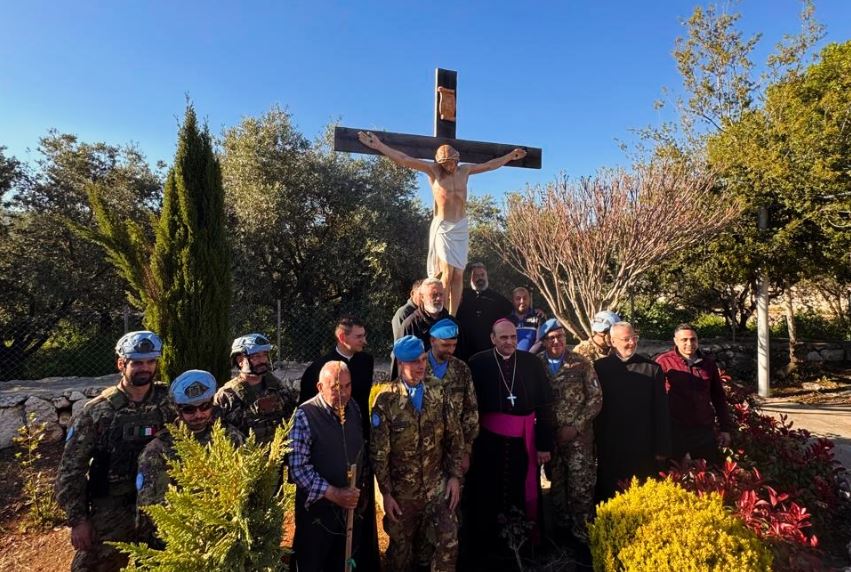
The Italian forces of the United Nations mission in Lebanon (UNIFIL) restored in the town of Debel the crucifix that had been destroyed days earlier by an Israeli soldier, in an episode that has provoked a strong reaction in the Church and in the international Christian community.
The replacement of the image took place in less than 48 hours, in coordination with the local population, in an attempt to repair the damage caused after the desecration of one of the central symbols of the Christian faith.
The Desecration of the Crucifix
The incident took place in this town in southern Lebanon, with a large Christian majority, where an Israeli soldier was caught hammering the image of the crucified Christ. The disseminated images confirmed the deliberate destruction of the crucifix, which triggered a wave of indignation.
Read also: An Israeli soldier smashes a statue of Christ with a hammer in southern Lebanon
The Israeli Army itself later acknowledged the incident, expressed its regret, and announced the opening of an internal investigation to determine responsibilities.
The First Replacement
After the incident, the Israel Defense Forces (IDF) posted a message on their social networks in which they assured that they had replaced «the damaged image» in coordination with the local community, accompanying the publication with photographs of a new cross installed in the place.
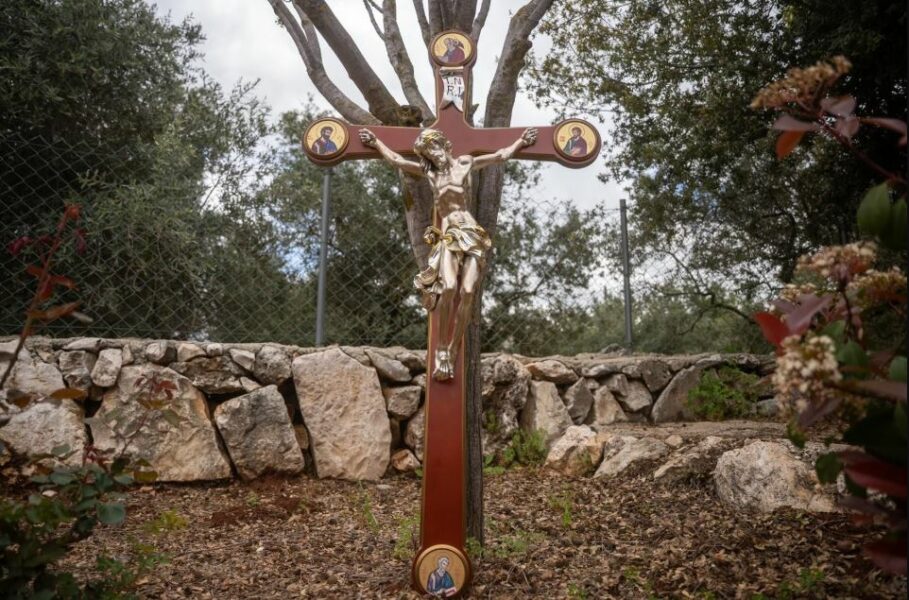
However, the image showed a small cross leaning against a tree on the side of the original location. The message closed by saying «The IDF expresses deep regret for the incident and is working to ensure that it does not happen again in the future».
Replacement of the Crucifix in Less Than 48 Hours
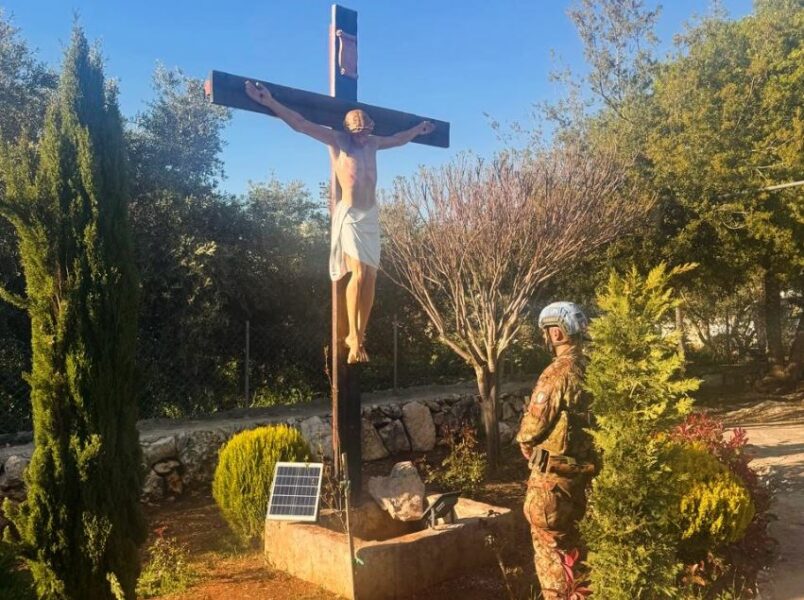
Subsequently, it was the Italian forces of UNIFIL who proceeded to replace a crucifix in accordance with the one that had been destroyed.
The intervention of the blue helmets took place in a short time and with the participation of the local community, as reflected in the disseminated images, in which the new cross already installed in the original location can be seen.
An Attack That Transcends the Material
In communities like that of Debel, where the Christian presence is historical and majority, the crucifix constitutes a visible expression of the faith and identity of the people.
Therefore, the act has been widely denounced by ecclesiastical authorities, who have qualified it as a desecration and a direct offense to the Christian faith. The subsequent reaction—with the replacement of the symbol and official apologies—does not erase the gravity of the fact.
As the bishops of the Holy Land have pointed out, this type of episodes are not isolated, but are inscribed in a broader context of vulnerability of Christian symbols in conflict zones. The demand for sanctions and effective guarantees of respect aims precisely to prevent events of this nature from repeating themselves.