


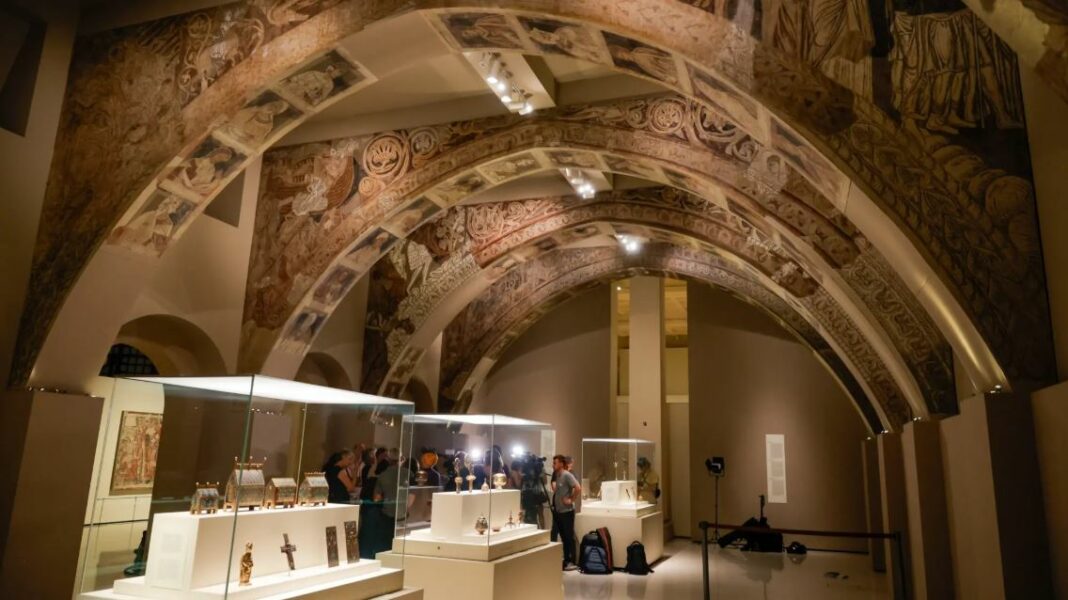
The conflict over the paintings from the Monastery of Sijena has intensified following statements by the Minister of Culture, Ernest Urtasun, who, although he has acknowledged the existence of a firm ruling ordering their return to Aragon, has expressed his rejection of the decision and has backed new maneuvers to halt or condition its execution from the National Museum of Art of Catalonia (MNAC).
Read also: The Generalitat retains the Sijena works despite the Supreme Court ruling
Formal acknowledgment of the ruling, but substantive rejection
According to El Mundo, Urtasun has stated that he does not agree with the decision of the Huesca court, considering that it “ignores the opinion of some experts” who warn of the possible damage that the transfer of the works could cause.
The minister himself has admitted that it is a judicial resolution that neither the Ministry nor the Generalitat can “omit.” However, he has made it clear that his department will continue to be guided by technical reports and will support any appeals that the MNAC board of trustees may pursue.
In practice, this position opens the door to prolonging the process and hindering the effective execution of the ruling.
Political resistance against legality
The Ministry’s stance reinforces the line maintained from Catalonia for years, based on questioning the technical viability of the transfer as an argument to avoid restitution.
From Aragon, on the contrary, it is insisted that the Supreme Court has already established three essential aspects: the Aragonese ownership of the paintings, the obligation to return them, and the viability of their transfer without exceptional risks.
The Director General of Culture of the Government of Aragon, Pedro Olloqui, has accused the minister of joining an offensive aimed at obstructing compliance with the ruling and has reproached him for questioning technical reports that were indeed considered by the courts.
A judicial ruling that ends decades of litigation
The execution order issued by the Huesca court sets a maximum deadline of 56 weeks for the return of the paintings, thus closing a long judicial battle that dates back more than a decade.
The works, removed from the monastery after the fire suffered during the Civil War, have been away from their place of origin for more than 90 years.
The judicial resolution not only mandates their restitution but also establishes that the MNAC must bear the costs of the transfer.
In the face of attempts to delay their return, from Aragon it is insisted that what is at stake is not only a patrimonial issue, but respect for legality and the restitution of an asset that is part of the history and identity of the monastery.