


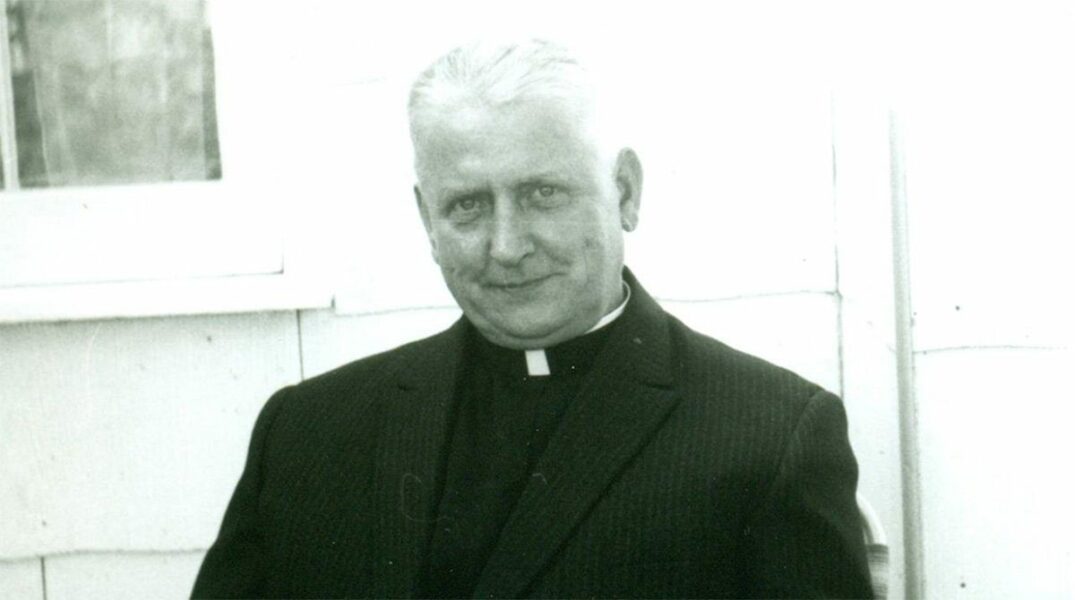
The canonization cause of Jesuit Walter Ciszek, a Polish-origin American priest who spent years in captivity in the Soviet Union, has been halted following the Vatican’s evaluation. This has been confirmed by the Diocese of Allentown (Pennsylvania), which has concluded that the submitted documentation does not allow progress toward his beatification.
Rome concludes the process
In a letter dated April 9, Monsignor Ronald C. Bocian—president of the now-defunct Father Walter Ciszek Prayer League—informed its members that the diocese had received notification that the case “lacks the necessary documentary support” to continue.
The decision comes after years of study by the competent bodies in Rome, responsible for examining each cause in accordance with Church norms.
The Diocese of Allentown, which took over the cause after its opening in the Byzantine Catholic Eparchy of Passaic (New Jersey), has indicated that the league will transform into the Father Walter J. Ciszek Society, with the aim of keeping his memory alive and spreading his spiritual legacy.
A clandestine ministry in Soviet territory
Walter Ciszek was born in 1904 in the United States, into a family of Polish immigrants. He was ordained a Jesuit priest in 1937 and became the first American in the order within the Byzantine rite, one of the Eastern traditions in communion with the Catholic Church.
Trained in Rome as part of an initiative promoted by Pius XI to prepare priests destined for Russia, he managed to enter Soviet territory at the start of World War II using false documentation, in order to exercise his ministry clandestinely.
In 1941, he was arrested by the Soviet secret police on charges of espionage and sentenced to fifteen years of forced labor in Siberia. During his internment in various camps, he managed to celebrate Mass and administer the sacraments under extreme conditions.
Years of captivity and return to the United States
After serving his sentence in 1955, he was not allowed to leave the country and was assigned to work in a chemical factory. For years he remained incommunicado, until he managed to reestablish contact with his family in the United States, who had given him up for dead.
In 1963, he was released through a prisoner exchange negotiated by President John F. Kennedy. Back in his country, he developed his work in the academic and spiritual fields, especially in the study of Eastern Christianity.
He died in 1984. His experience was captured in works such as He Leadeth Me and With God in Russia, written with Jesuit Daniel Flaherty.
A legacy that endures
Although the canonization cause will not proceed, the Diocese of Allentown has emphasized that this decision does not affect the value of his testimony.
In a statement, it noted that his life, marked by faith, perseverance, and trust in God amid suffering, continues to be a spiritual reference for numerous faithful.
It has also thanked the prayers and support received over the years, and assured that Ciszek’s testimony will continue to bear fruit beyond the formal canonization process.