


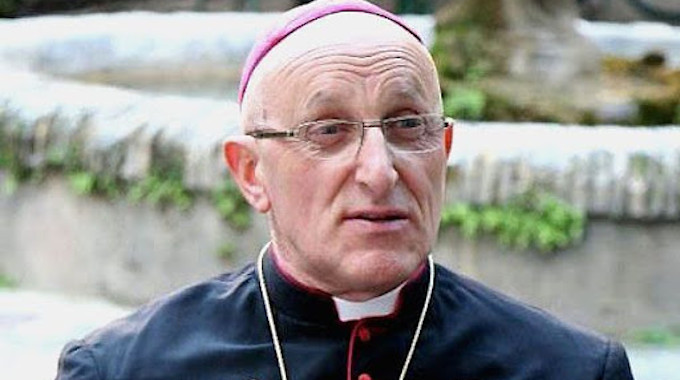
The emeritus bishop of Fréjus-Toulon, Monsignor Dominique Rey, has denounced a «quasi-persecution situation» against Christians in Algeria, coinciding with the visit of Pope Leo XIV to the North African country. His statements introduce an element of contrast to the institutional tone that has marked the pontifical trip.
In statements collected by Tribune Chrétienne, Rey explains that he decided to speak out after directly hearing from local Christians, both Arabs and Kabyles, belonging to different confessions. As he points out, it is not isolated cases, but a situation that affects the entire body of the faithful.
“A quasi-persecution situation”
The prelate describes a worrying scenario: «Christians are falling into a quasi-persecution situation», marked by «increasingly significant restrictions on the exercise of worship and religious practice». In his view, this is a violation of the basic principle of religious freedom, which should guarantee every person’s right to believe and practice their faith without obstacles.
Criticism of the papal trip’s approach
The Pope’s visit has been presented as a gesture of outreach to the Algerian people. However, Rey believes that this approach cannot overlook the existing problems. In reference to the statements of Cardinal Jean-Paul Vesco, who has highlighted the encounter nature of the trip, the French bishop warns of the need to address the real tensions as well.
«It is very good to talk about encounter», he acknowledges, «but we must know how to put the issues of tension on the table», particularly the «marginalization of Christian communities» resulting from recent legal provisions.
The absence of Tibhirine and the risk of “consensus”
Another point that Rey regrets is the decision not to include a visit to Tibhirine in the trip, an emblematic place for Christians in Algeria due to the martyrdom of the Trappist monks in 1996.
For the bishop, this absence represents a missed opportunity to publicly recognize the witness of those who gave their lives for the faith. «The martyrdom of these witnesses marks the religious history of Christians in Algeria», he emphasizes.
Furthermore, he warns of the risk of an excessively conciliatory approach: «Wanting to be too consensual is to stop being in the truth», he states, insisting that the promotion of fraternity cannot be done apart from the reality experienced by Christian communities.
Accusations of state pressure and lack of religious freedom
Rey goes further in his diagnosis and points directly to the actions of the Algerian authorities. As he argues, the pressure exerted on Christians «is not admissible» and contradicts even a basic understanding of secularism.
In his opinion, the problem lies in the fact that the State does not guarantee true freedom of conscience, but tends to impose a certain religion: «It is a State that wants to impose the Muslim faith», he states clearly.
The role of the Vatican: between dialogue and denunciation
Regarding the Holy See, the bishop believes there is awareness of the situation, although he points out the need for greater balance between diplomacy and clarity.
As he explains, the Vatican «has received testimonies from deeply wounded Christian communities», but at the same time seeks to maintain a channel of dialogue with the authorities. Even so, he insists that this dialogue should not evade «the expression of the difficulties, trials, and sufferings» that the faithful are going through.
A context that challenges beyond the visit
Monsignor Rey’s statements introduce an element of contrast in the official narrative of the papal trip, by emphasizing a less visible reality. Without questioning the importance of dialogue between religions and cultures, his intervention underscores that this effort cannot be detached from the effective defense of religious freedom.