


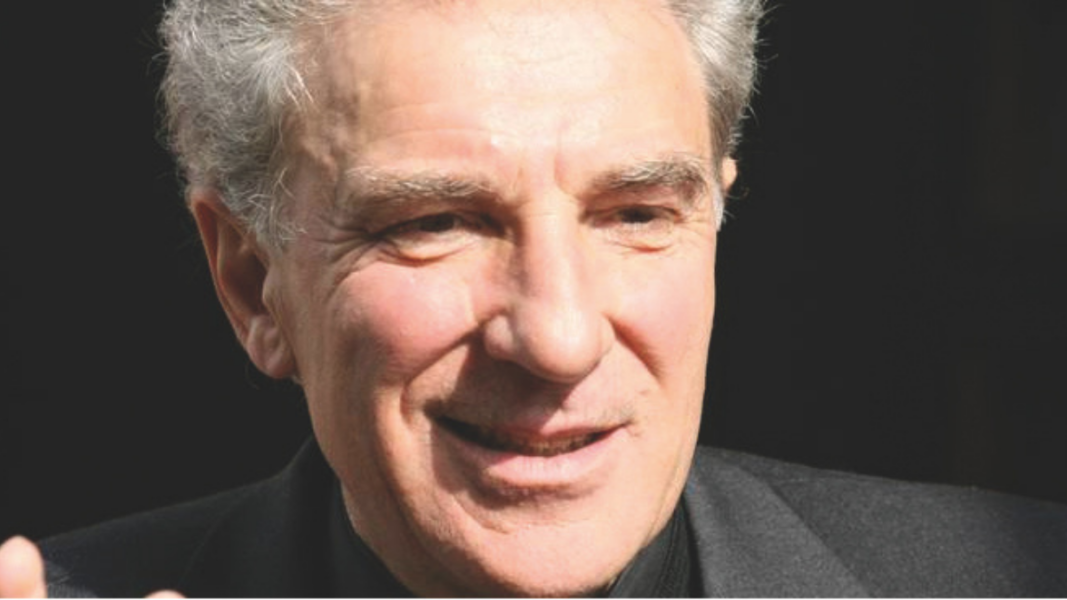
The Dicastery for the Doctrine of the Faith has decided not to lift the statute of limitations in the case of the Italian priest Valentino Salvoldi, from the diocese of Bergamo, accused by at least 21 people of sexual abuse conduct committed between the 1990s and the early 2000s. The decision, confirmed in 2025, also closes the canonical procedure after the Udine Prosecutor’s Office archived the criminal case in September 2024 due to the statute of limitations on the offenses, as reported by the portal of the Italian association Rete L’Abuso.
There will be no trial. Neither civil nor ecclesiastical.
A public profile as a preacher and trainer
Valentino Salvoldi was not an unknown priest or tied to a specific parish. Ordained in 1970, he developed much of his ministry outside the territorial scope of the diocese of Bergamo, alternating stays in Italy and in various African countries as a fidei donum missionary. His activity focused on preaching, training, and organizing youth gatherings.
He presented himself as a professor of philosophy and moral theology and as a collaborator in training initiatives linked to the Church. He published numerous books on spiritual and moral outreach with various Catholic publishers, many of them centered on love, affection, and religious experience. In his own biographical presentation, he claimed to be at the service of the Holy See in tasks of clergy formation in young Churches, although without specifying exactly what that role consisted of.
His figure was built around an image of a modern priest, critical of ecclesial structures he considered rigid, and promoter of a more affective and experiential spirituality. That public profile—charismatic, itinerant, and media-oriented—explains in part the influence he exerted over teenagers and young people who participated in his camps and gatherings.
The priest “beggar of love”
Valentino Salvoldi presented himself as a charismatic preacher, critical of what he considered an excessively rigid Church. He defined himself as a “beggar of love” and advocated a spirituality centered on affection, the body, and physical closeness.
After his time as a missionary in Africa, from the 1990s he organized camps for teenagers and young adults. According to the testimonies collected by the association Rete L’Abuso and published by the Italian press, in those gatherings a climate of strong emotional dependence developed, with nighttime rituals, candlelit dinners, and intense spiritual dynamics.
Several complainants describe a repeated pattern: prolonged kisses on the mouth, invitations to share a bed, collective nude baths during camps, and physical contacts justified as expressions of spiritual affection. Some recount that the priest insisted that in that context “common rules did not apply” and that they were part of a spiritual elite.
Salvoldi has denied the accusations and has defended that his gestures were expressions of tenderness within a pedagogy that aimed to free from fears and prejudices.
The complaints and the criminal archiving
In 2023, former participants began to organize and file complaints. One of them managed to contact dozens of people who recounted similar experiences. The documentation was forwarded both to the Prosecutor’s Office and to the diocese of Bergamo.
On September 3, 2024, Deputy Prosecutor Elena Torresin archived the criminal procedure, considering that the offenses were time-barred. No trial was held nor were proofs evaluated in a criminal setting: the archiving was based exclusively on the passage of time.
The diocesan reaction
The diocese was officially informed in October 2023 and in December issued a brief note indicating that it had activated the mechanisms provided for by canon law.
However, according to the documentation disseminated by the complainants, the canonical procedure did not advance quickly. Some victims were contacted more than a year after the diocese had formal knowledge of the facts. The management of the diocesan Service for the Protection of Minors has been questioned for its bureaucratic tone and for the perception of lack of independence.
The Dicastery’s decision
In 2025, the Dicastery for the Doctrine of the Faith decided not to derogate the statute of limitations in the canonical sphere. Ecclesiastical law contemplates the possibility of lifting it in certain serious offenses, but in this case that faculty was not exercised.
The consequence is the definitive closure of the file without sanction.
From a legal point of view, the decision complies with the current regulations. From a pastoral and credibility point of view, the debate remains open.
Beyond the statute of limitations
More than twenty complainants describe the same pattern prolonged over years. Time has prevented a criminal trial. The Vatican decision has prevented a canonical process.
On his blog on Infovaticana, Specola has been particularly critical and has spoken openly of a use of the statute of limitations that ends up functioning as institutional cover. According to that reading, the problem is not only legal, but structural: the distance between statements of “zero tolerance” and the concrete application of the norms when cases affect old facts.
The Salvoldi case, beyond its formal outcome, once again raises an uncomfortable question: if the canonical system allows lifting the statute of limitations in serious offenses, what criteria determine when it is done and when it is not?