


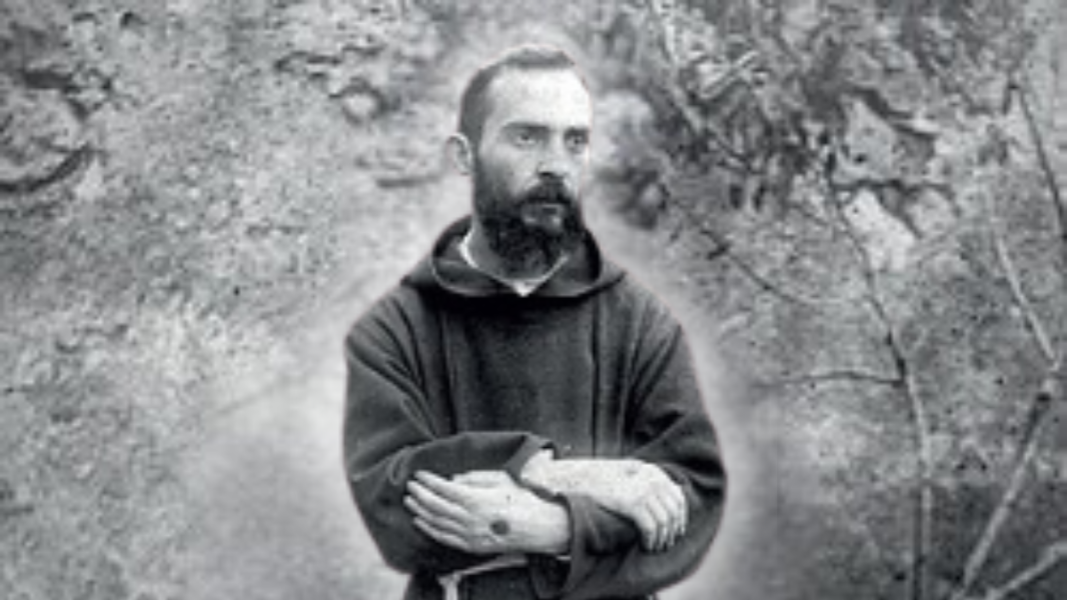
Every September 23, the Church remembers San Pío de Pietrelcina (1887-1968), universally known as Padre Pío, one of the most influential and beloved saints of the 20th century. Italian Capuchin friar, he was chosen by Christ to participate in a singular way in his Passion through the stigmata, which he bore on his hands, feet, and side for half a century. His life was marked by prayer, suffering offered up, and total dedication to the priestly ministry, especially in the confessional. For this reason, many rightly called him the “crucified without a cross”.
Born in Pietrelcina under the name Francesco Forgione, from childhood he experienced an intense closeness to the Lord and to the Virgin Mary. At fifteen years old, he entered the Capuchin convent and took the name Pío, in honor of Pope Saint Pius V. He was ordained a priest in 1910 and, after enduring serious health problems, settled in the convent of San Giovanni Rotondo, where he would remain until his death. There, on September 20, 1918, he received the stigmata while praying after Mass. Those wounds, inexplicable to science, were for him an intimate cross, lived with humility and offered as reparation for souls. He never sought notoriety from prodigies, but silent fidelity to God’s will.
Beyond the mystical phenomena, Padre Pío was above all an untiring priest in the confessional. With the gift of reading hearts, he helped thousands of penitents to rediscover God. His rigor was not harshness, but charity that confronts with the truth to lead to conversion. For this reason, despite misunderstandings and criticisms, the faithful returned again and again to confess with him, convinced that in those absolutions they found divine mercy. To this were added numerous miracles attributed to his intercession and his most visible work of charity: the Casa Alivio del Sufrimiento, a hospital founded in 1956 to care for both the bodies and souls of the poor.
Among the thousands who went to San Giovanni Rotondo was a young Polish priest, Karol Wojtyła, who years later would become Saint John Paul II. The Pope always recognized in Padre Pío a “generous dispenser of divine grace” and, in 2002, canonized him, confirming the veneration that the people of God already professed for him.
On September 23, 1968, after tirelessly repeating “Jesus, Mary”, Padre Pío gave his soul to the Lord. His figure continues to be today a beacon of faith and conversion, reminding us that holiness does not consist in visible prodigies, but in charity lived to the extreme and in faithful love for Christ and his Church.
Source: Aciprensa
Articles of interest: