


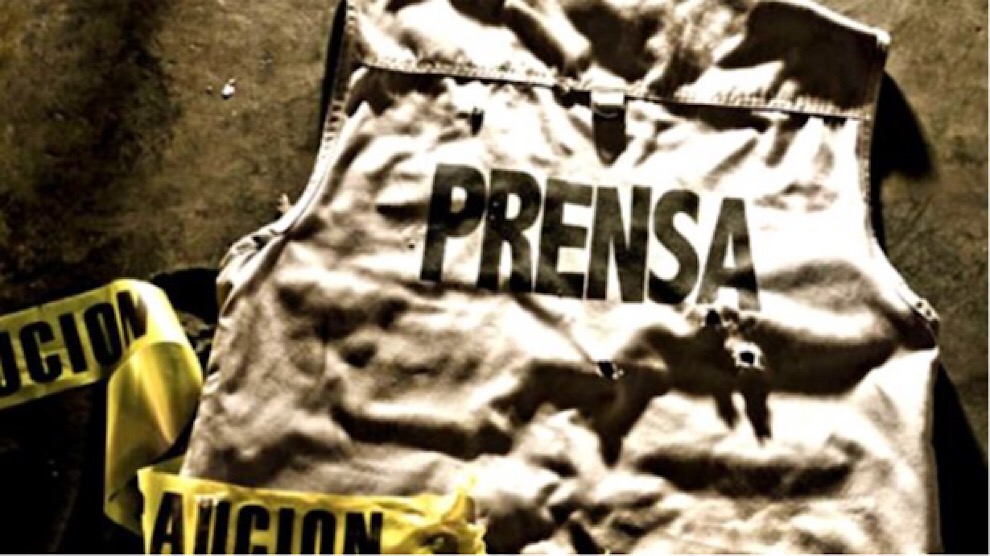
On June 20, International Refugee Day, Reporters Without Borders issued an alert that should shake any democratic conscience. The number of countries affected by the forced exile of journalists has doubled in just five years: from 19 in 2021 to 40 in 2025. More than 1,468 professionals from over 60 countries have sought support from the organization after fleeing threats, detentions, or death. This figure is not mere statistics; it represents shattered families, silenced voices, and a direct blow to the right to information of millions of people.
The 2026 World Press Freedom Index by Reporters Without Borders confirms what many countries now suffer: press freedom worldwide has fallen to its lowest level in 25 years. The global average score is the worst recorded since the index began. Of the 180 countries assessed, more than half (52.2 %) are in a “difficult” or “very serious” situation, compared to 13.7 % in 2002. Less than 1 % of the world’s population today lives in nations where the press enjoys a “good” environment. The decline is structural; the legal indicator has worsened in more than 60 % of the countries evaluated. Wars, authoritarianism, organized crime, and impunity shape a map of terror for those who practice journalism.
In the Americas, the deterioration is particularly alarming. The continent lost an average of 14 points on the index. The United States dropped seven places (64th). Countries such as Ecuador plummeted 31 positions (125th), Peru fell 14 (144th), Argentina slipped 11 (98th), and El Salvador continues its free fall. The violence of organized crime, combined with hostile rhetoric from political power and economic pressures, is turning large parts of the region into high-risk territories. So far in 2026 alone, at least six journalists have been murdered in Mexico, Colombia, and Guatemala, according to data collected by Reporters Without Borders.
Mexico deserves special and urgent attention. Although it ranks 122nd in the global RSF classification, the organization Article 19 documents a terrifying reality: 177 journalists and communicators have been murdered in the country since 2000 in possible connection with their reporting work. Veracruz remains the deadliest state, with 33 cases. The administrations of Calderón, Peña Nieto, and López Obrador each recorded around 47–48 murders. Under the current government, at least 10 cases have already been counted, the most recent being that of Luis Ángel López Valdés, killed on June 11, 2026, in Veracruz. Impunity remains the norm. Mexico continues to be one of the most dangerous countries in the world for practicing journalism, where the profession can cost one’s life.
Behind the figures lies a deliberate strategy by many public and private powers to control the narrative, criminalize criticism, and turn information into propaganda. When independent journalism is displaced by exile, prison, or death, the public sphere is impoverished, corruption proliferates, and citizens are left at the mercy of official versions or networks of disinformation.
In Mexico, this dynamic takes on particularly worrying overtones. Only what is compliant with the regime or uncritically reproduces its narrative is considered “true journalism.” Journalism that watches over power, documents abuses, questions public policies, or gives voice to those ignored by the official discourse is systematically labeled as suspicious, an enemy, or even an “adversary of the transformation.” This perverse logic not only erodes freedom of expression; it undermines the very foundations of any democracy that claims to be one.
As Pope Leo XIV warns in paragraph 134 of his encyclical Magnifica Humanitas, “disregard for the truth leads slowly but inexorably toward totalitarianism, for which, as the philosopher Hannah Arendt wrote, the ideal subjects are not so much those who are ideologically convinced, but the people for whom the distinction between fact and fiction (that is, the reality of experience) and the distinction between true and false (that is, the norms of thought) no longer exist.”
When a government or political system decides that truth is whatever suits power and that everything else is suspicion or fake news, it is laying the groundwork for something far more serious than a mere crisis of media credibility. It is attacking the dignity of the human person and the very possibility of democratic coexistence.
Protecting journalists is not a corporate favor or a political concession. It is an elementary obligation of any state that claims to be democratic and an indispensable requirement for the health of the republic. While the world witnesses the greatest setback in press freedom in a quarter of a century, Mexico and the region cannot afford to continue normalizing the murder, exile, and stigmatization of those who fulfill the mission of informing. Truth, as the Holy Father reminds us, is not a negotiable good. It is the foundation without which every democracy ultimately becomes fiction, and when it is an enemy of power, it can also be very dangerous.