


Fr. José Juan Sánchez Jácome / ACN.- We cannot succumb to the trends of modern times that seek the eye-catching, the sophisticated, and the spectacular in technological media to secure a place, gain social recognition, and stay relevant, according to the logic of the world.
In our case, the Word of God cannot be wrapped in powerful images and symbols to make it appealing and position it in public opinion. In our eagerness to modernize the Church, we may end up with only the packaging, the innovations, and the image, to the detriment of the very richness of the Word of God, which does not need colors and modern presentations, but to be savored in itself.
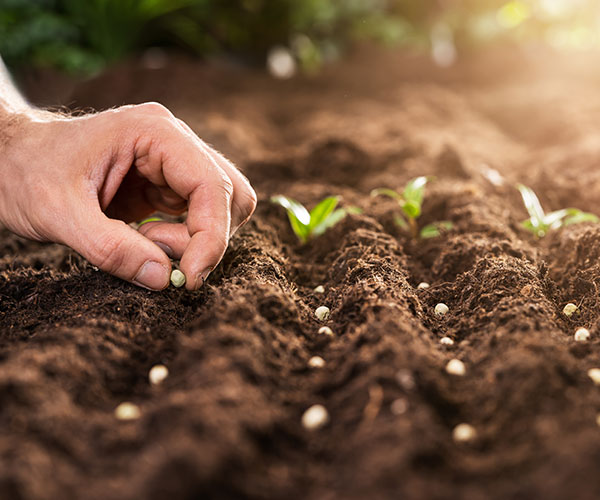
Jesus was not impressed by the spectacular nature of the technical media of his time, but rather focused on the simple and imperceptible aspects of nature to explain the mysteries of the kingdom of God. That is why he compared the Word of God to a seed, to a tiny seed that holds a potential for life, fruit, and beauty that unfolds through a process.
We can often see this tiny seed in clear disproportion to the empire of technological media and scientific advances that offer dazzling, immediate, and short-term results in various areas of life.
When we fail to consider the power of the seed and the dynamic of the Word of God, Christians can often feel overwhelmed and at a disadvantage in the face of the noise, the dominance, and the immediate results produced by these powerful and sophisticated media.
The seed is the only thing we have, but it is everything we have. With great clarity and filled with hope, the prophet Isaiah points to the power of the Word of God that will not fail to be fulfilled:
“For as the rain and the snow come down from heaven, and do not return there until they have watered the earth, making it bring forth and sprout, giving seed to the sower and bread to the eater, so shall my word be that goes out from my mouth; it shall not return to me empty, but it shall accomplish that which I purpose, and succeed in the thing for which I sent it.”
It does not speak in terms of precision, performance, or technical efficiency, but of a promise based on love and the plan of salvation, which guarantees that the Word will be fulfilled despite obstacles and any adversity. The Bible even speaks of the growth of this seed even in adverse conditions, as well as of beauty, abundance, and a plentiful harvest, because it is a Word that transforms the earth and the human heart. Psalm 64 does not merely affirm this, but sings of the goodness of God:
“You crown the year with your bounty; your wagon tracks overflow with richness. The pastures of the wilderness overflow, the hills gird themselves with joy, the meadows clothe themselves with flocks, the valleys deck themselves with grain, they shout and sing together for joy.”
The Word is the only thing we have, but it is everything we have. Therefore, in the face of its beauty, power, and vitality, we must ask ourselves what has happened to us, why human life has become so complicated. What has happened that we now witness a process of social decay. What should we say about the evil that is spreading in our society.
In the face of this reality that hurts and concerns us, we must recognize at least two important factors. First, we must acknowledge that we have stopped sowing. We have not sown properly in the family, in the school, and in society.
Perhaps we have stopped sowing and believing in the power of that tiny seed to bring about an abundant harvest. We must sow in season and out of season, without waiting for the right conditions. Like the sower who scatters seed, we must take every opportunity to proclaim the Word of God.
To keep sowing, we must gratefully remember all those who sowed in us. They sowed with the hope that spiritual fruits would come into our lives. Perhaps many of us took time for the word to blossom, but our sowers foresaw that moment.
If we feel adversity when sowing, if we encounter obstacles and even censorship, as in these times, to speak of God, if it seems that everything remains the same despite preaching about God, we must not despair, and it will often be necessary to consider our own personal case.
How many people sowed in us and how long they waited for the fruits to come. It may have taken us a long time to show change. Many sowed in us, and even when the results were not visible, they did not become discouraged because they trusted unconditionally in the power of the word.
Faith is like a seed that works in us even when we are not aware of it or when we are unable to respond to it. Therefore, we must not stop sowing, and if you have spoken of Christ to others and they have rejected you, pray and wait. The seed has already been sown. So, even if it seems there are no results and the word has been rejected, we must never give up on a soul.
Gloria Fuertes explains it this way: “When all hopes were buried, all springs dry, all questions silenced, all fires extinguished, then, in the middle of the night, the weak force of a seed broke through the crust of the earth.”
There is a second thing we need to consider: the word has its stages to reach full bloom. That is why Jesus masterfully describes the process a seed undergoes, to help us see the process the Word of God follows in our hearts.
The Word of God is not magical; it does not offer immediate results. It is as modest as a seed that needs a process in our hearts. How we would like to see immediate results, but it is our task to do our work and leave the rest to God, like the farmer who sows and patiently waits for the seed to grow and blossom.
The fruits will not come through our own ability, ingenuity, or intelligence. This work belongs to God. The sower does his work, but does not know how the seed grows. Jesus encourages us to do what is ours to do, always leaving to God the most important part of this work: the growth and the harvest.
We are accustomed to immediate results, but in spiritual life things do not work that way. We must be patient, we must strive, and we must know that the most difficult part is what God accomplishes, so as not to fall into the temptation of pessimism and defeatism because things do not change as we would like.
The providence of God acts more in accordance with the rhythms of nature than with the rhythms of industrial production. We must wait, enjoy each stage, await the emergence of the shoots, the seed, the fruits, and the harvest itself.
Roberto L. Stevenson said: “Do not judge each day by the harvest you reap, but by the seeds you plant.” The storm can scatter the flowers, but it cannot harm the seeds. The persecutions and challenges the Church has faced throughout the centuries have not stopped the growth of the seed, for the seed we sow carries the germs of God, as Fray César Valero reflects:
“The roots, the essences, are there. Two thousand years of faith and martyrdom are not easily suppressed. Not even by decree. And in any place and at any moment they sprout again with vigor. That is why it is so important to keep sowing, even though at times it may feel as if we are sowing on asphalt. Every word is a seed, and if the seed carries the germs of God, it will never be lost; perhaps our eyes will not see it, but its fruit will come.”
Many Christians continue to be persecuted, threatened, and killed for living their faith. But despite the dangers they face, they trust in the vitality of the seed that will continue to blossom, even in those challenging situations, as Bernardo Stamateas said:
“When problems come to bury you, remember that you are a seed. They are only sowing you; you will germinate and emerge to the surface again and bear fruit because you will have matured.” This is also confirmed by the striking testimony of a Christian in Gaza: “They buried us, but they did not know we were seeds.”
God continues to entrust us with his word. Let us not wait only for the arrival of the fruits, but for a great harvest that will also lead us to admire the work of God, as perceived in Chesterton’s reflection: “If the seeds sown in black earth can become such beautiful roses, what cannot the heart of man become on its long journey toward the stars?”