


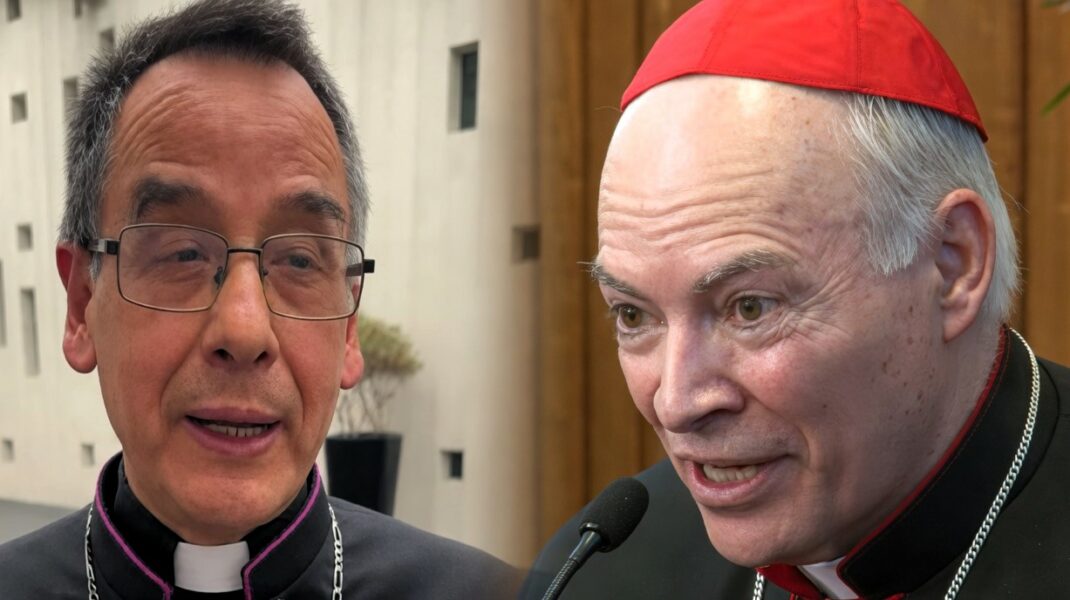
Despite the evidence, the recent reinstatement of Father Efraín Hernández closes a week marked more by doubts than by answers that would contribute to certainty and trust, especially among the millions of faithful and those who, in good faith, support the Basilica of Guadalupe. It is not only about the benevolent concept of alms, behind it lie tangled webs and complications that require a strong and moral authority to get to the bottom of a matter that Archbishop Aguiar Retes seeks to conceal with the apparent blessing that “nothing has happened”.
The Insigne and National Basilica of Our Lady of Guadalupe has been the scene of a profound institutional crisis since mid-2025. Thanks to investigations through this Infovaticana blog, all the elements that have attempted to piece together a complex puzzle are now known. Detailing the sequence of events is necessary to understand how the Guadalupe chapter has been in resistance, preventing further regrettable situations that put the patrimonial administration, pastoral care, and reputation of the Sanctuary at risk. This article reconstructs the chronology as it has been followed from Infovaticana.
The first turning point was recorded on Wednesday, August 6, 2025. Efraín Hernández Díaz, then rector of the Sanctuary and episcopal vicar, sent a message to the priests of Pastoral Zone I informing them that he would take vacation with the approval of Archbishop Aguiar Retes. The unexpected part was that, from that date onward, a prolonged absence began without formal communication, failing to fulfill his responsibilities.
Thursday, August 7, the day scheduled for the ordinary chapter meeting, he did not appear, causing confusion among clergy and staff. Capitular meetings and those with Basilica personnel were suspended.
Thursday, September 18. Father Efraín appears in Spain to sign a “twinning” agreement with the Sanctuary of the Virgin of La Macarena; he is accompanied by Auxiliary Bishop Francisco Javier Acero and the archbishop’s close secretary, Father Mauro García Olvera.
Friday, September 19, 2025. Extraordinary chapter meeting. By consensus, the canons decide to send a formal letter to Archbishop Aguiar Retes outlining the need to expose a critical situation.
Saturday, September 20, 2025. Aguiar personally receives the document at his private residence. The archbishop acknowledges the seriousness of the facts presented regarding the Basilica’s situation and expresses his agreement to remove Efraín Hernández Díaz as rector and expel him from the chapter.
Sunday, September 21, 2025. A collegiate chapter meeting is held, presided over by the archbishop himself, who explicitly states that he has verified the seriousness of the accusations. Two decrees are read and anticipated: Prot. 817/2025 removing Father “Efra” Díaz as rector and expelling him from the chapter, and Prot. 818/2025 transferring faculties and duties to the archpriest. The chancellor of the archdiocese, María Magdalena Ibarrola y Suárez, attests to the acts by signing the documents. The archbishop thanks the chapter for its timely information and requests that the decrees not be disclosed until Wednesday, September 24, 2025.
However, the situation takes a turn. After September 24, Hernández Díaz sends a message to priests stating that he had submitted his resignation as rector and episcopal vicar, but maintaining his status as canon while anticipating time away.
Sunday, October 5, 2025. Aguiar again convenes the chapter, informing them that Father “Efra”’s case would be referred to the judicial vicar, Auxiliary Bishop Andrés Luis García Jasso; Aguiar now describes the facts as “alleged irregular handling of assets.” The chapter expresses disagreement with this reversal, and the archbishop does not allow dialogue and delegates the investigation. To everyone’s surprise, the former rector attends and confronts the canons.
On October 8, 2025, through decree Prot. 879/2025, the archbishop invalidates the previous protocols (817 and 818/2025) and orders the canonical investigation to proceed; Aguiar downplays the facts, shifting them from serious to merely irregular.
November 11, 2025. Chapter compiles information reiterating the removal of Father Efraín. The text bases the request on the Statutes of the Sanctuary and the Chapter, the Pastoral Directory, the Apostolic Brief Praestatem Pietatem of Saint John Paul II (which grants the CEM oversight of the Sanctuary), and various canons of the Code of Canon Law, particularly canon 1741.
Thursday, November 13, 2025. As part of the ordinary assembly of the CEM, the meeting of the National Council for the Sanctuary of Guadalupe is held at the Casa Lago of the Mexican Episcopate in Cuautitlán, State of Mexico. Participants include members of the chapter, Archbishop Aguiar Retes, the Bishop of Cuernavaca, Ramón Castro Castro, president of the CEM, the judicial vicar, Bishop Andrés Luis García Jasso; Auxiliary Bishop of Mexico Francisco Javier Acero, and the apostolic nuncio, Archbishop Joseph Spiteri. The chapter raises serious concerns: risks to the Sanctuary’s legal entity due to poor asset management, removal of reserved documentation such as bank statements, properties, and employee data, contracts with entities of dubious tax conduct, possible links to organized crime and money laundering, intimidation through death threats and workplace or psychological harassment, and “secrecy” in the rector’s decisions.
Particular and scandalous abuses are highlighted, such as the deterioration of the camarín of the Sacred Original due to excessive openings to privilege certain groups. At that meeting, explicit agreement is reached with the chapter’s request: Efraín Hernández Díaz must not return as rector or remain in the chapter. An external audit is proposed, and the urgency of economic transparency and protection for those threatened is emphasized.
December 12. Archbishop Joseph Spiteri celebrates the midnight Mañanitas Mass to the Virgin. This is unprecedented in the recent history of the Basilica of Guadalupe, as that celebration traditionally belongs to the rector of the Sanctuary.
December 25. Following the appointment of the new Bishop of Cancún Chetumal, Aguiar attempts rapprochement with the chapter. He appoints Canon Father Martín Muñoz as the new vicar general and moderator of the curia. He begins his duties in February 2026.
March 1, 2026. The chapter compiles a comprehensive document for ecclesiastical authorities, including Pope Leo XIV. They request a clear and written response from the archbishop. In case of refusal, they warn that they will appeal under canons 1732-1738 and communicate the outcome to the CEM, the Nunciature, the Secretariat of State, and the Dicastery for the Clergy.
April. It emerges that the canonical investigation could be nearing its conclusion with results that do not favor Father Efraín Hernández.
May 24, 2026. Without basis, agreements, or results, Aguiar Retes reinstates Father Efraín as rector; it transpires that at the meeting Aguiar reportedly said that the investigation results showed no commission of canonical offenses and that the company responsible for the audit was Deloitte. No document was provided to support the reassignment of Father Efraín.
May 27. A meeting between the president of the CEM and the chapter is reported following the pilgrimage of the Diocese of Cuernavaca. It emerged that the CEM and the nunciature had advised against the return of Father Efraín and that Archbishop Aguiar did not heed those recommendations sent in writing.
May 28. After the priestly ordinations at the Basilica, Archbishop Aguiar meets with the chapter. Concerned about an audio recording made at the May 24 meeting, he stated that it had been a crime; however, he would refrain from any criminal action. It also emerged that Aguiar would only keep Efraín Hernández “temporarily” while admitting that there were things “that were not right”; some media outlets begin “damage containment and control,” pontificating and protecting Father Efraín, emphasizing “tranquility” in the clergy of the archdiocese and indecently praising the “great leadership” of Aguiar.
Up to this point, a concise chronology of the events. Among the most scandalous grievances, the conversion of the camarín of the Virgin of Guadalupe into a space of privileged access for dozens of people, many without the proper conditions, causing physical deterioration to the Sacred Original and suggesting possible dynamics of favoritism or quotas; possible indications of links to organized crime, money laundering, and irregular contracts; explicit threats of revenge against chapter members; and the removal of reserved documentation that compromises the security of assets and employees.
The chapter’s effort has been decisive: to preserve the integrity of Mexico’s principal Sanctuary through institutional channels, containing the public scandal, but demanding clarity, effective episcopal oversight, and protection of the spiritual and material heritage entrusted to the Church.
The definitive resolution, pending the archbishop’s response and the results of the investigation and audit, will have implications for the Church in Mexico. And it must respond without concessions and with precision. The case points not only to a useful puppet but to those who pull the strings of that marionette. As the 50th anniversary of the opening of the new Basilica approaches, this crisis could have very painful and unprecedented consequences in the recent history of the beloved Guadalupe site, if Truth and the minimum sense of justice do not prevail. Neither media damage control will mitigate what, sooner or later, will be revealed. Above Efraín Hernández there are others who have turned the Sacred House of Tepeyac into a true plunder. Those who, as the prophet Jeremiah says, turn their office and duty—always presenting themselves as successors of Zumárraga—into making the temple a den of thieves. And God will do the same as He did in Shiloh: “I will cast you out of my presence, as I cast out all your brothers, all the descendants of Ephraim.” (Jer 7:15). The Word of the Lord.