


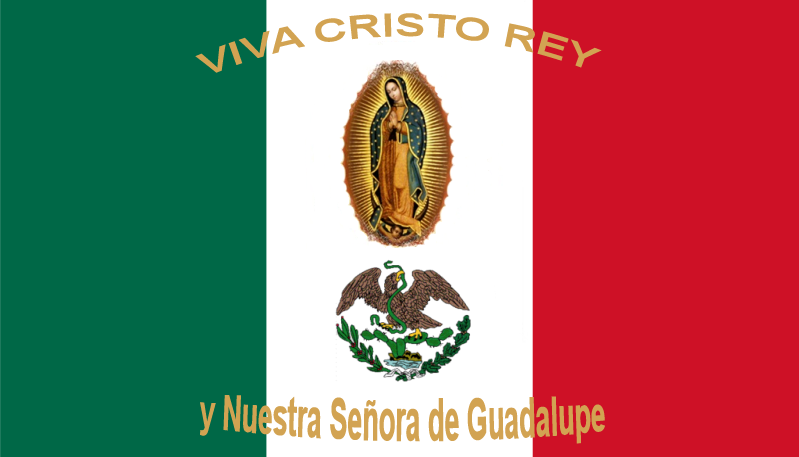
On July 31, 2026, marking exactly one hundred years since the enactment of the so-called Calles Law and the suspension of public worship in all churches throughout Mexico, the Mexican Episcopal Conference released a far-reaching message titled “Message on the Centenary of 1926: The Religious Conflict in Mexico.” With the subtitle “The Bells of the Churches Fell Silent, Their Blood Spoke: Memory of Our Martyrs, Religious Freedom and the Building of Peace,” the document, signed by the president of the episcopate, Ramón Castro Castro, and the secretary general, Héctor M. Pérez Villarreal, does not seek to reopen wounds or fuel resentments, but rather to inaugurate a time of grateful memory and ecclesial discernment that will extend until the Guadalupano Jubilee of 2031 and the Jubilee of the Redemption in 2033.
The text recalls that on July 25, 1926, the Mexican bishops issued a collective pastoral letter in which, faced with the impossibility of freely exercising their ministry, they suspended public worship beginning July 31. At dawn on August 1 of that year, Mexico awoke without public Masses; the churches remained open and silent, guarded by the faithful themselves. Thus began one of the most painful chapters in national history, which led to armed conflict between 1926 and 1929, the “arrangements” of June 1929, and a second period of hostility that lasted until the late 1930s.
The bishops emphasize that a people that does not remember remains at the mercy of those who write its history for it, and that Christian memory is not nostalgia for the past but strength for the present. They also recall that just seven months earlier, on December 11, 1925, Pius XI had instituted the feast of Christ the King with the encyclical Quas primas. That teaching on the kingship of Christ, which does not impose itself by force of arms but reigns from the cross, became in Mexico a popular cry that no army could silence: “Long live Christ the King and Holy Mary of Guadalupe!”. One hundred years later, that cry remains a program: to recognize that no human power is absolute, because only God is Lord of conscience and of history.
With clarity, the episcopate specifies what is not being commemorated. It does not celebrate a war or a victory; it does not exalt weapons or idealize violence, regardless of its origin. It does not call for revenge, does not feed resentment, and does not place this memory at the service of any political or partisan project. Nor does it reduce those years to a sacristy dispute; it was a national drama that cut across families, towns, schools, and entire countrysides where the federal government attacked its own citizens. What is commemorated, instead, are three fundamental realities. First, the fidelity of a believing people who, amid fear, continued to pray in their homes, baptize their children in secret, protect their priests, and kept the faith alive when no churches were open; the faith of our grandmothers is the first heritage of this memory. Second, the witness of the martyrs who did not kill for Christ but died for Him, forgiving their executioners. And third, the lesson learned at an enormous cost: that religious freedom is not a privilege of the clergy but a right of every human person, and that its denial always ends up costing blood. A Christian memorial, they warn, does not repeat the past; it purifies it and hands it healed to new generations. Recent magisterial teaching calls for fostering processes of healing collective memory as part of the justice that repairs broken bonds, and the bishops commit themselves to this: to a memory that does not justify injustice but is not nourished by hatred.
The document addresses without evasion the fratricidal dimension of the conflict. The first question God directs to man after original sin is not about God but about the brother: “Where is your brother Abel?” What happened in Mexico a century ago has that tragic face: it was not a nation invaded by outsiders but a people divided against itself. On both sides of the trenches and the battalions were children of the same land, baptized in the same parishes, heirs of the same culture, with the same Mother in their hearts—the Virgin of Guadalupe. Brothers who killed brothers. As pastors, the bishops humbly acknowledge that in those years, alongside heroism, there was also among some Catholics hardness of heart, political calculations, words that inflamed passions, and decisions made without the lucidity now demanded of others—and that the Church itself, at certain moments in history, has not always known how to serve the truth with the peaceful means of the Gospel. Asking forgiveness for one’s own faults does not weaken the denunciation of others’ faults; it makes it more credible. And therefore they affirm with prophetic firmness: the persecution against the Church was real. There were churches closed and desecrated, priests executed without trial, religious expelled, laypeople hanged from roadside posts, thousands murdered, deportations, betrayals, and children turned into victims. Naming these injustices is not to offend anyone; it is to fulfill the duty of truth, without which there is no possible reconciliation, only imposed silence. Then the bells of the churches fell silent; their blood spoke, and its voice has reached us.
The martyrs occupy a central place. “Martyr” simply means “witness.” There is a daily martyrdom—the honesty that does not yield to temptation, the forgiveness repeated in the face of offense, the fidelity without applause—that prepares and makes possible definitive martyrdom. Martyrdom is not a defeat: it is a Passover. Mexico has its own martyrology, verified by the Church: the twenty-five martyrs canonized by Saint John Paul II on May 21, 2000, led by Saint Cristóbal Magallanes; the thirteen beatified in Guadalajara on November 20, 2005, among them Blessed Anacleto González Flores, lawyer, catechist, father of a family, and apostle of peaceful resistance, declared by this Conference patron of Mexican laity; Saint José Sánchez del Río, canonized on October 16, 2016; Blessed Miguel Agustín Pro, S.J., executed on November 23, 1927 with arms outstretched in the form of a cross; Saint Luis Batis Sáinz and the laypeople of Chalchihuites who wished to die together. Alongside them, the immense multitude of those whose names were never recorded on any list and are known only to God. They built the nation not with weapons but with what sustains a people from within: the conviction that there are truths worth living and dying for, the certainty that power has limits, and the freedom of a conscience that cannot be bought. And above all, they built the Kingdom of God. The memory of the martyrs does not belong to any group or region: it is the spiritual heritage of all Mexicans.
Regarding religious freedom, the episcopate affirms that it is a fundamental human right still unfinished. Founded on the dignity of the person, according to Vatican II, it does not seek a privilege for Catholics but defends a right of all. The steps taken in 1992 and the reform of Article 24 of the Constitution in 2013 are gratefully acknowledged. Mexico has left behind the stage of confrontation and pretense. Yet, with serenity and without offense, it is stated that religious freedom in Mexico is still not complete. Restrictions persist that do not correspond to a mature democracy: limits on the ordinary exercise of worship outside churches, the impossibility for religious associations to obtain radio and television concessions, restrictions on parents’ freedom to choose religious education for their children, and an attitude among the political class that has not assimilated the new constitutional culture of religious freedom. Even more serious is when the State allows organized crime to become a parallel government controlling territories where all human rights are nullified. The blood of priests murdered in the exercise of their ministry—including the Jesuits of Cerocahui and Father Marcelo Pérez—tells us that the list of witnesses did not close in 1929. There is also a new risk: that rights are proclaimed in a purely formal way while other violations of human dignity advance through the manipulation of information, polarizing algorithms, and the new slaveries of the digital age. Guarding religious freedom today also means guarding the right of every person to seek God without being reduced to data.
At the heart of the entire message lies a single conviction: the greatness of the human person. The martyr is the most radical affirmation of the value of the person, preferring to lose life rather than lose face and conscience. For this reason, all violence—yesterday’s and today’s—is rejected, and the ideology that measures a person’s worth by utility and turns the poor, the sick, migrants, the elderly, and the unborn into disposable material is denounced.
For the unity of the nation and the building of peace, the episcopate turns to two biblical images proposed by Pope Leo XIV: the Tower of Babel, a work of pride that ends in dispersion, and the rebuilding of the walls of Jerusalem with Nehemiah, who invokes God and entrusts each family with a section of the wall. Mexico today needs the way of Nehemiah. The homeland lives fractured by violence, disappearances, impunity, inequality, and a polarization that has turned the adversary into an enemy. When the other ceases to be a brother, the entire country loses. Building peace does not mean silencing conflicts but transforming them. Therefore, the commitment to the National Dialogue for Peace is reaffirmed, along with walks and days of prayer, accompaniment of victims, and a culture of encounter that first disarms words. Legislators are asked for laws that fully guarantee religious freedom, and Catholics are urged not to claim for themselves what they are not willing to defend for others.
The message concludes by emphasizing that this commemoration is not being organized from a desk; it is already happening in the hands of the people, especially the laity, who were the majority of the martyrs. Throughout the country there will be days of prayer, walks, pilgrimages to the Sanctuary of the Martyrs and to the Hill of Cubilete, expressions of popular culture and devotion, diplomas and congresses, and the catechetical series “Witnesses of the Kingdom.” Behind all this lies a longing: that this time find the Church listening before speaking, united, capable of awakening in the laity the awareness that their faith is lived in the family, at work, and in public life, and of reading with lucidity a change of epoch in which threats to conscience no longer come with soldiers but with screens. It does not propose an agenda of activities; it proposes a time of grace.
This memory walks toward Tepeyac, within the Intercontinental Guadalupana Novena preparing for the Fifth Centenary of the Guadalupano event in 2031. The centenary of the religious conflict is lived within that Novena, so that the memory of the martyrs is a gift offered to the sister Churches of the Americas, the Philippines, and Spain. The martyrs did not cry out only the name of Christ the King; they also cried out the name of Holy Mary of Guadalupe. Under her gaze, the episcopate desires that this time find Mexicans reconciled, capable of naming the truth without hatred, of forgiving without forgetting, and of building together a nation where no conscience is coerced and no life is disposable. May the blood of the martyrs, united to the blood of Christ, continue to speak—more eloquent than that of Abel—of life, freedom, and peace. Do not be afraid of the truth of this history, the bishops say. We are their heirs, more by faith than by blood. May their memory make us better. May Christ the King reign in hearts and may Holy Mary of Guadalupe cover the Homeland with her mantle.