


From October 7 to 14, 2026, the Paul VI Hall will host the meeting “Ten Years after Amoris Laetitia: Proclaiming the Gospel with Families Today,” convened by Leo XIV with the heads of the Eastern Catholic Churches and the presidents of the episcopal conferences. It is not an assembly of the Synod of Bishops nor the formal continuation of those held in 2014 and 2015 that preceded Francis’s exhortation. It is, in the Pontiff’s own words, a synodal discernment, in an atmosphere of mutual listening, on the steps to be taken to proclaim the Gospel to today’s families, in light of that document and of what is already being done in the local Churches.
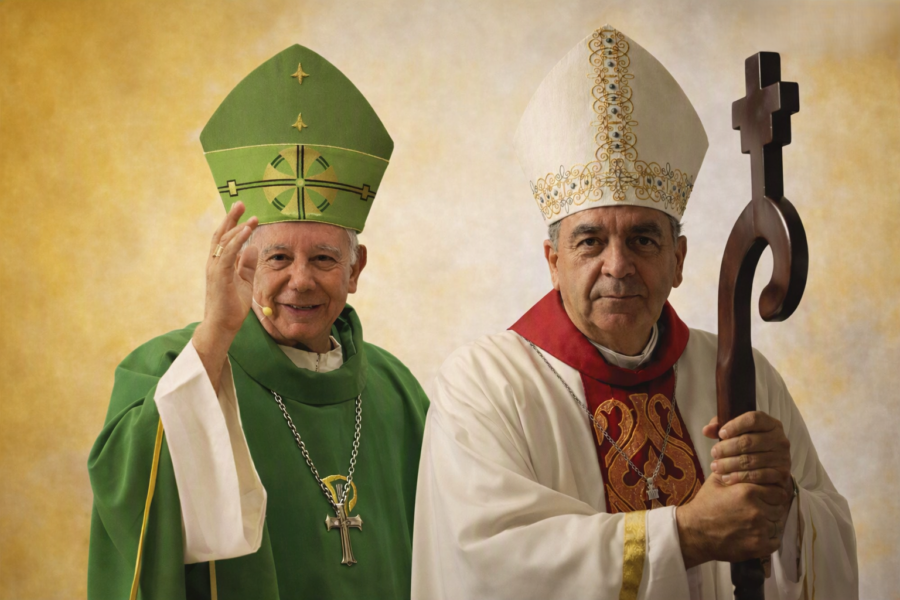
Mexico arrives with two voices of weight. Ramón Castro Castro, bishop of Cuernavaca and president of the Mexican Episcopal Conference, attends by virtue of his office. Jaime Calderón Calderón, archbishop of León, travels at Rome’s indication and by invitation of a select papal group; Calderón also explained this on social media, in conferences of these dimensions, in addition to the president, an accompanying delegate was requested, and together they bring the study that, under Castro Castro’s coordination, the family dimension of the Conference prepared from the questionnaires sent by the Holy See.
The original announcement was made on March 19, 2026, the feast of Saint Joseph and the tenth anniversary of the post-synodal exhortation signed by Francis in 2016. On July 6 the thematic itinerary was published, prepared by the Dicastery for the Laity, the Family and Life and the General Secretariat of the Synod. On October 2, at the Holy See Press Office, Gabriella Gambino, undersecretary of that dicastery, formulated the central question: how to renew pastoral care with vigor and enable families to participate ever more in the life and mission of the Church? Ten years, she said, are time enough to pause and listen to the bishops about the path that local Churches are walking with families, in societies where transmitting the faith has become more difficult and where young people need to rediscover the beauty of the vocation to marriage.
The official press-conference figure is 187 participants behind closed doors. Of these, 115 come from episcopal conferences—111 presidents and four delegates; 15 from the Eastern Catholic sui iuris Churches; two represent bishops without a conference; 22 are personal invitees of the Pope; 11 are responsible for organization. Eleven married couples from the five continents are also added, according to the Dicastery’s count, called to give witness, not to be on display. Among Leo XIV’s invitees appear names that marked the family debate of the previous pontificate: Cardinals Blase Cupich, Robert McElroy, Joseph Tobin, Jean-Claude Hollerich, José Cobo, Víctor Manuel Fernández, Luis Antonio Tagle and Pablo Virgilio David. Jaime Calderón Calderón also figures in that papal designation.
The method does not seek a document to replace Amoris Laetitia. Jesuit Giacomo Costa, responsible for the methodology, made this clear: it is not a matter of erasing differences to manufacture consensus. A better-understood divergence can be the fruit of listening. Each thematic day opens with prayer, a family testimony, an episcopal intervention and one by an expert; group work follows and, in the afternoon, a plenary session. At the end, a commission will draft a synthesis report; the assembly will discuss it and the text will be left in the Pope’s hands. On Wednesday the 14th, Leo XIV presides at the 10:00 a.m. Mass in St. Peter’s Square and, in the afternoon, closes with a speech after the presentation of the report.
Five nuclei order the week, the same ones Calderón summarized as “five great themes, always about the family, only nuanced.”
Thursday the 8th: “Families today: reality, beauty and challenges.” Cardinal Filipe Neri Ferrão, archbishop of Goa and president of the Federation of Asian Episcopal Conferences, and Professor Vincenzo Rosito of the John Paul II Institute introduce the topic. The question is how to read the signs of the times from concrete experience, without idealizing or resigning oneself.
Friday the 9th: “Young people and the discovery of the vocation to marriage.” Bishop Timothy Costelloe, SDB, archbishop of Perth, and Bishop Stephen Fernandes, auxiliary of Bombay, speak. Here Calderón’s itinerary intersects with the theme: in 2018, as bishop of Tapachula, he was a synodal father of the XV Ordinary Assembly on young people, faith and vocational discernment.
Saturday the 10th: “Married life. The first years of marriage: a decisive time.” Cardinal José Cobo, archbishop of Madrid, and Argentine theologian María Marcela Mazzini intervene.
Monday the 12th: “In the difficulties of life: accompanying and sustaining.” Cardinal Pablo Virgilio David, bishop of Kalookan, and social ethicist Julie Hanlon Rubio open the day closest to chapter eight of the 2016 exhortation: abandonment, separation, divorce, fragility, and the question of how to build communities where such persons feel listened to and co-responsible.
Tuesday the 13th: “Christian families, subjects of the Church’s mission.” Cardinal Protase Rugambwa, archbishop of Tabora, and Véronique Martin Lonchamp, national delegate for family pastoral care in France, close the meeting.
The inaugural session on Wednesday the 7th includes greetings from Cardinal Kevin Farrell, prefect of the Dicastery for the Laity, the Family and Life, and from Cardinal Mario Grech, secretary general of the Synod; the opening address by Leo XIV; and a meditation by Sr. Helen Alford, OP, president of the Pontifical Academy of Social Sciences.
Calderón has described the mandate with a precision worth retaining. Pope Francis gave Amoris Laetitia so that the mystery of the family might be studied, that domestic Church. Leo XIV wanted those at the head of the Churches to reflect with him. Mexico does not bring only a diagnosis. It brings, according to the archbishop of León, the awareness that families cannot be viewed simply as an ideal; they must be understood in the situations in which they find themselves and, from there, accompanied. And that families themselves, little by little, accompany the new generations. He hopes to return with “good practices,” learning from one another how, in different corners, that pastoral care “so beautiful yet also so challenged” is responded to.
In November 2018, Calderón, newly arrived from the assembly on young people and already bishop of Tapachula, described Francis’s method as a journey of listening, attentive to the heart of problems, and spoke of the need to relearn how to listen. From that assembly he was named a member of the Ordinary Council of the Synod of Bishops for the following triennium. In October 2023 and again in 2024 he returned to Rome as a synodal father of the assembly on synodality, then still at the head of Tapachula and, in the second session, already as archbishop of León, appointed by Francis on July 4, 2024.
For the Church on pilgrimage in Mexico, the relevant datum is concrete. Two bishops with distinct trajectories—the president of the Conference and an archbishop who has already sat in three of Francis’s synodal assemblies and on his Council—bring to the Holy Father the emphasis on ceasing to look at the family only as an ideal and beginning instead from the situation in which it finds itself, especially in the defense of life, the dignity of the person and the assaults on motherhood. Calderón promised, upon his return, to share the fruits. What can emerge from those tables is a more precise reading of how, ten years later, the Church proclaims the Gospel with families and not only to them, especially when in Mexico realities pose multiple challenges, the family is no longer conceived in a traditional way, and the aging of the population that has postponed the task of fatherhood and motherhood to later phases of life after the consolidation of personal projects continues to advance.