


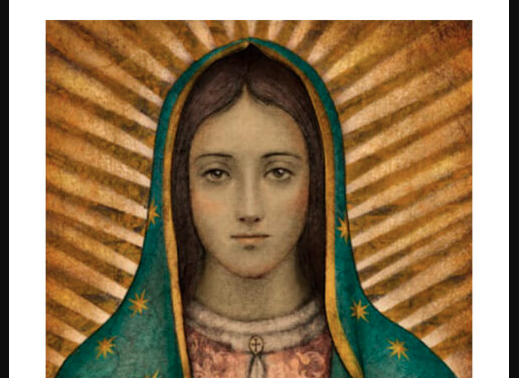
Fr. José Juan Sánchez Jácome / ACN.- The encounters with the Blessed Virgin Mary bring us closer to Jesus and make it possible for us to remain faithful and never lose the meaning of the Christian life. Jesus Christ himself sowed in our hearts affection for his own mother and asked us, while in agony nailed to the cross, to receive her, to care for her, and to take her to live with us.
It is not merely the concern of a son to secure his mother’s future, but the Lord’s desire to strengthen us in our life as disciples. Through this charge he gives us, in the person of the apostle John, Jesus was telling us: if you want to be a disciple, look to Mary, learn from her, from her gestures, her words, and even her silences; allow yourself to be educated and formed by her, as all mothers do with their children.
Indeed, a mother does not only bring us into this world, but makes life possible every time it is threatened. This mother makes the Christian life possible whenever persecutions come and we feel weary; she makes strength and fidelity possible when we are called to stand at the foot of the cross.
Pope Francis explains it this way: “The Lord himself knows that we need refuge and protection amid so many dangers. That is why, at the highest moment, on the cross, he said to the beloved disciple, to every disciple: ‘Behold your Mother!’ (Jn 19:27). The Mother is not (…) an optional thing; she is Christ’s testament. And we need her as a traveler needs rest, as a child needs to be carried in arms. It is a great danger for the faith to live without a Mother, without protection, letting ourselves be carried along by life like leaves in the wind. The Lord knows this and urges us to welcome the Mother. It is not a mere gesture of spiritual courtesy; it is a requirement of life. To love her is not poetry; it is to know how to live. Because without a Mother we cannot be children. And we, above all, are children—beloved children—who have God as Father and the Virgin Mary as Mother.”
I recognize, with the emotion and gratitude of a son, the tenderness and essential character of the Virgin Mary in the Christian life, but I am also aware of the difficulties and resistance some brothers and sisters have in welcoming the Blessed Virgin Mary. Some have become blocked by a series of prejudices, while others, trying to open themselves to Mary’s motherhood, feel difficulties in taking this step. Without claiming to be exhaustive, I would like to point out some reasons that explain this situation.
First, it can be explained by psychological reasons: when, for example, a person has not had a good relationship with their mother, they may project onto the Virgin the same rejection or reserve they feel toward their own mother. Of course, the opposite can also happen, as we often see in the lives of the saints. In the face of a mother’s death, her absence, or a lack of maternal affection, someone may feel moved to love the Blessed Virgin Mary and adopt her as their mother.
Second, these resistances can be explained by doctrinal reasons: when we are exposed to constant attacks on our faith and frequently hear ideological controversies that discredit Mary. When we live in environments of strong confrontation, suspicions can be sown and the natural affection we have for the Virgin Mary is definitively inhibited. There are people who, confused, feel that loving Mary so much is an exaggeration and come to believe they are acting like idolaters, offending God’s lordship.
Pope John Paul II shared that at some point in his life he had this fear: whether we as Christians were going too far in our love for the Virgin Mary. But he remarked with great surprise that he discovered that not only does Mary lead us to Christ—as we have always maintained—but that Christ also leads us to Mary.
Jesus did not burst into our world like a meteorite, nor did he appear suddenly. The Father in heaven gave us Jesus through Mary and allowed Mary to present the Messiah, the Savior of the world, to us. If one day we fear exaggerating or overstepping in our devotion to Mary, it is good to remember this biblical truth. The Father is Marian: he made Mary so beautiful, he loved Mary, and he chose her.
We act like the Father who gave us Jesus through Mary. Therefore, our devotion to Mary is a way of imitating the Father who chose her to be the Mother of the Savior of the world. We can say it more precisely with the words of St. Louis Marie Grignion de Montfort: “To give oneself thus to Jesus through Mary is to imitate God the Father, who gave us Jesus only through Mary.”
Mary carried in her womb and formed the Son of God. In the same way, St. John Eudes affirms, the Father in heaven allows her to beget Jesus in the heart of all of us: “Just as the eternal Father granted Mary to conceive his Son first in her Heart and then in her virginal womb, so also he gave her the power to form him in the hearts of the children of Adam.”
Thus, it is we who project our complexes, prejudices, interests, and ideologies, supposing that God becomes angry if we love Mary very much. God does not react with jealousy and envy as we often do.
Many people who love the mother of Jesus have been deeply wounded by the criticisms and accusations against Mary, for she is often criticized mercilessly. In the face of the persistence of these anti-Mary campaigns, some brothers and sisters give in, doubt, and even abandon their Marian devotion, with serious consequences, because deep down they love her and recognize her. And so they repress their love for the Blessed Virgin Mary.
Third, we cannot fail to mention pastoral reasons: when the catechesis, worship, and pastoral ministry of the Church do not foster love for the Blessed Virgin Mary. It is true that we are a Marian people and that by nature we are drawn to Mary, but in the face of merciless attacks it is necessary to defend her, promote her, and present her as an authentic path to Jesus.
The pastoral ministry of the Church can sometimes become trapped in modernisms and novelties, forgetting the foundations of the faith and the religiosity so necessary to experience the fire of divine love.
Finally, cultural reasons must be pointed out: when we repress and hide the expressions of our faith in the face of a social environment that discredits and mocks the Christian life. Love for Mary can often remain a secret and private practice, as well as a devotional matter that does not transform life.
Mary helps us return to what is essential, to reaffirm our identity as children of God, and to consolidate our vocation as disciples. The wonderful thing about the Virgin Mary is that even if we ungratefully forget her or set her aside in our Christian life, we cannot ask a mother to stop being a mother. Mary will seek to protect us and lead us to Jesus.
In fact, the holy Curé of Ars says: “The Blessed Virgin has given birth to us twice: at the Incarnation and at the foot of the cross. She is, therefore, twice our Mother.” In Nazareth she witnesses the Annunciation, and at Calvary she receives a new announcement: not only to be the Mother of God, but the mother of all the children of God.
Meditating on this mystery of motherhood, let us not fail to recognize at what price she has begotten us at the foot of the cross: “You cannot enter into the mystery of suffering unless you are sustained by the arms of Mary. Mary has mystically begotten us at the foot of the cross through the most atrocious martyrdom that a mother’s heart has ever known. We are truly children of her tears” (St. Leopold Mandic).
Edward Schillebeeckx, in his book Mary, Mother of the Redemption, beautifully states: “When Christian missionaries arrive in a mission territory previously unknown, they find that Mary has already been there for a long time, has already filled the jars with water, and is only waiting for priests to follow her and once again work the miracle of Cana in the name of Christ.”