


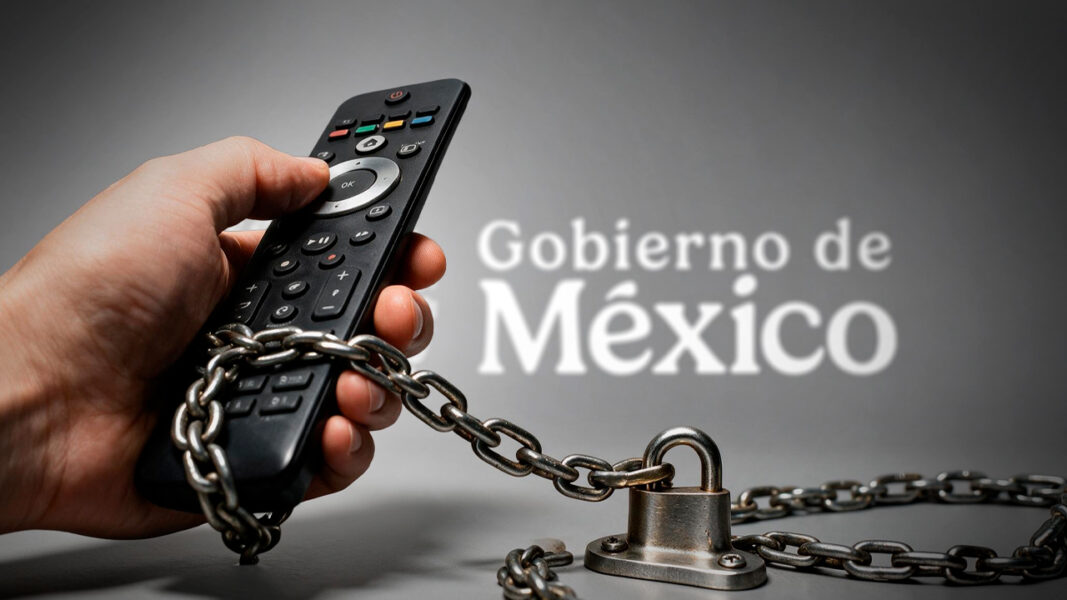
The legal counsel of the President of the Republic presented in the official space “Right of Reply” what the regime hastily labeled a “technical analysis” of a supposed digital ecosystem amplifying critical messages. In practice, it displayed the names of journalists, media outlets, and dissenting voices that are all too well known. A list of inconvenient figures, compiled and disseminated from the State apparatus, is not a neutral exercise in digital cartography. It is a targeting that, when it comes from the power that controls institutions, official advertising, budgets, and the dominant narrative, is a form of intimidation.
Under worn-out fallacies such as “it is not a blacklist,” “we are only showing how networks work,” “there is the greatest freedom of expression in history,” the aim is to confuse the obvious with a technical matter. They speak of “ecosystems” to avoid acknowledging what is intolerable for this regime: the existence of citizens who think differently, investigate, question, and do not kneel. Criticism is disguised as a conspiracy; dissent, as an operation of the right; inconvenient information, as artificial amplification. This is how the internal enemy is constructed. This is how hatred is stirred against those who dare to dissent. Power does not tolerate the mirror; it prefers to shatter it and accuse the one holding it of destroying the country.
This episode coincides with the attempt to advance guidelines that would empower administrative authorities to classify content as “false” or “decontextualized” and, ultimately, to interfere with the editorial independence of the media. In the face of this risk, the Mexican Episcopal Conference published the message «You Will Know the Truth, and the Truth Will Set You Free». The bishops were clear and forceful: “No administrative authority can set itself up as the arbiter of truth, particularly when it comes to ideas, opinions, convictions, beliefs… Truth is not decreed; it is sought and recognized in free and plural debate.” And they added the formula that should be engraved in every public institution: “Truth is not imposed: it is sought, proposed, and freely recognized. When the State refrains from deciding what is true and limits itself to guaranteeing the conditions for all to seek and express it, it protects at once freedom of expression, religious freedom, and the rights of audiences.”
The bishops also recalled that “those who inform with honesty sustain the common life of a country; those who do so with fear, or in the service of interests alien to the truth, weaken it.” That is the measure. Not the comfort of power. Not loyalty to the political project of the moment. Informative honesty and the citizenry’s right to know.
If Mexico does not firmly defend this right to truth and criticism, if it accepts that the State may threaten and target dissent, accept hatred against them and reserve the monopoly on what may be said, then this country will live through the darkest chapter of its recent history. It will not be like that of the classic dictatorships of uniforms and open prior censorship, but that of lists disguised as analysis, of “ecosystems” that criminalize dissent and incubate a drowsy people that confuses propaganda with “true” information.
Only a citizenry free from totalizing ideologies, anchored in the Truth—that which is not decreed from the Palace nor imposed by the force of a circumstantial majority—will be able to preserve what is most precious that we have built with decades of struggle, blood, and sacrifice: the right to think, to dissent, and to express ourselves. That right is not a gift from power. It is a conquest that must be defended every day, especially when power pretends that no list exists while displaying the names of those it finds inconvenient.
Truth remains the only thing that sets us free. These lists and the guidelines are, simply put, control. And that is the ingredient that nourishes a regime desperate to anchor itself in power forever and ever.