


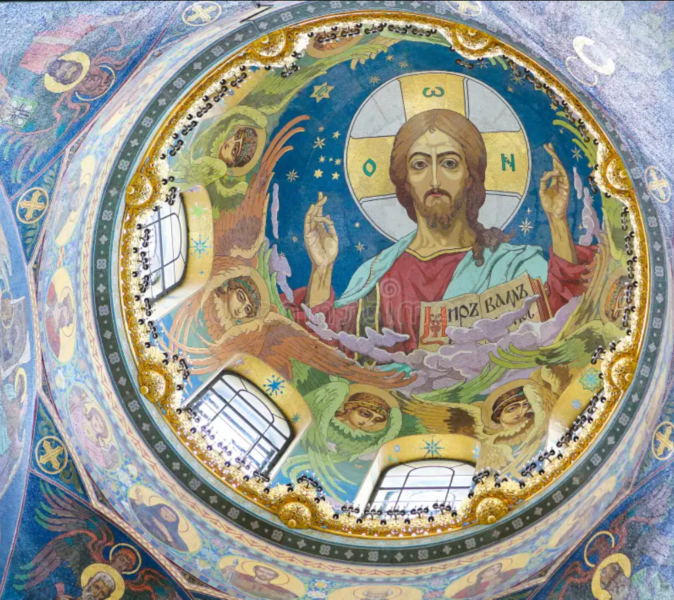
Fr. José Juan Sánchez Jácome / ACN.- Jesus is loved and admired not only for what He did, but for what He can do for us right now. It is not simply about admiring Him, but about imitating Him. Jesus is not a charm that brings us luck and protection; He is not a historical figure who has remained in the past; He is not merely a great thinker who has left ideas and thoughts for posterity. Jesus must be loved, admired, imitated, and followed in a very concrete way.
That is why it is impossible to live the faith without often asking ourselves these questions: Who is Jesus to me? What real influence does the Lord have in my life? Does faith in Him give me a new outlook on life? How attached am I to Christian values? How does the Gospel influence my decisions?
It is not about pure romanticism or sentimentalism. It is not about loving Jesus in images, in movies, or in celebrations, and not following Him in daily life. It is about each person examining their own stance toward Jesus, about each one discovering how far our love and fidelity to Jesus reach in the events of each day.
Faith is relationship, recognition, and confession. Peter, in today’s Gospel, offers an answer that is not a rational definition, but a profession of faith; it is the response of a man who had discovered that he did not know everything, that he could not handle everything. Peter came to realize that his criteria were relative, that he did not possess the truth and longed for salvation, that is, true life. Peter recognizes that Jesus is the fulfillment of all human hopes.
To recognize and confess that Jesus is the Lord is no small thing; it is one of the fundamental decisions a person can make in life, and therefore such a proclamation must radically transform the entire life of the one who makes it. If I say, like Peter, that Jesus is the Messiah, the Savior, the Son of the living God, I am declaring that with Jesus I have come to discover the full meaning of this life, even when it passes through pain, illness, and suffering. If I believe in and love Jesus, I must prove and demonstrate it with my concrete life, with the decisions I make, with the direction I give to my life, and not only when I make the sign of the cross, when I go to church, or when everything smiles upon me in life.
One cannot say that Jesus is my Lord, that He is my God, if afterward I live under the dominion of any other lordship such as money, pleasure, power, libertinism, ambition, selfishness, etc.
That is why we must give continuity to our experience of encounter with Jesus. Just as human love is not simply “falling in love,” faith is not only a feeling, fascination, or admiration for Jesus Christ. Let us keep in mind that if we do not cultivate our relationship with Jesus, our faith will fade or grow cold.
Therefore, from the confession of faith we must move to the confession of love. We must come to say with all our heart not only: “You are the Christ, I believe in You, Lord,” but also: “I love You, Lord.” The Dominican Daniele Aucone explained this aspect as follows:
“The Christian life is not cold intellectualism nor sterile sentimentalism, but reconciled existence called to unite mind and heart, profession of faith and confession of love.”
We proclaim the faith in the happy moments of life, in the solemn celebrations of the liturgy, and in the stages we go through in our process of spiritual growth. But it is necessary to sustain what we solemnly profess when we are going through discouragement and tribulations, as Padre Pio said:
“The most beautiful profession of faith is the one that comes from your lips in darkness, in sacrifice, in pain, in the supreme effort to seek the good decisively; it is the one that, like lightning, dispels the darkness of your soul; it is the one that, in the flashing of the storm, lifts you up and leads you to God.”
Saint John Bosco also explains it very movingly: “Let us place our trust in God and move forward. Be with God like the little bird that keeps singing, even if the branch trembles, because it knows it has wings.”
Saint John Chrysostom refers to this same aspect: “God is not content with interior faith; He asks for exterior and public confession, and thus moves us to greater trust and love.”
May the example of the martyrs and of the Blessed Virgin Mary motivate us to manifest our faith when we are in the midst of tribulation and when we live our lives in society, for if Christ died for us in public, we cannot relegate Him to our private life.
I am still struck by the profession of faith of the great French Jesuit theologian Henri de Lubac. This is how I would always like to remain in the faith and express my love and admiration for Christ Jesus:
“I am a child of this century, a child of unbelief and doubts, and I will remain so until the day of my death. But my thirst for faith has always caused me terrible torment. Sometimes God sends me moments of total calm, and in those moments I have formulated my personal creed: no one is more beautiful, profound, understanding, reasonable, manly, and perfect than Christ. But moreover—and I say it with enthusiastic love—there can be nothing better. Furthermore: if someone proved to me that Christ is not the truth, and if it were proved that the truth is outside of Christ, I would rather remain with Christ than with the truth.”