


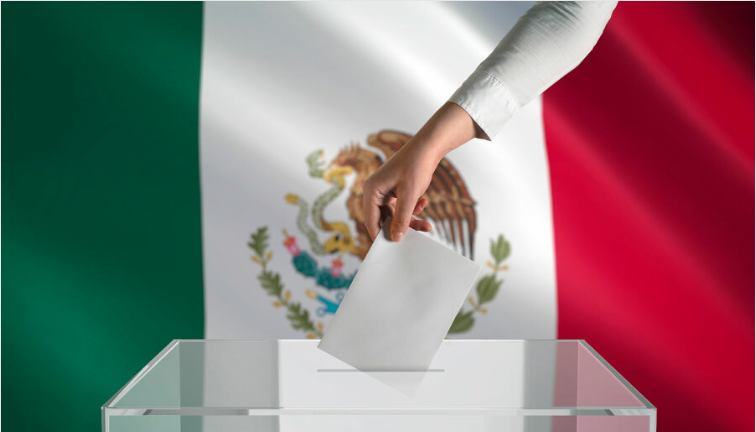
Editorial El Semanario de Guadalajara.- In Mexico, when those in power propose new electoral rules, it is wise to look not only at the official discourse, but also at the context in which these initiatives arise. And today, that context speaks loudly.
The proposal pushed by Morena to cancel or annul elections when there is foreign intervention may sound logical. At first glance, no one could oppose defending national sovereignty and protecting our democratic processes. However, behind that narrative legitimate questions also emerge that, as citizens, we must not overlook.
The initiative comes amid growing pressure from the United States government on Mexican authorities accused of possible ties to organized crime.
In particular, it arises as demands intensify to investigate political figures from Sinaloa allegedly linked to drug cartels.
These are not minor rumors. The recent visit by the U.S. Secretary of Homeland Security and the meetings held with the federal government show that the issue has already escalated to the diplomatic and international political arena. The fight against drug trafficking, fentanyl smuggling, and criminal infiltration in Mexican politics has become a matter of enormous bilateral tension.
And it is precisely here that citizen concern arises. Because a reform of this kind, although presented as a mechanism of national defense, could also open the door for future elections to be challenged on political grounds. Even more so when the institutions responsible for validating electoral processes face questions about their closeness to the current administration, due to their dependence on the Executive, which has sought to legitimize this proposal to modify elections in various ways.
Anything could be labeled foreign interference, even any post on the ever-changing and volatile social media.
Democracy cannot depend on convenient interpretations or on courts subject to partisan interests. The law must protect the citizen, not shield the regime.
At the same time, we cannot ignore a painful reality: the infiltration of organized crime into Mexican politics exists and has left deep wounds. We are not only talking about drug trafficking. We are talking about disappearances, forced recruitment of young people, violence, corruption, and entire communities held hostage by fear. This is where scrutiny must focus on its interference in elections.
All that’s missing is for them to claim that Mexico will lose its fourth World Cup match due to foreign interference, and that will be grounds for annulling elections.
It is essential that any accusations against officials or former officials be investigated seriously. Without simulations. Without pacts. Without political protection. Mexico needs to regain trust in its institutions. That will only be possible when justice ceases to have partisan colors.
As a society, we must not allow crime and power to walk hand in hand. From a Christian perspective, this moment calls us to reflect on our civic responsibility. Indifference only strengthens corruption. Our country needs men and women committed to truth, justice, and the common good.
Let us not lose the capacity to be outraged by evil, but neither should we lose hope of building a just Mexico. Because when truth is sought with honesty and justice is administered without favoritism, it is still possible to believe in a better future for our nation.