


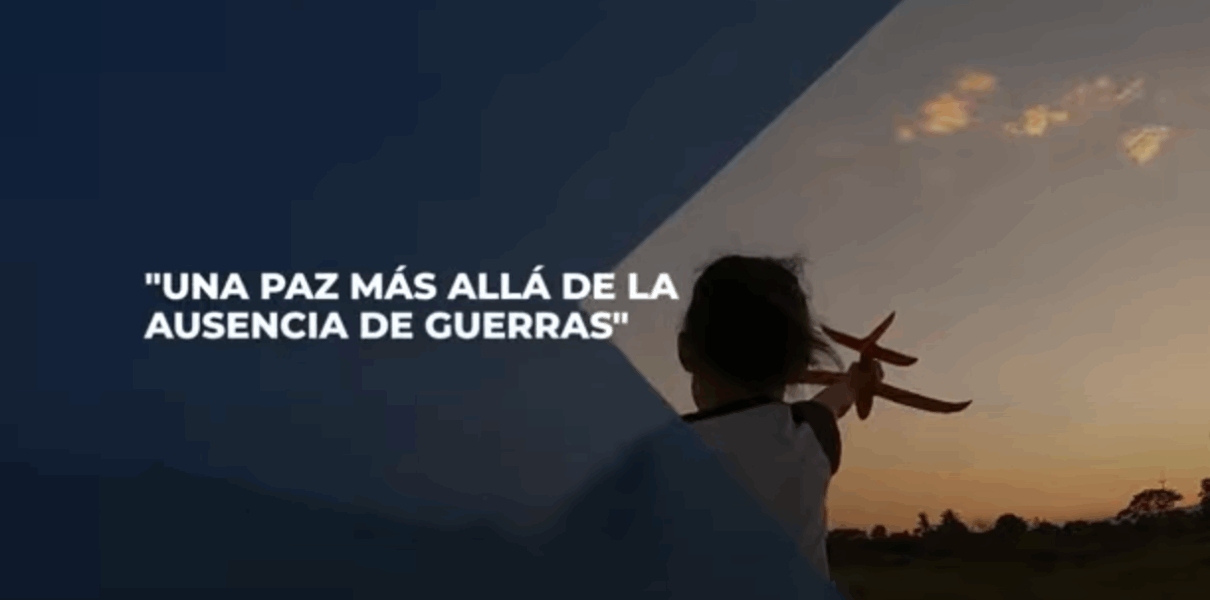
In the twelfth catechesis of the series «Thy Kingdom Come», the bishop of Cuernavaca and president of the Mexican Episcopal Conference (CEM), Ramón Castro Castro, offered a message of hope centered on a peace that transcends the mere absence of armed conflicts. Inspired by the Book of Revelation and the teachings of Saint Augustine, the prelate emphasized Christ’s spiritual victory over evil, calling on Christians to be agents of transformation in a Mexico marked by violence, corruption, and social divisions.
During the preaching, titled «A Peace Beyond the Absence of Wars», Bishop Castro invoked the biblical image of an angel chaining the dragon—symbol of the devil—for a thousand years. According to his interpretation, based on Saint Augustine, this period does not represent a utopian era of earthly pleasures, but the current time of the Church on Earth, from Christ’s first coming until his return. «The binding of Satan does not mean his destruction, but a real limitation of his power,» explained Castro, highlighting that evil persists but can no longer hinder the expansion of the Gospel or dominate without opposition.
The message highlights how, from the cross, Christ weakened the power of the evil one, allowing the light of the Gospel to illuminate the peoples. However, the bishop warned about the persistent tactics of evil: «His cunning remains a threat, seeking to divide, foster injustices, and turn people away from God.» In the Mexican context, Castro pointed to concrete examples such as deception that justifies violent acts, corruption disguised as justice, and hatred camouflaged as patriotism. He criticized ideologies that present themselves as good but perpetuate suffering, including the «politics of hate,» fake news that divides families, and corruption justified as necessary.
One of the bishop’s most direct criticisms was against strategies that present God as an enemy of progress and freedom, which distances humanity from true peace. In response to this, he proclaimed that Christ’s Kingdom has already begun and is manifested where the Gospel is lived. «Those who follow Christ and strive to be faithful to his teachings are living witnesses of his kingdom,» he affirmed, describing this kingdom as a transformative force in history.
Castro called on Christians to recognize Christ as King, which implies building just structures and working for peace in Mexico. This includes confronting impunity, combating corruption, defending migrants, and protecting families. «We Christians are called to be leaven of transformation, sowers of a peace that flourishes where evil loses its influence,» he urged, emphasizing the rejection of ideologies from any political spectrum that use violence or lies.
The commitment, according to the bishop, is concretized in everyday actions: simple charity, defense of the vulnerable, family and social reconciliation, promotion of truth, and choosing the good over personal interest. «Where the good is chosen over personal interest, where forgiveness is chosen instead of revenge, where building is chosen instead of destroying. There the victory of Christ over evil is manifested,» he underlined.
The catechesis culminates with a note of hope: the binding of the evil one marks the beginning of a sure victory, ensuring that evil does not have the last word in Mexico’s history. Castro invited people to live as «citizens of heaven» committed to the transformation of the country according to the heart of God, closing with the Aramaic invocation «Maranatha, come Lord Jesus, thy kingdom come.»
This series of catecheses, promoted by the CEM, seeks to deepen Christian spirituality in times of crisis, and Castro’s message resonates at a time when Mexico faces challenges such as insecurity and political polarization. The bishop, known for his defense of human rights and his criticism of violence, continues to position himself as a key voice in the dialogue between faith and society.
The complete catechesis can be viewed here
https://www.youtube.com/watch?v=kf9h6stSFwo