


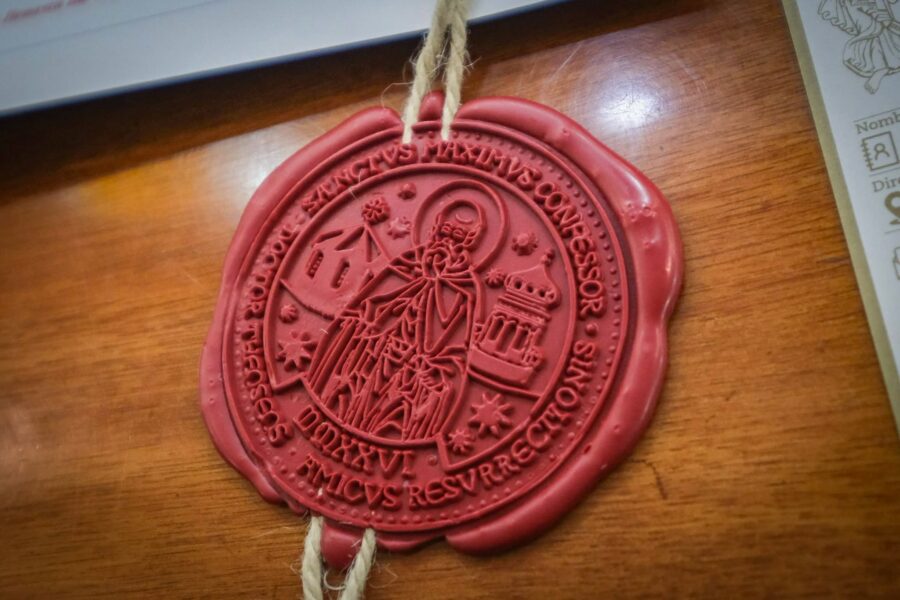
In the framework of the celebration of the 50th anniversary of the priestly ordination of Cardinal José Francisco Robles Ortega, Archbishop of Guadalajara, the archdiocese launched this Sunday the pioneering phase of the Camino de San Máximo Confesor, a pilgrimage route of approximately 350 kilometers that is spiritually and pastorally twinned with the historic Camino de Santiago de Compostela. The initiative, promoted jointly with the Government of the State of Jalisco, seeks to strengthen spirituality, promote religious tourism, and offer the faithful an experience of encounter with Christ on the trails of western Mexico.
The Cardinal Robles Ortega himself addressed a message to the faithful in which he expressed his gratitude for the gift of vocation and invited them to take part in the vocational walk. “This year the Lord grants me the opportunity to give thanks for 50 years of my priestly ordination. I wish to celebrate this jubilee by walking with you as pilgrims of hope, giving thanks to God for the gift of vocation and asking Him to continue calling many young people to follow Him with generosity”, he stated. The walk began at 7:00 a.m. at the parish of San Pedro in Tlaquepaque and concluded with the Eucharist at 12:00 p.m. at the Metropolitan Cathedral, where this pastoral project destined to strengthen the spirituality of the particular Church was placed under the Lord’s blessing. The Governor of the State of Jalisco, Pablo Lemus, was also present at the cathedral.
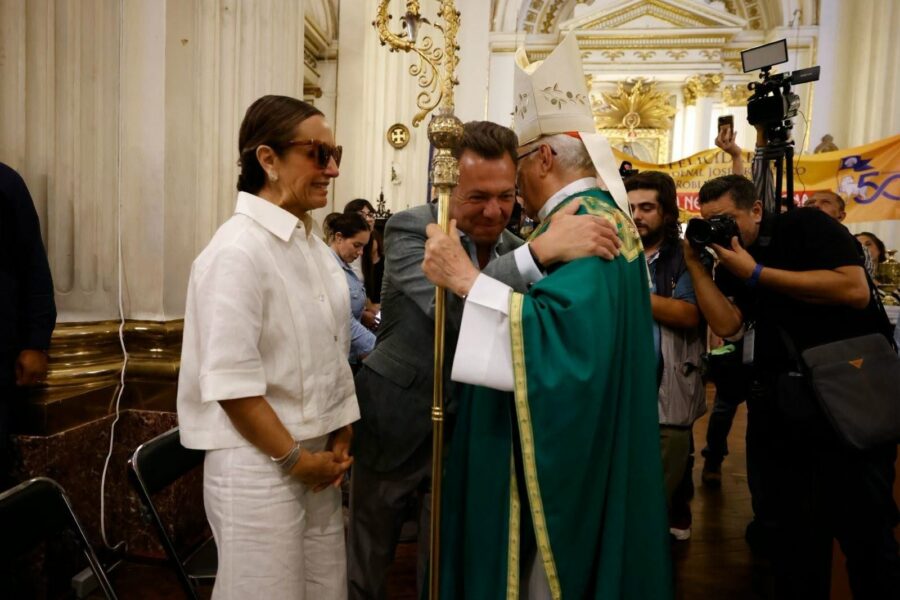
The Cardinal emphasized that the pilgrimage will continue in the following days and will have a special meaning, the formal opening of the Camino de San Máximo Confesor. “A path of faith for our archdiocese that is born spiritually twinned with the historic Camino de Santiago de Compostela, so that many pilgrims may experience in it an opportunity for encounter with Christ”, he affirmed. He invited families, groups, and parish communities to live the experience “with joy and simplicity” so that faith may remain a “living testimony of God’s love”.
The twinning, requested by the Archdiocese of Guadalajara and accepted by that of Santiago de Compostela, is exclusively religious and pastoral in nature. The kilometers walked in Jalisco may be recognized as part of the Camino de Santiago, provided the pilgrim completes at least 70 kilometers in Spanish territory to obtain the Compostela, in accordance with current regulations. Some reports indicate that at least 180 kilometers will be required on the Jalisco route. For the first time in Mexico, a local route obtains this recognition, making Jalisco a possible spiritual gateway for those who wish to prepare before crossing the Atlantic or for a complete pilgrimage experience that is more intimate and close to home.
The Camino de San Máximo Confesor traverses non-motorized trails through 11 to 14 municipalities, integrating the Valles region, the tequila-producing area, the agave landscape, and the Guadalajara metropolitan area. It crosses territories linked to the history of Christianity in the former New Galicia, from the evangelization processes of the 16th century to the testimonies of faith and martyrdom of the 20th century. Its destination is the locality of Los Pueblitos, in the municipality of San Cristóbal de la Barranca, where an architectural replica of the aedicule of the Holy Sepulchre of Jerusalem, unique of its kind in Mexico, is located.
The Government of the State of Jalisco has actively supported the project. Alberto Esquer, Chief of Staff, confirmed support in cartography, infrastructure, maintenance of rural roads, civil protection, and security. This Sunday, coinciding with the launch of the pioneering phase (which will extend approximately until August 3 or 10, according to various sources), the Pilgrim’s Credential was presented, a document that will allow pilgrims to register their journey and validate the kilometers for the Camino de Santiago. Esquer highlighted that the joint work between the archdiocese and the Government consolidates Jalisco as one of the main destinations for religious tourism in Latin America.
The final destination of the route is the Monastery of San Máximo Confesor, a space of silence, prayer, and contemplation located about two kilometers from Los Pueblitos, in a privileged natural setting near the Barranca de San Cristóbal. It emerged around 2012 from the vision of a group of priests, especially driven by Father Javier Magdaleno, who sought to create a place of worship and retreat. Influenced by the spirituality of the Eastern Church, the architectural complex was built organically, adapting to the terrain.
The monastery is dedicated to Saint Maximus the Confessor (c. 580-662), a Father of the Eastern Church, monk, and theologian considered one of the most learned men of his time. He received the title of “Confessor” for his courageous witness to faith in Jesus Christ, true God and true man, even in the face of suffering. His thought animates the spirituality of the place. The site features chapels decorated with Byzantine-style paintings by artist Arturo Ruvalcaba Salazar, evoking Eastern iconography, and the replica of the Holy Sepulchre: a first space called the “room of the angel” and a second that evokes the place where the body of Christ was laid. It offers silent retreats, individual cells, hospitality, and spiritual formation, and opens its doors to those seeking peace and an encounter with God.
The Pilgrim’s Office, operated by the Confraternity of San Máximo Confesor, provides guidance, spiritual accompaniment, and registration. The project is also framed within the Centenary of the Religious Persecution (2026) and looks toward the fifth centenary of the arrival of the Gospel in western Mexico (2030). More than a physical journey, the Camino de San Máximo Confesor is presented as an invitation to walk in the simplicity of faith, rebuild the social fabric, and renew hope, in harmony with Cardinal Robles Ortega’s call to live the jubilee as pilgrims who bear witness to the love of God.