


We begin by thanking our Infovaticana for the full publication in Spanish of one of the articles, almost a study, to which we made extensive reference yesterday: The Anguish of Pope Prevost. It seems to us of utmost interest to understand the pontificate of Pope Leo and its possible development. We must continue praying for the Pope; he does not have it easy, and starting with mortgages is not the best for him to exercise his ministry with absolute freedom. The sooner the dark points are clarified and resolved, the better for everyone, especially for Pope Leo XIV; time does not resolve things, and trying to hide them serves no purpose; today, with the new media, it is complicated for them to be forgotten.
Pope Leo XIV received Rolando Álvarez yesterday, the exiled bishop of Matagalpa and apostolic administrator of Estelí in Nicaragua. Álvarez is in forced exile after being deported by the dictatorship of President Daniel Ortega and his wife, Murillo, in January 2024. From Chicago, Father Erick Díaz, an exiled Nicaraguan priest, said that the meeting between Pope Leo XIV and Álvarez is “an audience of hope and ecclesial communion,” as well as “a significant moment for our Nicaraguan Church, marked by challenges, fidelity to the Gospel, and hope in the Lord.” The Thursday audience between Pope Leo XIV and Álvarez comes after the Holy Father received in August three other exiled Nicaraguan bishops: Bishop Silvio Báez, auxiliary bishop of Managua; Isidoro Mora, bishop of Siuna; and Carlos Enrique Herrera, bishop of Jinotega and president of the Nicaraguan Episcopal Conference. On October 2, Pope Leo XIV received a copy of the report “Nicaragua: A Persecuted Church” detailing the attacks by the dictatorship against the Catholic Church.
Leo XIV promotes a pro-homosexual Irish bishop who desires intercommunion with Anglicans; he is Niall Coll, 62 years old, Bishop of Raphoe, Ireland. “Homosexual people are human beings and are important to the life of the Church.” He added that “it is fundamental to Pope Francis’s teaching” “to include everyone.” In January 2025, Bishop Coll delivered a homily at an Anglican service for the sick in St. Canice’s Cathedral, Kilkenny, and later described it as a moving experience of spiritual communion: “It is regrettable that Anglicans and Catholics still cannot receive the Eucharist together.”
The study congress organized by the Dicastery for the Causes of Saints, “Mysticism: Mystical Phenomena and Holiness,” which took place from November 10 to 13 at the Pontifical Urbaniana University, concluded with an audience granted by the Pope in the Paul VI Hall. Pope Leo XIV offered a clear and theologically dense summary of the entire Conference. The Pontiff recalled that mysticism does not coincide with extraordinary phenomena, but with the intimate union of love with God that manifests itself in the fruits of life, according to the evangelical criterion: “By their fruits you will know each tree.” «In the heart of every canonization process is the reputation of holiness and the exercise of heroic virtues , which give concrete witness to union with God.”
Pope Leo XIV promulgated a chirograph that formally establishes the Apostleship of the Sea as a canonical juridical entity. This act grants greater solidity to the organization and will allow for a more defined organization of the Apostleship of the Sea. This document essentially addresses the practical organization of the work of this Society of the Apostleship of the Sea. With the chirograph promulgated by the Pope, this organization becomes concrete, fostering coordination of the work at the level of the various episcopal conferences.
We continue with the Orlandi soap opera that keeps adding surprising chapters. Could Emanuela Orlandi’s body be buried in the tunnels under Rome’s Casa del Jazz, where excavations have been underway since this morning? Laura Sgrò, the Orlandi family’s lawyer, does not rule it out: “Any investigation into a missing person is always positive, whether it concerns Judge Paolo Adinolfi, Emanuela Orlandi, or other people whose whereabouts are unknown.” “It is important not to leave any stone unturned, regardless of what is found in that tunnel,” recalling that Pietro Orlandi “had previously received a report suggesting that Emanuela’s remains might be there, but,” the criminal lawyer clarifies, “this is just one of many reports that mentioned a thousand other places. We are in the realm of conjecture.”
The Holy See reiterated the Catholic Church’s position on gender, stating that only men and women exist at the recent 16th Ministerial Conference of the United Nations on Trade and Development. In commenting on the resolution of the Geneva Consensus adopted by the conference, the Holy See clarified the limits of certain terminology present in the document. In particular, it highlighted its concern over the use of terms like “equity” and “inclusion,” which are associated with gender ideology. “The Holy See underscores that any reference to ‘gender’ and related terms that appears in any document that has been or will be adopted by this Ministerial Conference, or that is used or adopted by UNCTAD’s intergovernmental apparatus, must be understood as based on biological male or female sexual identity.»
The theological eruption provoked by Fernández in early November was entirely predictable and serves to highlight the lamentable current state of the congregation he presides over. For some time, it seems to have been common practice for a cleric not necessarily to have a natural aptitude for the position to which he is destined in the Vatican. The case of Bishop Gustavo Zanchetta, fallen from grace, is a notorious example. When Zanchetta resigned from his see in 2017, after revelations of homosexual abuses against seminarians, Pope Francis created a new position for the bishop in the Vatican and defended him for the next two years.
The same happened with Father Marko Rupnik, whose art and mosaics adorned the walls of Rome’s most influential figures, while complaints of abuse against nuns were minimized by his superiors. Beyond the alleged repeated abuses and the close relationship between them and his art, Rupnik was the most sought-after artist in the Sacred Palaces. Since 2023, Fernández was appointed to head the Congregation for the Doctrine of the Faith by his friend Pope Francis. Fernández’s past was so controversial that the congregation itself had a file since 2009 detailing concerns about his writings, which prompted a preventive investigation when then-Cardinal Bergoglio appointed him rector of the Pontifical Catholic University of Argentina. Some of Fernández’s most scandalous books from his past have come to light, such as his works with explicit sexual content on kisses and orgasms. He himself is ashamed of his work, and it was omitted from the biographical information that the Vatican published in a failed attempt to erase his past.
His management of the congregation has been no better than his Argentine past. Less than six months after taking office, Fernández published Fiducia Supplicans , which nearly caused a schism, a split, and an internal war in the Church unlike anything seen since Vatican II. The criticism of the text was so widespread and forceful that he had to suffer the humiliation of one of Pope Francis’s closest advisors, Cardinal Fridolin Ambongo, managing an exclusion clause for Fiducia Supplicans for Africa. This was achieved by meeting personally with Francis and Fernández.
In his first months, he generated such media uproar and controversy that it became clear that someone had ordered him to stop giving interviews. The reactions his work provoked only increased skepticism toward Francis’s pontificate, which was already widespread at the time. It is no surprise that with his latest document, Mater Populi Fidelis, on Mary as “Co-Redemptrix,” Fernández has done nothing but generate confusion, internal struggles, and further diminish the office he holds. Just like with Fiducia Supplicans , there was no real reason for Mater Populi Fidelis to be written, and all it has done is backfire on Fernández’s public intention.
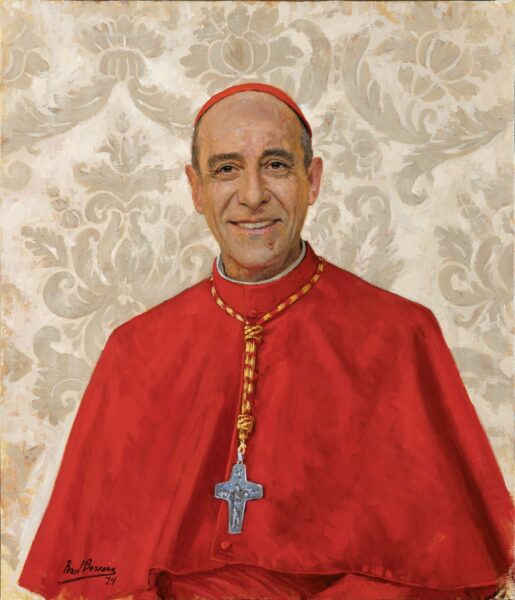
Veteran Catholic journalist Phil Lawler expressed this sentiment when he wrote: “Sometimes, when it is not necessary to say anything, it is necessary to remain silent. This may have been one of those cases. The reaction to the Vatican’s declaration was entirely predictable: cries of protest from those who have felt betrayed and abandoned by the Vatican’s statements over the last 15 years.” This is just the latest in a long series of public relations disasters and theological controversies that have plagued the Vatican since Cardinal Fernández’s arrival a little over two years ago. Müller: “The praise from major media outlets for progressive reformers has yet to translate into a conversion of people to faith in Jesus Christ, because only in the Son of the living God can they place their hope in life and death.” If Pope Leo wishes to recover some appearance of peace and order in the Church, then Fernández must not remain. He himself sensed that his stay in the Vatican would not be very long, and upon arrival, he commissioned his portrait, with precise instructions, for the congregation’s official gallery—our image of today.
Even Chupich has his problems growing; these are the things of government. The Archdiocese of Chicago has removed a deacon from active ministry following allegations of sexual abuse against minors. In a letter dated November 5, Archbishop Blase Cupich wrote to families of St. Joseph Catholic Church in Round Lake that Deacon Rajan Fernando has been removed from service due to allegations of sexual abuse against minors. The archdiocese reported that the allegations have been reported to the authorities: “I know this is difficult news, but the well-being of our parishioners is of vital importance to me. The Archdiocese of Chicago takes very seriously the obligation to ensure the fitness for ministry of all who serve the People of God.”
The new president of the U.S. episcopate is more conservative than his predecessors. Francis’s twelve years have weakened, but not diminished, the solid majority that remains. Coakley’s election confirms this, as it was already evident during Pope Francis’s pontificate with the elections of Joseph Edward Kurtz, Daniel Di Nardo, José Horacio Gómez, and Timothy Broglio. In fact, the new president, perhaps more than his predecessors, can be classified as conservative. His résumé stands out as spiritual assistant to the Napa Institute , a conservative nonprofit Catholic organization that has often been criticized by liberals for its defense of the Church’s traditional teachings. His 2018 stance in favor of greater transparency from the Pope regarding the abuse scandal involving former Cardinal McCarrick is also relevant. During Pope Francis’s pontificate, the excessive power of Cardinal Cupich over U.S. affairs has been evident. By appointing him a member of the Pontifical Commission for Vatican City State and publicly defending him from criticism for considering giving a position to pro-abortion Senator Dick Durbin, Leo XIV demonstrated his reluctance to completely remove the influential archbishop of “his” Chicago. The secret ballot in Baltimore sent a clear message to the Vatican: the majority of U.S. bishops do not share Cupich’s stance and are annoyed by his influence. The other elected is Flores, who was his Episcopal Conference’s representative in the controversial Synod on Synodality, which did not convince the U.S. bishops. Defeated by the conservative Coakley, he rises as vice president. The initial vote also highlights the excellent regard for one of the most well-known and respected bishops in the United States: Archbishop Robert Barron, who received the third highest number of votes in the first ballots, behind Coakley and Flores. In the future, continuity might fall to him, rather than the new vice president.
When you lose your bearings, the other cardinal points go out of control. In June, a 33-year-old pastor from the Evangelical Church of Berlin-Brandenburg-Upper Lusatia Silesia, belonging to the Protestant Church in Germany, celebrated a “polyamorous wedding” with four men during an “impromptu wedding festival” in Berlin. The pastor, Lena Müller, posted a photo of the “wedding” on Instagram, though the post has since been deleted: “On Friday night I had the privilege of celebrating my first polyamorous wedding with Christopher and Gloria. Four young people said ‘I do,’ celebrated love with us, and placed themselves under God’s colorful blessing.” The self-proclaimed “feminist and pastor” spoke with the Neue Osnabrücker Zeitung about the event: “It was immediately noticeable that there was a lot of affection among them. That’s why, as a team, we quickly agreed: What would God have against it now being four instead of two?” Two of the men are Latvian, one is Thai, and another is Spanish. The Protestant bishop of Berlin, Christian Stäblein, emphasized that the Protestant Church “only marries couples who have been married civilly” and that, therefore, the “polyamorous wedding” is not valid. The progressive and pro-LGBT Protestant Church has been “marrying” homosexual couples for years, but marriage between more than two people is not permitted in Germany and is punishable by law.
Journalist Alberto Barranco recounts anecdotes from the last conclave in a book titled “The Last Conclave.” He destroys the narrative that it was an “arduous” showdown, given that the winner “never had rivals,” not even the candidate they were pushing as the favorite. «Our version is different because we have listened to many cardinals who have recounted very interesting things.” It details that the Italian Beniamino Stella disconcerted everyone by openly attacking Bergoglio «for ignoring the Church’s deep-rooted tradition that linked governing power with holy orders.» The text describes that a vote had to be repeated because the Spaniard Carlos Osoro Sierra accidentally introduced two ballots, and that some participants had to be woken up by shouts” in Santa Marta to go to the Sistine Chapel because they had fallen asleep without the «alarm» on their cell phones, which they could not carry with them since they had to be completely isolated from the outside. The Vatican later gave them an alarm clock. It is also recounted that during the first vote, the security personnel warned that a signal was being picked up from the Sistine Chapel! The “offender,” one of the oldest, discovered he had his phone in his pocket. “Disoriented and distressed, he handed over the instrument of the crime.»
«…Wherever the body is, there the vultures will gather.»
Good reading.