


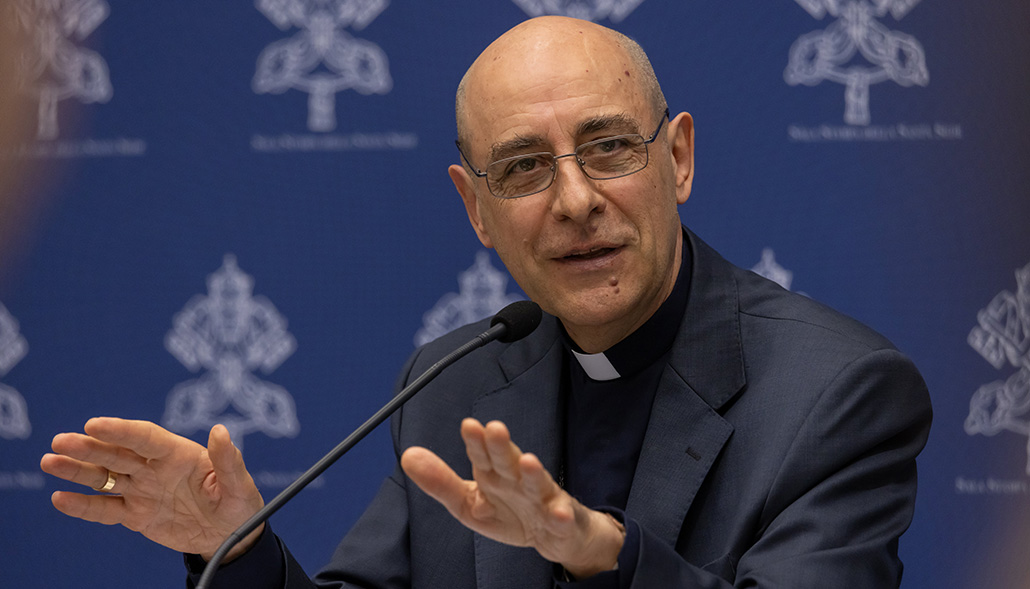
Cardinal Víctor Manuel Fernández, prefecto of the Dicasterio para la Doctrina de la Fe, has stated that the tribunal judging Slovenian priest Marko Rupnik operates with full independence and that the Holy See, while wishing for the case to be resolved as soon as possible, cannot impose deadlines on the judges. He explained this in email statements dated November 20 to Edward Pentin, which were published on November 23 in the National Catholic Register.
According to Fernández, the Vatican wanted from the outset a tribunal with “guarantees of complete autonomy” and promised its members that it would not interfere in their work. “We are honoring that commitment,” the cardinal assured, noting that for this very reason, “we cannot impose deadlines on them or require information from them.” The judges are five in number—two women and three men—and none hold positions in the dicasteries of the Roman Curia.
A secret process with no known sentence
The canonical criminal process is conducted under secrecy, and the specific charges under examination have not been publicly clarified. Rupnik, a former Jesuit, has been accused by numerous women of sexual, psychological, and spiritual abuse, as well as abuse of conscience. According to the Register, the priest continues to live without restrictions and was incardinated in 2023 in the Slovenian diocese of Koper.
The cardinal’s words come after the Holy See officially denied in July reports of an alleged acquittal and confirmed that the process was still ongoing. Following that denial, the victims’ lawyer, Laura Sgrò, denounced a trial “in the dark” and called for answers. In September, five of the women accusing Rupnik wrote an open letter to Leo XIV requesting clarity, transparency, speed, and judicial independence.
Spiritual abuse pending classification
Fernández also addressed the issue of spiritual abuse, which he said concerns him “greatly” and which he personally asked the Pope to classify as a crime. He explained that the matter is now in the hands of the Dicasterio para los Textos Legislativos, which is responsible for “examining the issue to determine whether a new crime should be established.”
The prefect stressed, however, that such a reform is not linked to this case: “Such matters are considered in response to the needs of the Church, never because of a single case.”