


By Brad Miner
Brad Miner. On cinema. No need to say more. Support The Catholic Thing. – Robert Royal
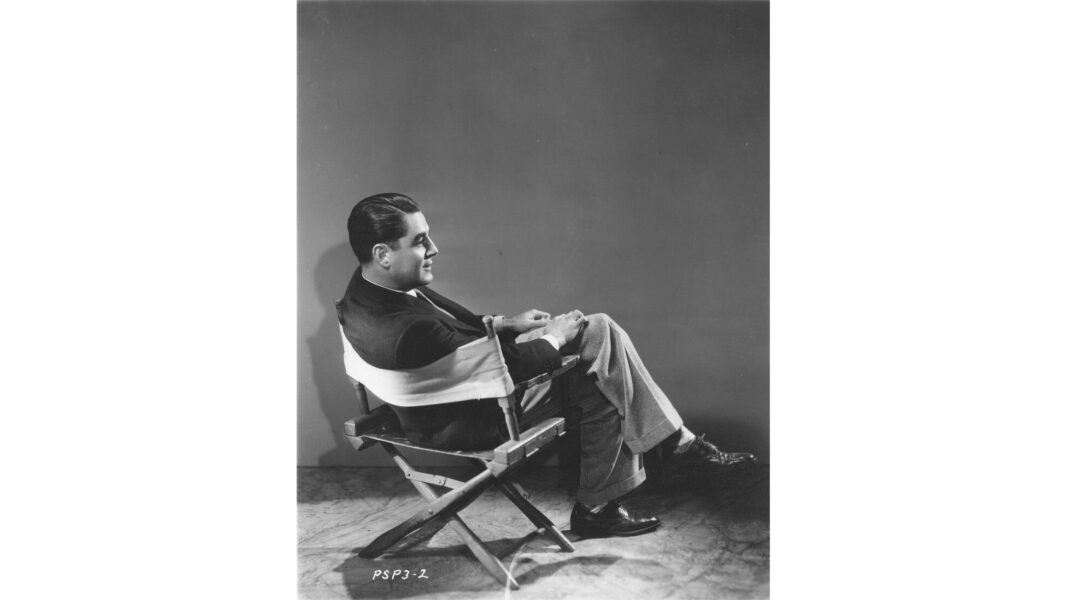
Who was the greatest Catholic film director in the United States? My answer is Leo McCarey. But I must acknowledge other great Catholic directors.
There is John Ford, whose The Quiet Man is a contender for the best Catholic film… or should I say the best Irish film?
There is Alfred Hitchcock, whose I Confess is undoubtedly a contender for the most interesting Catholic film.
There is Frank Capra. His It’s a Wonderful Life ranks among the most beloved films of all time, though it is not specifically Catholic. In fact, Capra never made what we might call a Catholic film.
And there is Henry King, a convert to Catholicism, whose The Song of Bernadette received 11 Oscar nominations and has become a classic.
Martin Scorsese? Francis Ford Coppola? Mel Gibson? No. Catholicism is perceived in their work, but it is covered by a veneer of, shall we say, impiety in the case of the first two, and recklessness in the case of the third.
Which brings me to Leo McCarey. He is my choice, above all because he made two of the most explicitly Catholic films in Hollywood: Going My Way (1944) and The Bells of St. Mary’s (1945). And there are two other films of great merit, which I will come to in a moment, although neither of them was “Catholic,” except in the sense that everything McCarey directed was shaped by his Catholic humanism.
Let me define it: it is the profound respect for human dignity, reason, culture, and creativity. It is the idea that being fully Catholic and being fully engaged with all that is human—through art, literature, philosophy, the sciences, and ordinary life—mutually reinforce each other. Grace does not dispense with nature, but perfects it. That is why cultivating stories about the human person is itself an essential part of the Christian life, and never a distraction from it.
For me, the best expression of what I believe characterizes McCarey’s vision does not come from a Roman Catholic, but from an ancient Roman, the comic playwright Terence: “I am human; nothing human is alien to me.”
McCarey often cultivated this idea in his films through comedy, beginning with Laurel and Hardy and the Marx Brothers, the madcap comedies The Awful Truth (which catapulted Cary Grant to absolute stardom), Once Upon a Honeymoon, and My Favorite Wife, and then, of course, those two great films about the affable priest, Father Chuck O’Malley.
Going My Way and The Bells of St. Mary’s were popular in an almost unimaginable way and, in my opinion, culturally transformative. I do not want to exaggerate, but those films portrayed Catholic life in the United States in such a way that they reduced anti-Catholicism in the country. McCarey’s films did not eliminate that prejudice, just as the films starring Sidney Poitier did not eliminate racism a generation later. But those men did move the ball closer to the goal.
McCarey also directed one of Hollywood’s most successful romantic films; in fact, a single film in two versions. He made Love Affair in 1929 (with Charles Boyer and Irene Dunne), and then remade it as An Affair to Remember in 1957, the latter his fourth film with Cary Grant (and also starring Deborah Kerr).

The Awful Truth (1937) was a terrible experience for Grant, because McCarey was an advocate of improvisation to the point of fraying his star’s nerves. But it was McCarey who taught Grant to be a comic actor.
Grant’s sense of comic timing and his wonderful delayed-reaction expressions are evident in My Favorite Wife, which ranks among McCarey’s films, and rightly so, even though he did not direct it. He had intended to (and it was based on an original story of his). But a horrific car accident, in which he was seriously injured and lucky to survive, took him to the hospital just before filming began and kept him there until after shooting ended. It seems clear that this near-death experience was largely the reason his subsequent films were so Catholic.
Going My Way and The Bells of St. Mary’s were the highest-grossing films of their respective years and together received 18 Oscar nominations. In 2026 dollars, Going My Way grossed $550 million. Tax records show that Leo McCarey had the highest reported personal income in the United States in 1944.
But his Catholic humanism was at least equally evident in two earlier films, neither of which dealt explicitly with faith: Ruggles of Red Gap (1935) and Make Way for Tomorrow (1937).
Make Way for Tomorrow, starring Beulah Bondi and Victor Moore (and a cast of other character actors), is an especially significant film, above all because McCarey considered it the best of his own. In fact, when he received the Oscar for Best Director for The Awful Truth, he told the Academy: “Thank you, but they gave it to me for the wrong film.”

Bondi and Moore play an elderly couple who are evicted from their home by debt. Their adult children would like to help them, but none can take in more than one parent, leading to a heartbreaking scene at a New York train station in which “Ma” and “Pa” say goodbye without knowing if they will ever see each other again. Orson Welles said the film “would make a stone cry.” As the drama begins, an intertitle appears: HONOR YOUR FATHER AND YOUR MOTHER.
Next year I will turn 80. I am thinking of buying copies of the film for my children.
But although I love all these McCarey films, there is one that stands out and is especially timely today, since yesterday marked the 163rd anniversary of Mr. Lincoln’s Gettysburg Address. In Ruggles of Red Gap, one of whose scenes closes this column, McCarey’s genius as a director is seen in the way his camera follows the flow of conversation and the variety of faces, capturing American personalities, and culminating with the Englishman Marmaduke Ruggles (Charles Laughton) reciting the words of the most famous speech in the United States.
That is McCarey’s Catholic humanism. (The context: Ruggles is the butler of the man to his left, “Egbert Floud.” Notice that Egbert calls Ruggles “Bill.” This is because he considers it more democratic: a kind of “new birth of freedom” for someone who has long been in servitude).
Note: This column is based on a more extensive presentation I gave yesterday at a Theology on Tap gathering in Bronxville, New York.
About the author
Brad Miner is senior editor of The Catholic Thing and a senior fellow at the Faith & Reason Institute. A former literary editor of National Review, he had a long career in the publishing industry. His books include Sons of St. Patrick, written with George J. Marlin, and his bestselling The Compleat Gentleman, which is also available in audio edition (read by Bob Souer). Mr. Miner has served on the board of directors of Aid to the Church in Need USA.