


The letter was published on November 17 in journalist Diane Montagna’s Substack newsletter. It responds to what the Pontiff said during the press conference on the Lima-Rome flight at the end of his apostolic journey to Uruguay, Argentina, and Peru. Jean-Marie Guénois of Le Figaro asked him whether he intended to relax the 2021 motu proprio. Leo XIV replied that Pope Francis’s decision would continue to be applied and recalled that dispensations could be requested. To explain his stance, he appealed to unity: according to him, the vast majority of Catholics worldwide celebrate the rite that emerged from the Second Vatican Council.
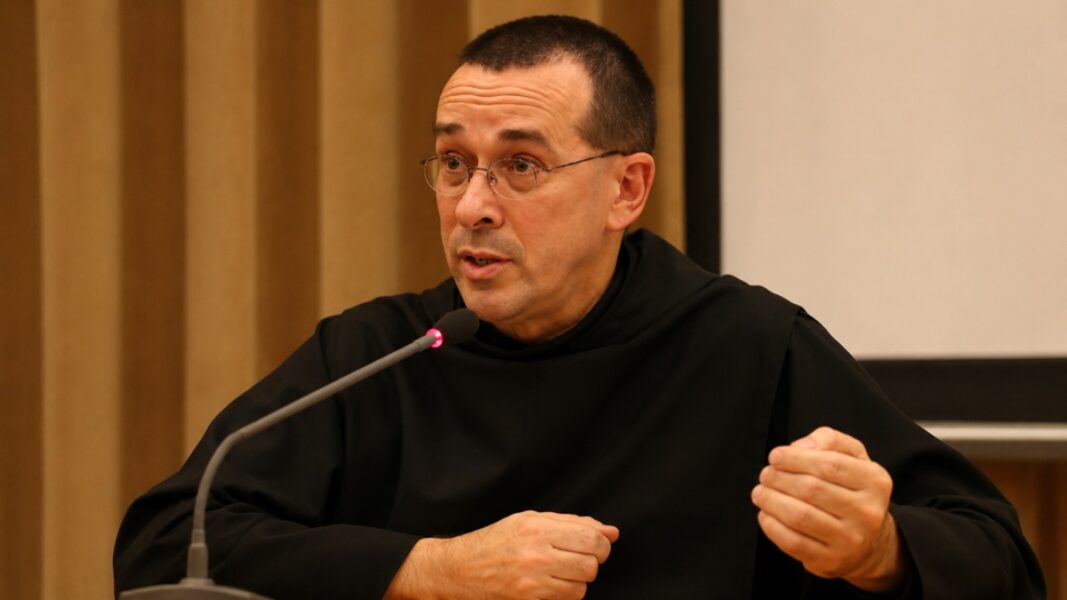
Dom Alcuin Reid is an Australian Benedictine monk and one of the most respected liturgists in the traditional sphere. His doctoral thesis was published as The Organic Development of the Liturgy, with a foreword by Cardinal Joseph Ratzinger. This is not the first time he has spoken out: last July he already called Traditionis Custodes a “pastoral, liturgical, and ecclesial disaster.”
“Unity is not uniformity”
The tone at the outset is filial. Reid recalls the images of the Pope’s visit to Chiclayo, his former diocese, and describes Leo XIV as a moderate and kind man who seeks the good of the Church and often speaks of reconciliation and communion. That is why, he explains, the words spoken on the plane caused him “some surprise” and “no little sadness.” The sadness stems from the pastoral consequences he foresees.
The core of his argument is historical and liturgical. “Strict liturgical uniformity is foreign to the history of the Roman rite,” he writes. He recalls that communion in the one Catholic faith today coexists with a legitimate diversity of rites: the Eastern Churches, the Ambrosian rite, or the proper use of the Ordinariate. He also uses the Pope’s own words, who during the trip had mentioned the different practices of the countries he visited.
Criticism of the foundations of the motu proprio
The letter goes beyond a plea. According to Reid, Francis’s decision “was based on falsehoods.” He refers to the consultation of the world’s bishops carried out in 2020 by the then Congregation for the Doctrine of the Faith: in his view, its results did not say what Traditionis Custodes attributes to them. The Benedictine adds that the measure appears to have been a “political maneuver” by some prelates concerned about the fruits of Summorum Pontificum. This last statement is the author’s assessment; the letter provides no new documentation to support it.
Reid also recalls that many bishops used their canonical faculties to dispense their dioceses from the restrictions, and that this faculty was curtailed by a rescript he describes as “hastily obtained.” He refers to the February 2023 rescript by which the Dicastery for Divine Worship reserved to the Holy See the dispensations to celebrate in parish churches and those for priests ordained after the motu proprio.
For the author, the result has been the opposite of what was sought: “in its pursuit of rigid uniformity, Traditionis Custodes has sown division and disunity.” Where the Mass and sacraments in the ancient rite have been banned, he maintains, many faithful have gone to the Society of Saint Pius X, to the Orthodox Churches, or elsewhere. “Their suffering is real,” he insists. In his judgment, the dispensations granted so far have been few and depend on too many subjective factors to bear stable fruit.
Return to the peace of Benedict XVI
The final request is clear. Reid asks the Pope to use his authority to remove the obstacle that, in his view, Traditionis Custodes, its implementing documents, and its most ardent defenders represent. He also asks him to restore to the Church the liturgical peace promoted by Benedict XVI, allowing the free celebration of the Mass, the sacraments, and the other rites in their ancient form.
To support the request, he quotes the letter with which Benedict XVI accompanied Summorum Pontificum in 2007: what previous generations held as sacred remains sacred and great for us as well, and it cannot be suddenly forbidden or considered harmful.
Reid signs as prior of the Monastery of Saint Benedict in Brignoles, in southern France. He concludes by promising prayers for the Pontiff’s ministry and asking him to hear his plea “as father, as bishop, and as Pope.”
Below we transcribe the full letter, translated from the portal of Diane Montagna:
Most Holy Father,
I was deeply moved by the images of your visit to your former diocese of Chiclayo during your recent Apostolic Visit to Peru. It is evident that you loved your diocese, its clergy, and its people deeply, and that they remain dear to you today. Thanks be to God!
The edification this provides seems to reflect your pontificate to date. You present yourself as a moderate, kind man who seeks the good of the Church. You promote Christ and His teaching, often in difficult circumstances. You frequently speak of the need for reconciliation and unity in the Church, and of promoting that communion of faith and life which is its essence.
While I struggle to understand how some of your actions regarding other religious leaders can be helpful, I know from several people who have met with you personally that you seek to understand the issues they raise and assure them that their concerns will be addressed. Surely, it cannot be easy to be the Pope!
It was therefore with some surprise and, indeed, no little sadness, that your comments during your press conference on the return flight from Peru about the ancient liturgical rites (the usus antiquior ) appeared this morning.
The astonishment was due to your assertion that “for the unity of the Church, the vast majority of Catholics in the world celebrate the rite of the Second Vatican Council.” The sadness was due to the pastoral implications these statements will have.
Your Holiness, unity is not uniformity, as your comments on the different practices in the countries you visited during your Apostolic Visit reflect. Strict liturgical uniformity is foreign to the history of the Roman rite, as Pope Benedict XVI, the skillful architect of liturgical peace and ecclesial communion, well knew. Unity in the one Catholic faith and in ecclesial communion does not exclude legitimate ritual diversity, as the Eastern Churches, the Ambrosian rite, and the use of the Ordinariate clearly demonstrate today.
Likewise, the “decision” of your predecessor, which you state will be maintained for now, was based on falsehoods (the Survey of the world’s bishops conducted by the then Congregation for the Doctrine of the Faith simply did not say what Traditionis Custodes claims) and, it seems, was nothing more than a political maneuver by several prelates overly concerned about the success and real fruits generated by the generous measures promulgated by Pope Benedict XVI.
Most bishops of the world, then, did not have (and probably still do not have) a problem with legitimate liturgical diversity that bears good fruit, especially among the young. Likewise, when they used their pastoral judgment and legitimate canonical prerogatives to exempt their dioceses from the restrictions imposed by Traditionis Custodes , their rights were overridden by a hastily obtained rescript that further restricted them.
Holiness, in your desire to achieve rigid uniformity , you have sown division and disunity. When your bishops, being stingy, have prohibited the celebration of Mass and the Sacraments according to the ancient rite, Catholic faithful have sought refuge in the Society of Saint Pius X, in the Orthodox Churches, or elsewhere. These people and their communities deserve to be heard. Their suffering is real. Bridges need to be built so that unity and communion may be maintained.
If the doctrine of Traditionis Custodes is maintained, further divisions and disunity will occur . Pope Benedict XVI took this decision out of the hands of diocesan bishops for a reason—or perhaps two: their unrealistic attachment to the ideology that everything after the Second Vatican Council was perfect and irreformable, and their extreme ultramontanism. He sought to correct the first. In a way, he used the second for the pastoral good of the Church, by emphasizing his lucid theology and paternal generosity with papal authority.
Holiness, we beg you to use your authority to remove the barrier to unity and communion represented by Traditionis Custodes , its interpretive documents, and its fervent followers. Dispensations from these measures have proven scarce and infrequent, and depend on too many subjective factors to bear real and consistent fruit.
Please restore to the Church that generous and fruitful liturgical peace and unity fostered by the kind and learned Pope Benedict XVI, by allowing the free celebration of all the ancient liturgical rites: the Holy Sacrifice of the Mass, the Sacraments, and other rites; spiritual riches which “previous generations considered sacred [and which] remain sacred and great for us as well, and which cannot be suddenly forbidden entirely nor considered harmful.” Please “preserve [these] riches which have developed in the faith and prayer of the Church, and… give them their rightful place.”
Holiness, from the first moments of your ministry I have prayed for you fervently and sincerely, and will continue to do so. I beg you to hear this plea as father, as bishop, and as Pope. Allow us to share that joy and pride which still fill the hearts of the people of Chiclayo, and which we have had the privilege of witnessing in recent days.
To that end, Your Holiness, know that you can always count on our support and on our prayers for your ministry.
Dom Alcuin Reid
Prior, Monastère Saint-Benoît, Brignoles, France