


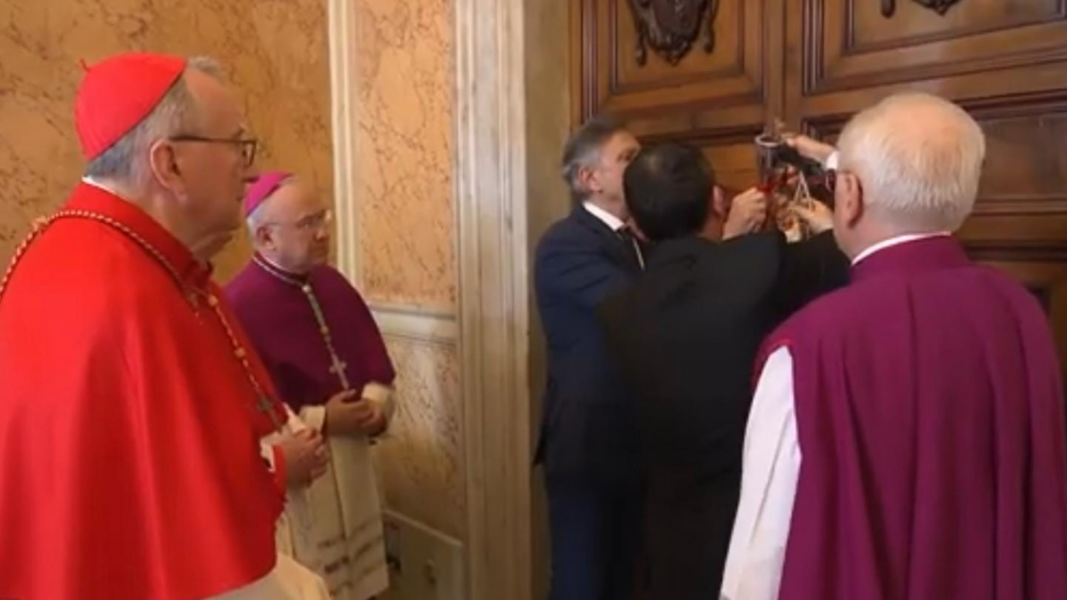
Cardinal Pietro Parolin, Secretary of State of the Holy See, spoke on the morning of November 17 at COP31, the United Nations climate summit being held in Antalya (Turkey) from November 9 to 20. In his address, he highlighted the “anthropological” dimension of the environmental emergency and called, beyond reducing emissions and adapting, for a “profound ethical conversion,” according to Vatican News reported.
A crisis that is also anthropological
Parolin stated that the climate crisis is a socioeconomic crisis and, above all, an anthropological one. To support this, he referred to Pope Leo XIV’s message for the 2026 World Day of Prayer for the Care of Creation, which identifies among the causes of the emergency the “loss of the sense of limit,” the “desire for domination,” the “pursuit of immediate gain,” and the “inability to recognize the dignity of every person.”
This idea connects with what the Pope said a few days ago at the University of Chiclayo, where he warned that the limit “is not a factory defect”. The cardinal thus applied to the environmental sphere a reflection the Pontiff had framed as a critique of transhumanism.
The poor, multilateralism, and education
The Secretary of State maintained that scientific analyses indicate the 1.5 °C threshold of the Paris Agreement will likely be exceeded. Although the Agreement provided countries with a common framework, he added, significant gaps remain in political commitments, concrete actions, and investments. He stressed that the poorest and future generations, who are the least responsible, bear the consequences to a greater extent, and described this, in the words of Leo XIV, as a matter of social, economic, and human justice.
Parolin also lamented that geopolitical tensions, driven by narrow interests, overshadow the climate crisis, and called for “cohesive and forward-looking multilateralism” so that countries cooperate in economic development, climate resilience, and lasting peace. He also urged greater efforts in mitigation and adaptation, along with changes in behaviors, economic and social systems, and governance.
In the final section, he proposed an educational pact that places human dignity and the common good at the center of the climate agenda. To this end, he cited Pope Leo XIV’s apostolic letter “Disegnare nuove mappe di speranza” (Designing New Maps of Hope) and stated that education must unite social and environmental justice through new habits and lifestyles. He concluded by inviting participants to care for creation entrusted to them by God and thus contribute to a peaceful world.
The Holy See’s ecological line
The intervention adds to others by Parolin at previous climate summits. Before COP30 in Belém, the cardinal argued that the Holy See’s contribution should be “to raise the level of awareness.” For its part, the Vatican has expanded its ecological agenda with “carbon fasting” as a Lenten practice.