


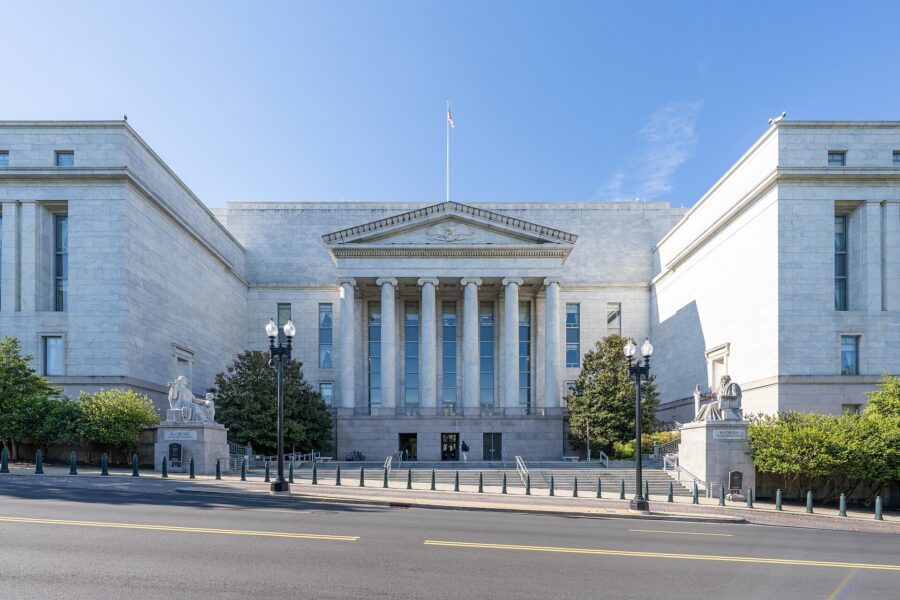
Riley Barnes, U.S. Under Secretary of State for Democracy, Human Rights, and Labor, assured the House Foreign Affairs Committee this Thursday that “Nigeria is one of only eight countries in the world that allow penalties of up to execution for blasphemy.” He made this statement during the hearing “One Year Later: Assessing Nigeria’s Efforts to Protect Christians and Secure the Middle Belt”, held at the Rayburn Building in Washington.
The session was chaired by the Africa Subcommittee, led by Republican Congressman Chris Smith, and marked its fourteenth hearing devoted exclusively to Nigeria. Also testifying alongside Barnes was Under Secretary of State Frank Garcia, responsible for African Affairs, while a second panel featured Nina Shea of the Hudson Institute, Ryan Brown, director of Open Doors USA, and Oge Onubogu of the CSIS.
Barnes calls on Nigeria to stop enforcing blasphemy laws
In his written testimony, Barnes stated that the U.S. government is demanding the release of Sufi singer Yahaya Sharif-Aminu, sentenced to death for blasphemy. “We continue to urge the government to cease enforcement of blasphemy laws,” the under secretary said, also noting that sharia penal codes are applied in twelve Nigerian states. He explained that these laws are used to persecute Christians who speak about Islam.
The State Department official also described the levels of violence and atrocities committed against Christians in the African country as “appalling.” Garcia, for his part, acknowledged that the pace of progress is “insufficient.”
Lawmakers demand results after Nigeria’s designation as a Country of Particular Concern
The hearing took place almost a year after Donald Trump once again placed Nigeria on the list of Countries of Particular Concern for severe violations of religious freedom. Republican lawmakers pressed the State Department to demand greater accountability from the Nigerian government. “Steps are not results,” warned Congressman Riley Moore, who defined success as the definitive end of the killings of Christians and the peaceful return of displaced persons to their ancestral lands. Smith, meanwhile, said the designation “is the beginning” but “not the end” of what is needed, and described the pace of progress as slow.
ADF International, a legal advocacy organization for religious freedom, released a clip of Barnes’s remarks and called for the repeal of these laws, which “violate religious freedom and must be abolished.” The organization provides legal support to individuals imprisoned for blasphemy in Nigeria, including Sharif-Aminu himself.
The persecution of Christians in Nigeria has been the subject of several reports by InfoVaticana, including one on possible U.S. sanctions against Abuja for violence against the faithful and another on the biennial report by Aid to the Church in Need, which highlights the worsening situation in ten countries.