


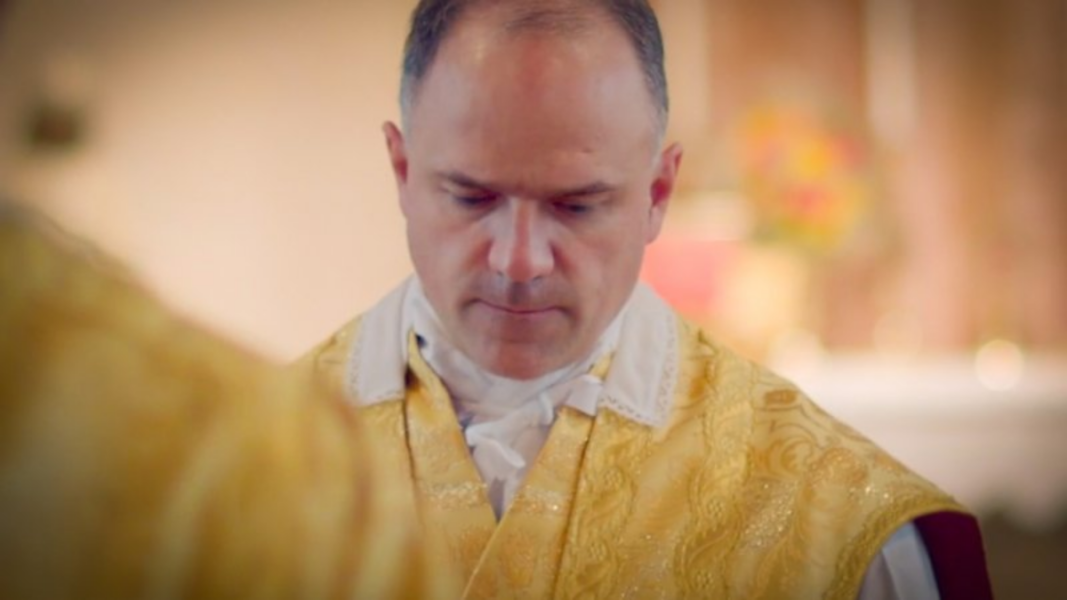
The Superior General of the Priestly Fraternity of Saint Pius X (FSSPX), Father Davide Pagliarani, has signed in Menzingen, dated November 4, the letter number 95 to the friends and benefactors of the Fraternity, titled «The Virgin Mary in the Face of the Spirit of Assisi». In it he maintains that Mary, as Mother of souls, is «fundamentally anti-ecumenical» and that her message is incompatible with the spirit of Assisi, recalling the exclusive rights of Christ the King over all souls, the rights of Truth against error, and the prerogatives of the Church over other religions.
The text starts from the liturgical title of Mary as the one who alone crushes all heresies and develops it in eight sections, from «The Spirit of Assisi and of Mater Populi Fidelis» to «The Virgin Mary is Fundamentally Anti-Ecumenical». Pagliarani argues that supernatural life proceeds from the knowledge of God revealed in Christ, that Mary, full of grace and Mother of God, contemplates Truth without obstacles and communicates that life to souls, so that error, the enemy of contemplation, is also the enemy of sanctification. In the face of the confusion of a modernism considered triumphant, he concludes that only she can obtain the grace to be preserved from error and from indifference, which he describes as the ripest and most pernicious fruit of the spirit of Assisi.
We reproduce below the full text of the letter:
Dear faithful, friends and benefactors,
The Spirit of Assisi and of Mater Populi Fidelis
Forty years ago, Pope John Paul II gathered in Assisi representatives of all religions for a day that would profoundly mark souls and become the disastrous paradigm of a whole series of ecumenical encounters that would be repeated over the years. The older among us may recall a particularly significant episode: a group of pilgrims from southern Italy had arrived in Assisi carrying a statue of Our Lady of Fatima, without fully understanding what was about to happen… The organizers of the meeting set them aside, for the presence of this statue would have hindered the development of the planned ceremonies.
A year ago, on November 4, 2025, the Dicastery for the Doctrine of the Faith published a text that provoked numerous reactions, for it explicitly asked the Christian people to avoid using the titles of Co-Redemptrix and Mediatrix of all graces to refer to the Blessed Virgin Mary. Today these titles are considered inappropriate, inaccurate, and above all inadequate to properly express Catholic dogma as it is currently conceived and reinterpreted.
However, this disastrous text, devastating both in its content and in its inevitable pastoral consequences, will have indirectly produced a positive effect: bringing to light once again the importance of formulas and titles. Indeed, the modernist perspective, which tends to reduce the act of faith to a personal and intimate experience of God, leads to contempt for formulas, under the pretext that faith cannot be reduced or confined to the use of concrete and «technical» expressions, structurally incapable of expressing a lived experience.
We would like to take advantage of the sad anniversary of the interreligious meeting of Assisi and the publication of Mater Populi Fidelis to meditate on a very beautiful title that the liturgy attributes to the Blessed Virgin Mary: she who alone crushes all heresies. «Rejoice, Mary, for you alone have crushed all the heresies that have appeared in the world».
How can such a title be justified? Why does the Church, even in its liturgy, wish to offer us such an image of Mary? At first glance, this title does not seem to have a direct relationship either with the divine maternity or with the perpetual virginity of Mary.
To appreciate the beauty and depth of this title, and to understand its full scope, it is necessary to go back to the very source of supernatural life: the life of God, which He is pleased to communicate to souls through grace. In this light we will be able to understand the unique place of the Blessed Virgin Mary, in whom this participation in the divine life reaches an incomparable fullness.
What is the Divine Life?
Let us pause for some theological considerations and try to enter, for a few moments, into eternity. The divine life is the simplest thing that exists; but that very simplicity contains a depth that we cannot fully comprehend.
«The divine life is nothing other than an act of contemplation and of love by which God, contemplating Himself at once as Sovereign Truth and Sovereign Good, perfectly enjoys Himself».
In eternity, God performs one single and unique act: He constantly contemplates Himself. He contemplates His Being, He contemplates His infinite perfection, for His Being is thus: infinitely perfect. This contemplation of His sovereign Being constitutes His very life: if God did not live in this way, He would simply cease to be God.
Now, this infinite perfection that He contemplates, He contemplates perfectly: His divine intelligence contemplates His divine Being and encompasses it completely in a single act of contemplation, perfectly true and always identical to itself. Thus, in knowing His divine Being perfectly, He contemplates Himself as Sovereign Truth1.
On the other hand, in contemplating Himself as Sovereign Truth, God also contemplates Himself as Sovereign Good. Indeed, the True and the Good designate one and the same reality, considered from two different aspects2: if God is the Sovereign Being and the Sovereign Truth, He is necessarily also the Sovereign Good. And in contemplating Himself as Sovereign Good, God loves Himself perfectly. If it were otherwise, God would no longer be God.
In summary, the divine life is nothing other than an act of contemplation and of love by which God, contemplating Himself at once as Sovereign Truth and Sovereign Good, perfectly enjoys Himself.
Now, although He is self-sufficient, God has freely chosen to communicate something of His Being and of His perfection to other beings distinct from Himself. Indeed, goodness naturally tends to communicate itself to others, to give itself. In His case, God, Sovereign Goodness, freely willed to give Himself outside Himself to creatures and, in particular, to certain creatures, to whom God communicates not only something of His Being and of His perfection, but also something of His very life.
God Communicates His Life to Souls by Making Himself Known
With these fundamental premises established, it is easily understood that, in order to communicate to a soul a certain participation in His divine life, God begins by making Himself known to it. Precisely to give it life, to make it share in that contemplation of Himself which constitutes His own life, God «reveals Himself» under the veil of faith.
The soul enlightened by faith can know God and, in knowing Him, can love Him and serve Him. In this consists the necessity of faith. Indeed, it is impossible to love the Good and adhere to it if one does not first know it. No one loves or desires what he does not know.
Now, this Revelation is not limited to making known to us the perfections of God. It will make us penetrate more deeply into the intimacy of His life, unveiling to us a mystery that our reason, by itself, could never discover: this unique divine life is the life of three distinct Persons: the Father, the Son, and the Holy Spirit.
«Precisely to give it life, to make it share in that contemplation of Himself which constitutes His own life, God “reveals Himself” under the veil of faith».
In the life of the Most Holy Trinity, the Father, in knowing Himself, eternally begets His Word, the perfect expression of divine Truth, «the radiance of His glory and the imprint of His substance» (Heb 1, 3). The Son is, therefore, that Word, in whom the Father is reflected and expresses eternal Truth. And from the Father and the Son proceeds eternally the Holy Spirit, subsistent Love.
It is precisely from this Trinitarian life that God wishes to make us participate. Therefore, from this desire to sanctify souls proceed the progressive Revelation of the Old Testament and, above all, its culmination in the coming to earth of the Word of God, Sovereign Truth incarnate. In God becoming man, whoever contemplates Our Lord contemplates, through His humanity, the same God: «Whoever sees Me sees the Father» (Jn 14, 9); and, through this knowledge of the Father through the Son, he attains eternal life: «Eternal life is this: that they should know You, the only true God, and the One whom You have sent, Jesus Christ» (Jn 17, 3).
This point is fundamental: the knowledge of Our Lord, the Word made flesh, becomes the necessary means on this earth to know God intimately. It is through the humanity of the incarnate Word, and only through it, that men can access Trinitarian life and contemplate God: «No one has ever seen God; the only Son, who is in the bosom of the Father, He has made Him known» (Jn 1, 18); and, consequently, «we have seen His glory, the glory as of the Father’s only Son, full of grace and truth» (Jn 1, 14).
Of course, God makes Himself known without the slightest possibility of error: if, impossible though it were, God were to make Himself known by mixing Truth with some error, He would make the sanctification of souls impossible. That said, faith always retains a certain obscurity: on this earth, we know God through a veil. This veil will be lifted in Eternity, where the knowledge proper to faith will give way to the beatific vision. Thus, our supernatural knowledge of God will pass from an imperfect mode to a perfect one: faith precedes vision and exists to prepare for it and lead us to it.
«The knowledge of Our Lord, the Word made flesh, becomes the necessary means on this earth to know God intimately».
Therefore, if God sanctifies souls and gives them life by the means we have just roughly described, what will be the degree of knowledge of this Sovereign Truth in the soul of the Blessed Virgin Mary?
We shall see that, in Mary, this contemplation of the Truth corresponds, on the one hand, to the degree of the fullness of her grace; on the other, to her divine maternity; and, finally, to her particular mission as Universal Mediatrix, which implies the responsibility of communicating to all souls the intimate knowledge of her Son, true God and true man.
The Contemplation of the Truth in Mary, Full of Grace
It is evident that the holiness of Mary entails in her a degree of contemplation of the True, unimaginable for any of us. Indeed, preserved from original sin and its wounds, she runs no risk of error. In her intelligence there is no kind of illusion, no erroneous or hasty judgment. No disordered passion comes to disturb or obscure in her the perception of the true. Her contemplation of the Truth encounters no obstacle.
But above all, her purity confers upon her intelligence an unequaled capacity to penetrate eternal truths, a capacity that is further strengthened by the presence in her soul, and to an unimaginable degree, of the supernatural gifts of the Holy Spirit. In particular, the gifts of understanding and of wisdom allow her to contemplate divine Truths to a degree superior to that of the seraphim and cherubim. She is the Throne of Wisdom.
By virtue of her fullness of grace, her soul finds itself in an absolutely privileged and unique situation. Sin and error are two realities that, in one way or another, would hinder her perfect contemplation and, consequently, her perfect union with God and with His holiness. Now, just as her soul cannot be touched even by the slightest shadow of sin, nor even by the least imperfection, neither can her intelligence be touched by the slightest shadow of error.
This perfect adherence of Mary to the Truth also allows us to understand the incomparable perfection of her freedom. «The truth will set you free» (Jn 8, 32): never have these words of Our Lord been fulfilled in so perfect a manner in a mere creature as in His Mother. For true freedom does not consist in the possibility of turning away from the good, but in the capacity to move in it without obstacles. Since no inclination to sin hindered her will, her knowledge of the Truth and her adherence to the Good had no impediment; her freedom itself attained a unique perfection. Far from diminishing her free will, her impeccability granted her, according to the expression of Father Garrigou-Lagrange, «full freedom in the order of the good, without any deviation toward evil»3. Therefore, her freedom was, like that of her divine Son, a purest image of the freedom of God.
The Mother of God, Contemplator of the Incarnate Word
It should be recalled that the contemplation of which we speak, being a means by which God communicates His own life, is not limited to observing and admiring the truths contemplated: this very contemplation gradually transforms souls according to the model of what they contemplate. In other words, through Christian contemplation, God progressively assimilates souls and transforms them into the image of Jesus Christ. It is in this precise sense that Saint Paul teaches that «the just man lives by faith» (Rom 1, 17).
Now, the soul that lived constantly more than any other under the influence of faith in the contemplation of Our Lord was that of the Blessed Virgin Mary. Indeed, the unique and singular capacity of the Immaculate to penetrate the True through contemplation is not due solely to the incomparable gifts she received, which endow her with an intuitive capacity superior to that of the angels. There is another element, equally important, that places her in an absolutely privileged position: her direct and unique relationship with the humanity of Our Lord Jesus Christ, by virtue of her divine maternity.
«The Blessed Virgin Mary is all the more intimately united to the very object of her contemplation inasmuch as this incarnate Word is truly her Son and she is truly His mother».
Let us not forget that this humanity, united to the Word, is the means the Father has chosen to accomplish the fullness of Revelation. Now, the Blessed Virgin Mary is all the more intimately united to the very object of her contemplation inasmuch as this incarnate Word is truly her Son and she is truly His mother. This proximity reaches an absolutely incomparable degree by the fact that the humanity of Our Lord, in its material element, proceeds exclusively from the Blessed Virgin Mary. Consequently, there has never existed nor will there ever exist in history a deeper affinity between a mother and her son than that which unites Mary and Jesus.
Without risk of exaggeration, we can establish here a rather surprising parallel between the eternal generation of the Word and the temporal generation of Our Lord. Just as the Father, in eternity, in contemplating the Word, says to Him: «I have begotten You today» (Psalm 2, 7) —where the today signifies eternity itself—, so also Our Lady, in contemplating Our Lord, can say to Him without ceasing: «I am Your mother, I have begotten You in time». Paraphrasing the Creed, Saint Leo the Great summarizes the unique affinity between the humanity of Our Lord and Mary with a very beautiful and quite original expression: «consubstantial with His Mother» (Sermon 30, 6).
Moreover, for thirty years, Mary had before her eyes that humanity united to the Word, like a divine window opened wide before her soul. We all know that Our Lord wished to spend thirty years of His life in obscurity to make us understand the primacy of the contemplative life over the active life. But a second reason, equally profound, illuminates those long years in Nazareth: to offer Mary the opportunity to contemplate, in an intimacy without equal, the incarnate Word of whom she was the mother. To what end? Of course, so that she might be sanctified more and more and transformed into His image. But also so that, nourished by the contemplation of the Truth made flesh, she might afterward make the Church live by it.
Mary Communicates to Souls the Life She Has Received
Indeed, this incomparable knowledge of the incarnate Word was not destined to remain as a personal privilege of the Virgin Mary. The fullness of grace she received was also ordered to her mission as Universal Mediatrix: she who received Christ and gave Him to the world remains associated, in total dependence on her Son, with the communication of the fruits of the Redemption to souls.
Therefore, since supernatural life begins here below with the knowledge of God under the veil of faith, it is above all in this domain that Mary’s mediation is exercised. Having known Jesus Christ as no other creature has, she begets her children to the life of faith: she introduces souls into the knowledge of her Son, strengthens them in the Truth He reveals, and teaches them to penetrate ever more deeply into His mysteries.
«Her vocation does not consist solely in being a model of Christian life, but also in being the mother who communicates that life to souls and protects it in its development».
Our Lady had thus to communicate to the nascent Church, not only the fruit of her contemplation, but also, in a certain sense, the very exercise —we might say, the method— of this contemplation, called to constitute the interior principle of the life of the Church. Indeed, whether spiritual, liturgical, or doctrinal, the activity of the Church is always reduced to one and the same act of contemplation, whose purpose is to sanctify souls and prepare them for the beatific vision. From this perspective, Our Lady had to become the archetype of the Christian soul.
But Mary’s maternal mission does not end there: since her purpose is to give birth to faith in souls, she cannot remain indifferent to the need to defend the Truth. Charged with leading souls to Life, bringing them to her Son, she must also preserve them absolutely from everything that obscures their knowledge of Jesus Christ and turns them away from Him. For error in this domain, by interposing itself between the intelligence and divine Truth, attacks supernatural life at its very source.
Error Is the Enemy of Contemplation and, Consequently, of Sanctification
It is important to understand well the necessity of contemplation as the foundation of the spiritual life. In the modernist conception, the act of faith is reduced essentially to an interior and personal experience of God which, in practice, abstracts from the exterior content of Revelation: such a conception renders incomprehensible and useless all that we have just described.
«Charged with leading souls to Life, bringing them to her Son, she must also preserve them absolutely from everything that obscures their knowledge of Jesus Christ and turns them away from Him».
Let us illustrate this difficulty with a concrete example. If I cease to believe, in clear and unequivocal terms, that the holy Mass is the renewal of the sacrifice of the Cross made present on the altar, my contemplation and my perception of this sacrament will be modified. Consequently, my way of praying, of celebrating Mass, or of assisting at it will also change. In the long run, my conception of the very sacrifice of the Cross will also change, because the act that renews it will have been, in a certain way, denatured in its meaning and in the understanding I may have of it. Finally, the very concept of Redemption will be transformed, especially in its expiatory and propitiatory dimension.
The same mechanism is reproduced every time a revealed truth is obscured or weakened: contemplation is affected and, afterward, Christian life itself. In fact, this corresponds to what occurred in the universal Church with the new Mass. And the example could easily be extended to the loss of faith in the kingship of Christ and in His imprescriptible public rights, or even in the absolute necessity of the mediation of Our Lord to attain salvation, which gives rise today to the widespread practice of a deleterious ecumenism.
As Mother of Our Souls, the Virgin Mary Is Fundamentally Anti-Ecumenical
It is therefore evident that the Blessed Virgin Mary, archetype of the Christian soul and mother of supernatural life, abhors error as much as she abhors sin. Her vocation does not consist solely in being a model of Christian life, but also in being the mother who communicates that life to souls and protects it in its development.
From what must she protect it? From everything that hinders it, wounds it, or destroys it: heresy and sin. We then understand more deeply what it means to crush the head of the Serpent, of him who is «a murderer from the beginning» (Jn 8, 44) and enemy of Life. Where Satan spreads death through lies and sin, Mary protects life by leading souls toward Truth and grace.
Crushing the head of the Serpent means, therefore, also destroying his lies: all those errors that prevent souls from knowing divine Truth in its fullness, from contemplating its Beauty, and from preparing to possess it eternally. For Satan pursues, through all his works, one and the same purpose: to separate the intelligence from the Truth in order to separate the soul from God.
In no way can the Blessed Virgin tolerate that her Son, incarnate Truth, be considered as one way among others to reach the Father; in no way could she tolerate that Truth and error be treated on an equal footing in the name of human dignity and of the deceptive freedom to choose between the true and the false. No one like Our Lady is aware that allowing souls to choose between Jesus and Barabbas would mean deceiving them and despising them.
No one like the Virgin can make her own this response of Our Lord to the Jews: «The work of God is that you believe in Him whom He has sent» (Jn 6, 29). As Mother of God, she is uniquely associated with this work: it is through her that the Son sent by the Father comes into the world.
That is why she is the great absent one from ecumenical meetings: her presence is uncomfortable; she cannot be invited. She bears a message incompatible with the spirit of Assisi: the inflexible reminder of the exclusive rights of her Son, Christ the King, over all souls; in other words, the rights of Truth against error and the prerogatives of the Church over other religions. If she could take the floor there, she would necessarily remind men, as Mother and Queen, of the choice that imposes itself: «Either my Son or the others!»
«Crushing the head of the Serpent means, therefore, also destroying his lies».
That is why, among the most beautiful and glorious titles that the liturgy —and, therefore, the Church— attributes to Mary, there figures the following: «She who alone crushes all heresies». This title suits admirably her who has received the mission and the means to give birth in us to the divine life —Our Lord Himself— and to lead us to holiness.
Therefore, in the midst of the present confusion of a triumphant modernism, only she can obtain for our souls the grace to be preserved from error and from indifference —the latter sometimes being what leads to error and at other times what derives from it: the ripest and most pernicious fruit of the spirit of Assisi.
Only the Virgin can lead intelligences back toward eternal Truth and convert them, enabling them to know God and to adore Him «in spirit and in truth» (Jn 4, 24).
Finally, only she can restore to the men of the Church the zeal of the popes, of the martyrs, and of the confessors, ready for anything to defend the Catholic faith and to manifest to the world its purity: a reflection, in time and in history, of the very purity of eternal Truth.
May God bless you.
Menzingen, November 4, 2026
Don Davide Pagliarani