


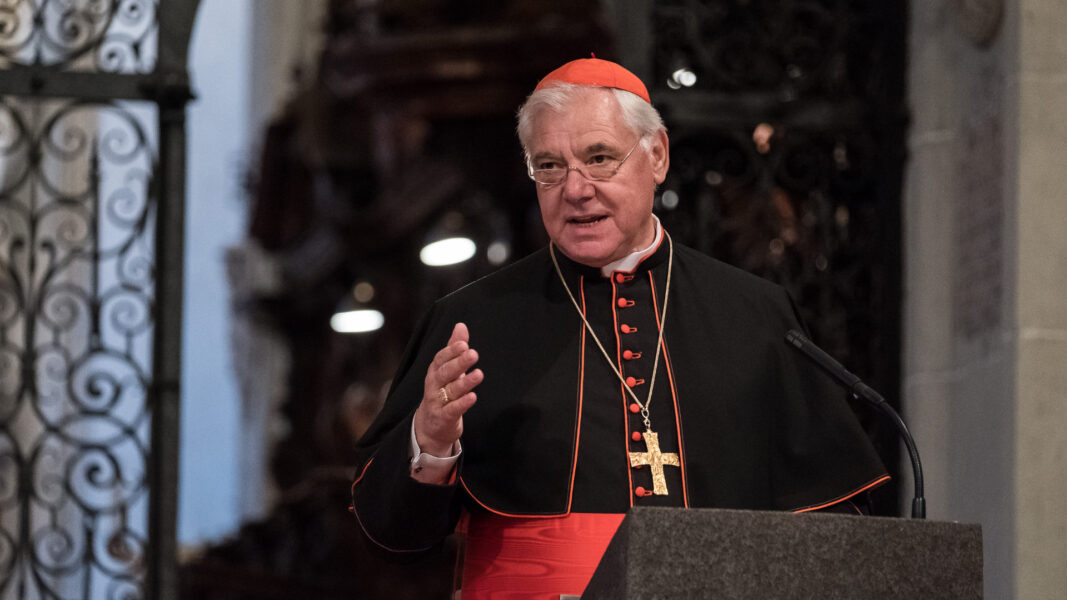
Cardinal Gerhard Ludwig Müller, prefectus emeritus of the Congregation for the Doctrine of the Faith, has called for the German Synodal Way to be halted. He did so in an interview with philosopher Jan Bentz of the University of Oxford, published on 19 October by the Gibbons Institute as the second issue of its “Dispatches” series. In it, the prelate maintained that the German process cannot introduce heretical ideas into anthropology or deny the revealed mysteries of God and that, therefore, “it must be stopped”.
Müller further stated that the texts approved by the Synodal Way lack doctrinal authority. “These documents they publish make no sense; they have no value for the magisterium,” he declared in the conversation, in which he stressed that the Church “is not a permanent synod.” In his view, those assemblies barely spoke of God, of revelation, or of Jesus Christ as the sole Savior, and the debate revolved around social and political issues.
“Those are not our flags”
The phrase that has resonated most concerns the symbols of the LGBT movement, which some German dioceses and ecclesial organizations have displayed as a gesture of welcome. “There is no place for rainbow flags in the Church,” Müller said, defending that Catholic identity must center on Christ and the Cross, not on ideological or political emblems.
The cardinal, who for years has been one of the best-known critics of the German process, linked this drift to the influence of modern ideological currents, including the “woke” movement and identity politics. According to his approach, a reform of the Church cannot arise from those categories, but from fidelity to the received doctrine.
A process awaiting Rome
The interview comes with the Synodal Way already formally concluded. Its sixth and final assembly was held in Stuttgart in January 2026, and the statutes of the future permanent Synodal Conference, in which bishops and laity would participate, were sent to Rome at the end of March, where they remain under study by the dicasteries.
The dialogue with Bentz also addressed the German bishops’ intervention in partisan politics, the episcopal consecrations of the Society of St. Pius X, the limits of synodality, and the orientation of the pontificate of Leo XIV. A few days ago, InfoVaticana reported other words from the cardinal on Church reform: Müller recalls that the Church belongs to Christ and cannot be reformed according to human criteria.