


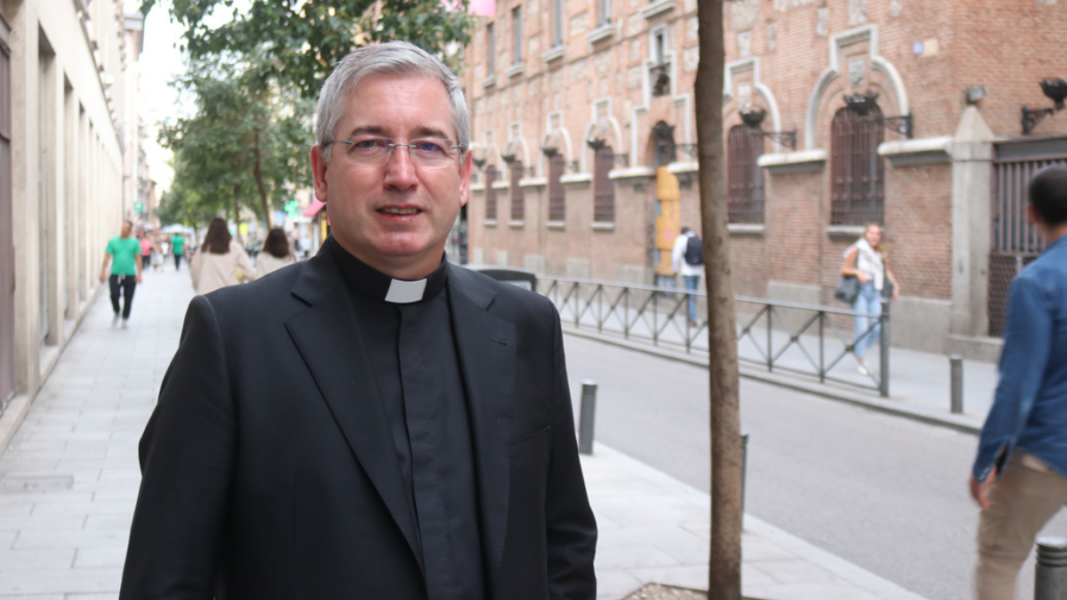
The Diocese of San Sebastián inaugurated on Saturday, October 17, the first diocesan synod in its history, with a meeting at the Diocesan Seminary attended by more than three hundred participants. The process, convened by Bishop Fernando Prado Ayuso under the motto Zurekin – With You, will extend at least until 2028 and aims, according to materials released by the diocese, to open a time of «listening, reflection, dialogue, and discernment about the future of the Church in Gipuzkoa». Prado and his vicar general, Mikel Aranguren, presented it to the media on Friday, October 16.
The diocese, established in 1950, had never celebrated a synod in this canonical form. According to the dossier collected by Vida Nueva, the purpose is not to confirm previous decisions, but to open a process of listening, and the text warns that the synod is not «another round of meetings for future renewal». The call is directed to priests, religious, laity, parishes, movements, schools, and Cáritas, as well as to those who feel Catholic or close to the Church even if they do not participate in it regularly. The campaign slogans are «There is room for everyone» and «Your voice matters.»
The calendar has four stages. Until December, the diocese will collect contributions through a survey, both on paper and in digital format, prepared with the University of Deusto. Between January and June 2027, the synodal groups will work. From October 2027, the synodal assembly will meet, tasked with studying the proposals, and from 2028 onward, what is discerned will be implemented. There is no date for the conclusions. The list of issues is not closed, but includes the participation of the laity and the role of pastoral teams, catechesis, liturgy, the charitable dimension, the territorial organization of parishes and pastoral units, economic and patrimonial sustainability, and transparency.
The diocese specifies that the synod should not be reduced to a vote on the future of the local Church. The Code of Canon Law defines the diocesan synod as an assembly of priests and other faithful who assist the bishop, and establishes in canon 466 that «the diocesan Bishop is the sole legislator in the diocesan synod»; the other members have only a consultative vote, and only he signs the declarations and decrees. To explain this, the diocese has organized three formation sessions at the seminary: on November 5, with the Bishop of Solsona, Francisco Conesa; on November 11, with canon lawyer Carmen Peña, professor at the Pontifical University of Comillas; and on December 3, with José San José Prisco, Dean of Canon Law in Salamanca.
At the press conference, Prado also responded to questions about Spanish politics. He called for breaking «the spiral of polarization that is not good for anyone,» setting aside ideologically aggressive tics and «removing some of the guts and making the reasons known,» and maintained that the Church should not be infected by that polarization, but rather be leaven and «a prophecy of social communion.» Regarding housing, which he considers one of the most serious problems in Gipuzkoa, he said it is not solved with grand speeches but with reflection and consensus. He also asked for prayers for Leo XIV and described his illness as «a serious matter.»
Prado, a Claretian, has governed the diocese since December 2022, when he succeeded José Ignacio Munilla. In December 2025, in his pastoral letter Our Seminarians, he acknowledged that there were no young men in the diocesan seminary and called for trust that God was preparing them. The Church of Gipuzkoa is now questioning its future in a synod that will last at least until 2028 and that was inaugurated precisely in that seminary.
Read also