


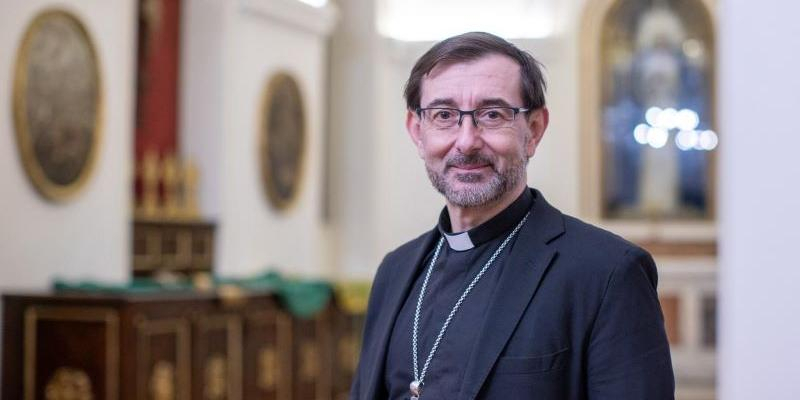
Cardinal José Cobo, Archbishop of Madrid, will be the protagonist of the XIV Joan Carrera Tribune, which will take place next October 15 in Barcelona. The prelate will dedicate his intervention to one of the axes that have marked much of the ecclesial debate in recent years: synodality.
The conference will be titled «The Call to Walk in Synodality: An Old Novelty» and will take place during a lunch-colloquium at the Pomarada restaurant in Barcelona, between 2:00 p.m. and 4:00 p.m. Cobo will be introduced by José Luis Segovia Bernabé, pastoral vicar of the Archdiocese of Madrid, while the colloquium will be moderated by Glòria Barrete, director of Catalunya Religió.
Cobo and Synodality
The choice of topic fits with a line that Cobo has maintained since his arrival at the Madrid see. In April 2024, the cardinal called for «calm but firm steps» toward a «more synodal» Church and maintained that synodality «is not a theological fad.» He also defended the need to revitalize pastoral, economic, and presbyteral councils, as well as other ecclesial participation bodies.
Cobo has continued to defend the synodal path after the closing of the assembly of the Synod on Synodality. The issue he will bring to Barcelona is therefore not presented as a process already concluded, but as a way of understanding participation and governance within the Church.
The conference will also allow us to learn how he now formulates that question under the pontificate of Leo XIV, who has kept synodality on the ecclesial agenda since his election.
A Forum Linked to Catalan Catholicism
The Joan Carrera Tribune is an initiative promoted by the Grup Sant Jordi de Defensa i Promoció dels Drets Humans and the newspaper El Punt Avui, together with some twenty ecclesial entities and institutions. Its promoters present it as a space intended to address the situation of Christianity in Europe and the world, disseminate experiences of dialogue and social participation, and enhance the presence of religious reality in Catalan society.
The profile of its promoters helps to situate the forum. The Grup Sant Jordi was born in 1970 as a section of the Grup Cristià de Promoció i Defensa dels Drets Humans founded by Joan Carrera and dedicated especially to «the national and linguistic rights of Catalonia.» The entity currently defines its mission as the promotion of «a Christianity rooted in the country and committed to human rights and those of peoples» and mentions among its actions initiatives related to the «right to decide» and the social doctrine of the Church.
Among other organizations, Cristianisme i Justícia, Jesuïtes de Catalunya, Justícia i Pau, the Fundació Catalunya Religió, the Fundació Joan Maragall, the Fundació Pere Tarrés, the Capuchins of Catalonia, Vedruna, Marists, and the Lliga Espiritual de la Mare de Déu de Montserrat are affiliated with the Tribune.
The forum has previously dedicated several sessions to the consequences of the synodal process. In June 2023, theologian Jesús Martínez Gordo addressed the German Synodal Way and the world Synod and even proposed the celebration of a Vatican Council III or an expanded synod that would address the power of the Pope. During that intervention, he defended that all the baptized participate in the governance of the Church and presented the model promoted in Germany as a «bottom-up» approach.
The previous edition of the Tribune was led by Cristina Inogés, a participant with voice and vote in the Synod on Synodality and a member of its Methodological Commission. During the meeting, Inogés maintained that «synodality has no turning back», called for changes in decision-making processes, and addressed the role of women in the Church. Regarding the female diaconate, she stated that «it is a problem of power, not theological,» and when asked about the ordination of women, she referred to the vocation received by all the faithful in baptism.
Cobo will thus arrive at a forum that has not only closely followed the synodal process, but has also given space to some of the «proposals for ecclesial reform» linked to its development. In his intervention on October 15, the Archbishop of Madrid will expound on that «old novelty» and how he envisions the continuity of synodality under the pontificate of Leo XIV.