


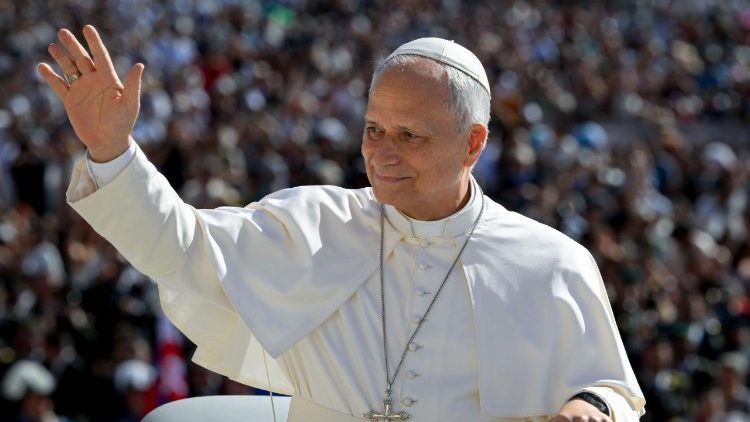
On the occasion of the third centenary of the canonization of Saint Toribio de Mogrovejo, Leo XIV has addressed a letter to the bishops of Ibero-America and the Caribbean in which he presents the saintly Archbishop of Lima as a model of episcopal ministry and reminds the prelates of some of their fundamental obligations: to remain with the flock even when doing so entails a personal cost, to guard and transmit the faith in its entirety, to care for the interior life, to foster eucharistic adoration, and to exercise true fatherhood over their priests.
The letter, dated 8 September and published by the Holy See on 19 September, also contains a personal reference to Robert Prevost’s years as a bishop in Peru. “There I came to know at first hand the faith of a people from whom I received much and from whom I understood better what it means to be a shepherd,” the Pontiff states, proposing that the episcopate of Saint Toribio be contemplated through the various gestures of the rite of reception of a bishop in his cathedral.
“The abandonment of the flock can begin long before a visible flight”
Beginning with the reception of the crucifix and the kiss the new bishop places upon it, Leo XIV recalls that episcopal ministry entails a promise of self-giving and may require unforeseen renunciations. The cross, he explains, reminds the shepherd that he must remain with the flock during difficult hours and that the protection of the sheep may come at a price to himself.
The Pope then presents the example of Saint Toribio, who extended that kiss to Christ in his travels and hardships, in the defence of the indigenous peoples, in the correction of abuses, and in his closeness to the poor and those who suffered.
“Dear brothers, we need to return frequently to the school of the cross. The abandonment of the flock can begin long before a visible flight, when comfort, fear or personal interests weigh more than the good of the faithful. The hireling calculates what he may lose; the shepherd knows that something of himself must be given in order to remain faithful,” writes Leo XIV.
Clear teaching and the integral transmission of the faith
The Pontiff also dwells on the bishop’s doctrinal responsibility. Commenting on the moment when the apostolic letters are read and the prelate takes his seat in the cathedra, he recalls that his mission does not proceed from himself but has been received and must be exercised in communion with the Church, the Successor of Peter and the College of Bishops.
The Pope recalls that Saint Toribio worked for the reception of the Council of Trent, celebrated provincial councils and diocesan synods, and carried out an intense catechetical labour motivated by the purpose of “transmitting the faith in its entirety.”
“In a time when so many voices claim authority over the consciences of the faithful, it belongs to the bishop to offer clear, patient teaching rooted in that communion, so as to help his people recognize the voice of the one Shepherd,” he notes.
Eucharistic adoration, “a pastoral priority”
Leo XIV likewise devotes an especially explicit section to the eucharistic life of the dioceses. Starting from the moment when the new bishop kneels before the tabernacle, he recalls that shepherds pass while Christ remains.
“Therefore, I would like to invite you to make eucharistic adoration a pastoral priority,” the Pope asks.
The Pontiff exhorts the bishops to offer the faithful times and spaces to remain before the Blessed Sacrament and to promote prolonged adoration. “I am convinced that the holy presence of the Lord, welcomed and adored with fidelity, sustains what our strength cannot reach and opens paths that no planning could foresee. It will be his love that transforms our dioceses,” he affirms.
“Before being a shepherd, he is a disciple”
The holy water received by the bishop upon entering the cathedral serves Leo XIV to recall another principle: the episcopal condition does not exempt one from the personal need for conversion.
“Before being a shepherd, he is a disciple; before presiding over the People of God, he himself is counted among the baptized, made children in Christ. The holiness of the shepherd cannot be taken for granted,” he warns.
For this reason, he asks the bishops to care for their interior life and to keep the awareness of being “disciples in need of conversion.” Likewise, commenting on the proclamation of the Gospel and the new bishop’s first preaching, he insists that no administrative or pastoral urgency should displace prayer and the preparation of preaching.
Bishops close to their priests
The letter also devotes a substantial passage to the relationship between the bishop and his presbyterate. Saint Toribio, Leo XIV recalls, attended to priestly formation, was demanding in admitting candidates to orders, visited his priests, and upheld ecclesiastical discipline.
“Dear brothers, let us be close to our priests,” the Pope exhorts.
Leo XIV asks that seminaries and the first years of priestly ministry be cared for in a particular way, that “a real fraternity” be fostered, and that no priest have the impression that he can only approach his bishop when a problem exists.
“Episcopal fatherhood is often recognized when a priest knows he can knock with confidence on the door of the episcopal residence,” he adds.
The altar and the life of the bishop
Upon reaching the offertory and the eucharistic sacrifice, Leo XIV directs the reflection toward the complete self-giving of episcopal life. In the paten, he explains, one can symbolically see all that the bishop will have to place each day in God’s hands: his work, his projects, his decisions, the persons entrusted to his care, his concerns and his hopes.
The Pope recalls that in the Holy Mass “the one sacrifice of Christ for the salvation of the world is sacramentally renewed” and that from this Holy Sacrifice “flows the grace by which the Church lives.” The existence of the bishop must be progressively united to that same offering until it becomes, in Christ, an offering to the Father.
Leo XIV concludes by recalling several saints and blesseds who exercised the episcopate in Ibero-America and exhorting the study of their ministries and writings, especially for the formation of seminarians and priests. Finally, he entrusts the bishops to Saint Mary of Guadalupe and asks for them the grace “to know, serve and love the Churches” entrusted to them.
Below we reproduce in full the letter of Leo XIV:
Dear brothers in the Episcopate:
Welcoming the request of the Peruvian Episcopate and on the occasion of the third centenary of the canonization of Saint Toribio de Mogrovejo, patron of the bishops of Latin America, I greet you with affection in the Lord and thank you for the service you render each day. In addressing these words to you, gratitude returns to my heart for the privilege of having exercised the episcopal ministry in Peru. There I came to know at first hand the faith of a people from whom I received much and from whom I understood better what it means to be a shepherd. That experience drew me in a particular way to Saint Toribio, who also arrived from afar in a land that he ended up making his own through pastoral charity.
My Predecessors have dwelt at length on the figure of the “exalted metropolitan of Lima,” [1] recalling his evangelizing zeal, [2] his commitment to the building and renewal of ecclesial life [3] and his closeness to the poorest and most vulnerable. [4] Without returning now to his biography, I would like to contemplate his ministry in the light of a sign that refers us to the very origin of our mission: the reception of the bishop in his cathedral church. [5] A similar rite is provided for the pastoral visit to a community, [6] as if the Church wished to lead the prelate, again and again, to the meaning of that first entry. What the liturgy expresses in a few gestures, the Apostle of the Andes made into life throughout his years as a shepherd. The best way to honour his memory will be to allow ourselves to be challenged by the way he lived the ministry that we too have received, and to imitate him.
The rite begins at the door of the cathedral. There the new bishop is received by the Church to which he has been sent. He arrives at a community that precedes him, that has walked a path of faith and in which the Holy Spirit was already at work. In crossing that threshold, he enters a history that does not begin with him and is bound, by his ministry, to a concrete people. The saintly archbishop arrived in a land of whose peoples and cultures he had scarcely any knowledge. To shepherd it he had to enter into that reality, and therefore he traversed it. His pastoral visits and his concern that the Gospel could be proclaimed in the local languages strengthened his bond with that land and its people. There are realities of a diocese that can hardly be reached from a desk. Therefore, let us ensure that the pastoral visit retains all its force: let us go personally to meet our communities, listen to our flock and seek out those who rarely have the opportunity to approach the bishop. The ministry of a successor of the apostles requires living with the heart in heaven and the feet on the road.
Still at the door, the bishop receives a crucifix and kisses it. The Church places before him the One who loved his own to the end. That gesture contains a promise of self-giving. The ministry may lead him along paths he had not foreseen and ask of him renunciations he perhaps never imagined. The cross reminds him that he must remain with the flock when difficult hours come and that the protection of the sheep may come at a price to the shepherd himself. Toribio extended that kiss to the suffering flesh of the Lord in his travels and fatigues, in defending the indigenous peoples, correcting abuses and remaining close to the poor and those who suffered. Dear brothers, we need to return frequently to the school of the cross. The abandonment of the flock can begin long before a visible flight, when comfort, fear or personal interests weigh more than the good of the faithful. The hireling calculates what he may lose; the shepherd knows that something of himself must be given in order to remain faithful (cf. Jn 10,12-13).
Next, the bishop receives holy water, sprinkles himself and sprinkles those present. The gesture returns him to the common source of Baptism. Before being a shepherd, he is a disciple; before presiding over the People of God, he himself is counted among the baptized, made children in Christ. The holiness of the shepherd cannot be taken for granted (cf. 1 Tm 4,16). Saint Toribio could ask for a more Gospel-faithful ecclesial life because he began by allowing himself to be measured by that same demand. He who has received the charge to sanctify still needs to be sanctified; he who proclaims mercy also lives by it. Let us therefore care for our interior life and keep the awareness that we are disciples in need of conversion.
The rite then leads the bishop before the tabernacle, where he kneels and adores. Before beginning his ministry, he pauses in silence before the Blessed Sacrament. Bishops pass; Christ remains (cf. Hb 13,8). Shepherds change, new urgencies arise and projects succeed one another, but the Church lives from the Lord. Therefore, I would like to invite you to make eucharistic adoration a pastoral priority. Toribio’s love for the Eucharist was manifested in his solicitude to draw everyone to Jesus. Let us offer our faithful time and spaces to remain before Him and encourage prolonged adoration. I am convinced that the holy presence of the Lord, welcomed and adored with fidelity, sustains what our strength cannot reach and opens paths that no planning could foresee. It will be his love that transforms our dioceses.
After vesting, the bishop approaches the altar and kisses it. It is the same Lord before whom he has just knelt, now contemplated as the One who gathers his Church around himself and makes it one body (cf. 1 Co 10,17). The saintly prelate served an immense and plural Church, striving to keep it united. It also belongs to us to ensure that the diversity of our dioceses finds its unity in Christ. The altar reminds us that communion belongs to the very heart of our mission.
He then goes to the cathedra and the Apostolic Letters are read, the bull by which the Roman Pontiff has appointed him shepherd of that particular Church. The bishop has not given himself that mission; he has received it and exercises it in the communion of the Church, united to the Successor of Peter and the College of Bishops. The teaching he offers from the cathedra does not spring from a word of his own that he must impose. He has received the faith of the Church and is called to “guard the good deposit,” to deepen it and make it comprehensible to those under his care (cf. 2 Tm 1,13-14). Saint Toribio understood this responsibility well. The reception of the Council of Trent, the provincial councils, the diocesan synods and his catechetical labour bear witness to his desire to transmit the faith in its entirety and make it accessible to those before him. In a time when so many voices claim authority over the consciences of the faithful, it belongs to the bishop to offer clear, patient teaching rooted in that communion, so as to help his people recognize the voice of the one Shepherd.
Next, the clergy and the faithful approach to “manifest obedience and reverence.” [7] The reverence received becomes for the bishop a responsibility, and the obedience offered claims fatherhood from him. This is especially visible in his relationship with the presbyters, united to him in a singular way in the one priesthood and in the mission entrusted to the particular Church. Toribio watched over their formation, was demanding in admission to orders, visited his priests and upheld ecclesiastical discipline, aware that the life of the clergy has repercussions on the life of the people. Dear brothers, let us be close to our priests. Let us care especially for the seminary and the first years of ministry, foster a real fraternity and ensure that no presbyter feels that he can only approach his bishop when there is a problem to solve. Episcopal fatherhood is often recognized when a priest knows he can knock with confidence on the door of the episcopal residence.
After the Gospel, the bishop addresses his people for the first time. Until then, the liturgy has placed him in an attitude of receiving and listening, and has led him to the silence of adoration. Only afterwards does he speak. That simple order contains a teaching that it is always good to keep in mind. Among the many responsibilities that occupy our day, we have been sent to proclaim the Good News. Like the Apostles, we are called to persevere “in prayer and in the ministry of the Word” (Acts 6,4). Saint Toribio made of his life a prolonged preaching, and his proclamation was credible because he had first allowed the Gospel to shape his existence. Let no urgency or pastoral task, however necessary, relegate prayer as the antechamber of preaching. Let us always reserve the necessary time to listen to the Word and carefully prepare the way of offering it to our people.
Once the rites of reception are completed and the liturgy of the Word has been celebrated, the moment arrives to present the offering. In that offertory we can see in anticipation all that the bishop will have to place, day after day, in the hands of the Lord: his work, the projects he will undertake, the decisions he must make, the persons entrusted to him, his concerns and his hopes. There will be moments when he will see the way clearly and others when he will experience his own smallness: all of this fits on the paten. It belongs to the bishop to give himself with fidelity; the fruit, in the last analysis, belongs to God (cf. 1 Co 3,6-7).
The celebration itself shows where that fruitfulness has its source. In the Holy Mass the one sacrifice of Christ for the salvation of the world is sacramentally renewed, while his People are associated with the offering of their Lord. From this Holy Sacrifice flows the grace by which the Church lives and by which Christ continues to gather and sanctify her throughout history. The bishop, like every priest, lends his voice and his hands to Christ, High and eternal Priest, who acts through his ministry. What he celebrates must also be prolonged in his own life, ever more united to the offering of the Lord, until his whole existence becomes, in Christ, an offering to the Father.
The spiritual geography of the Church in Latin America is marked by shepherds who made this union between the altar and life visible. The figure of Saint Toribio, therefore, is not alone. Throughout the centuries and in different regions of the continent a true constellation of bishops whom the Church venerates as saints and blesseds has been formed. Alongside the great archbishop of Lima are Saints Anthony Mary Claret, Ezequiel Moreno, Rafael Guízar and Óscar Romero, and Blesseds Juan de Palafox, Jacinto Vera, Mamerto Esquiú, Enrique Angelelli, Jesús Jaramillo and Eduardo Pironio, among so many other distinguished bishops. Let us deepen our knowledge of the ministry and writings of these shepherds and make them known in our particular Churches. Their witness can help us better understand the mission of the bishop and is of special interest for the formation of seminarians and priests. Their lives show how one and the same mission can take diverse forms according to times and circumstances and form a school of shepherds born of our ecclesial history. The saints continue to form saints (cf. Hb 13,7).
Let us entrust to Saint Mary of Guadalupe our desire to live with renewed fidelity the mission we have received. At the dawn of the evangelization of that beloved continent, she willed that Saint Juan Diego carry her request to the bishop and that he discern and welcome what the Lord was accomplishing through a humble messenger. That encounter remains an invitation for us shepherds: to be attentive to the action of God, which often manifests itself by unforeseen paths and makes use of those from whom one would least expect it. By the intercession of the Mother of God, let us ask for the grace to know, serve and love the Churches entrusted to us, so that, when the hour comes to give an account to the Lord of our ministry, we may hear: “Well done, good and faithful servant […] enter into the joy of your master” (Mt 25,21).
With fraternal affection, I bless you from the heart.
Vatican, 8 September 2026, Nativity of the Blessed Virgin Mary.
LEO PP. XIV
____________________________________________
[1] Pius XII, Radio Message to the V Inter-American Congress of Catholic Education, 12 January 1954.
[2] Cf. St John Paul II, Meeting with the Members of the Episcopate of Peru, 2 February 1985.
[3] Cf. Benedict XVI, Message on the Occasion of the IV Centenary of the Death of Saint Toribio, 23 March 2006.
[4] Cf. Francis, Meeting with the Bishops in Lima, 21 January 2018.
[5] Cf. Caeremoniale Episcoporum, 1141-1144.
[6] Cf. Ibid., 1180.
[7] Ibid., 1143.